
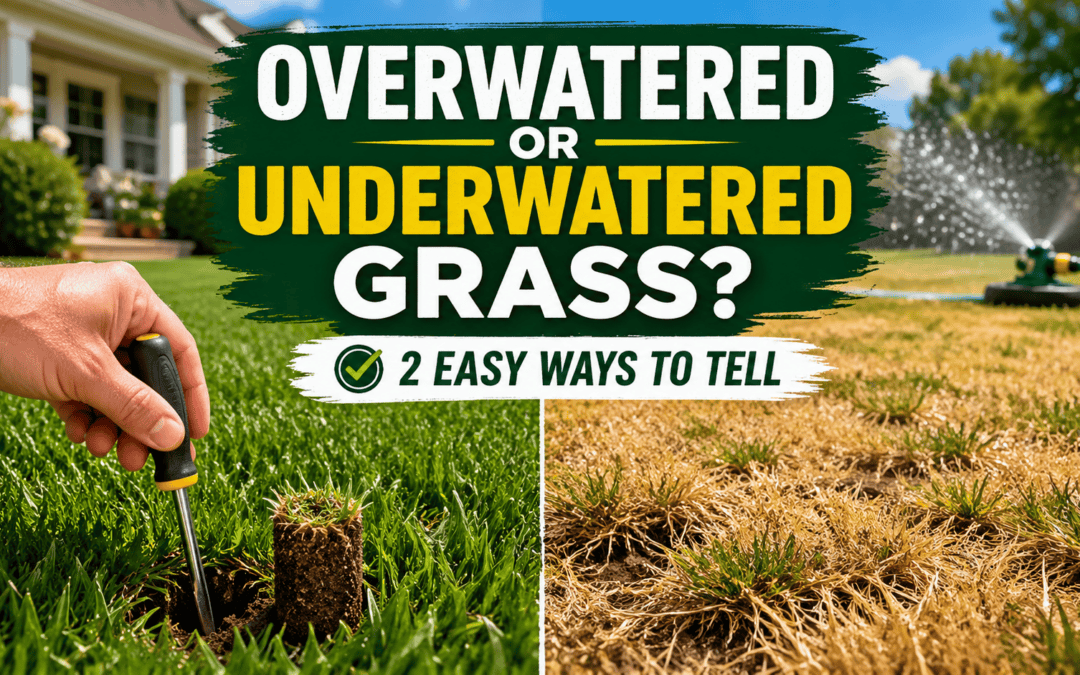
Brown or yellow spots in the lawn can be frustrating because they don’t always tell the full story. A dry lawn and an overwatered lawn can look surprisingly similar from the surface.
You may see thinning grass, yellow patches, brown areas, or spots that just don’t look as healthy as the rest of the yard. The hard part is figuring out whether your grass needs more water, less water, or if something else is going on.
The good news is that there are two simple tests you can use to check if you’re overwatering or underwatering your grass. You don’t need expensive equipment, and you don’t have to guess based only on how the grass looks.
Check out this guide on how to tell if you’re overwatering or underwatering your lawn!
Why Brown Grass Doesn’t Always Mean the Same Thing
When grass starts turning yellow or brown, watering is usually one of the first things homeowners think about. The problem is that overwatering and underwatering can both lead to stressed-looking grass.
A lawn that isn’t getting enough water may turn dry, crunchy, thin, or brown. But a lawn that’s getting too much water can also struggle because soggy soil can weaken roots and cause other lawn problems.
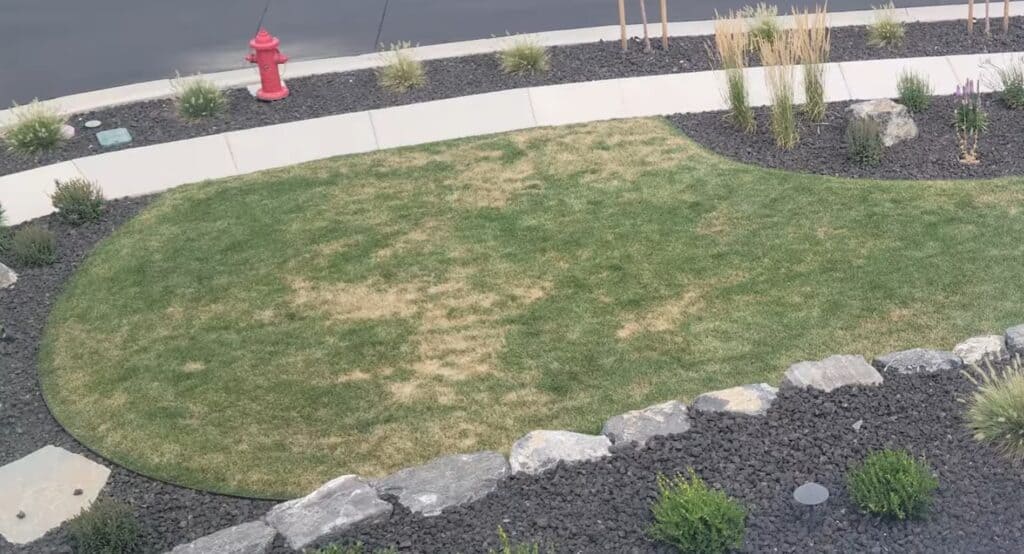
That’s why looking at the grass from above isn’t always enough. You need to check and test the soil.
Tools You’ll Need for Testing Lawn Watering
You only need two basic tools for these lawn watering tests:
- A screwdriver that’s at least 6 inches long – https://amzn.to/3IPIn4Y
- A soil core sampler or soil probe (I have the 21″ version) – https://amzn.to/4mp5eDg
(If you make a purchase using the links in this post, we may earn a commission.)
The screwdriver test is the easiest place to start when trying to figure out if you’re overwatering or underwatering your lawn. The soil core sampler gives you a better look at what’s happening below the surface of the grass.
Lawn Watering Test #1: The Screwdriver Test
The screwdriver test is a quick way to check if your soil has enough moisture.
Take a 6-inch screwdriver and push it into the ground in the area where the grass looks stressed. Pay attention to how much resistance you feel.
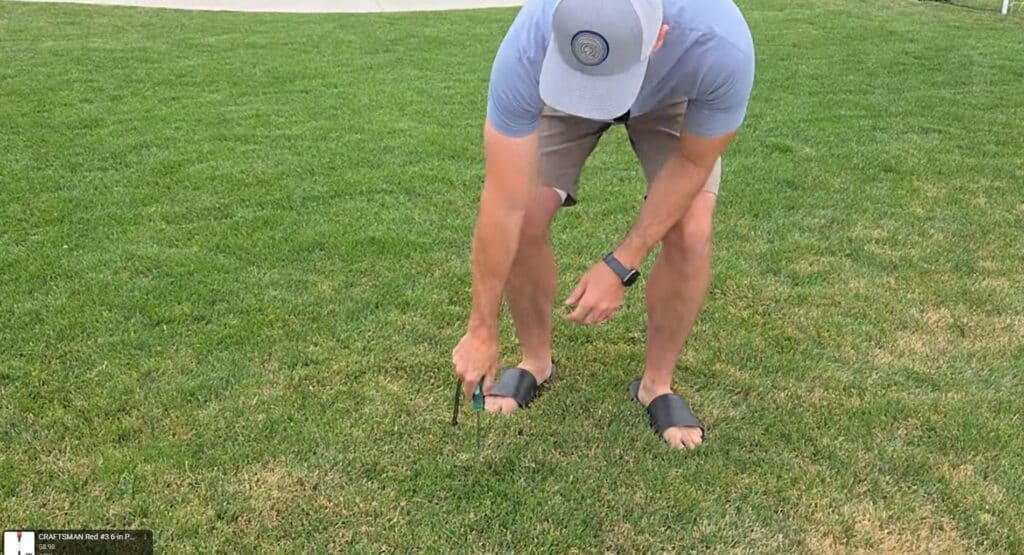
If the screwdriver slides into the soil fairly easily, the ground likely has enough moisture.
If the screwdriver is hard to push in, especially after the first couple of inches, the soil may be too dry (or you could have some compaction).
This test works because dry soil often becomes compact and hard. Clay soil can be especially difficult because it may feel almost like concrete when it dries out.
Why the Screwdriver Should Be at Least 6 Inches Long
A longer screwdriver helps you check deeper than the top layer of grass and sod.
The top 2 to 3 inches may feel different from the soil underneath. If your lawn is watered properly, moisture should reach deeper into the soil so grass roots can grow down instead of staying shallow.
Deep watering helps build stronger roots and a healthier lawn.
Lawn Watering Test #2: The Soil Core Sampler Test
A soil core sampler gives you an even better picture of your lawn’s moisture level.
Push the sampler into the ground about 6 inches, then pull out a soil plug. Look at the soil and feel it with your hands.
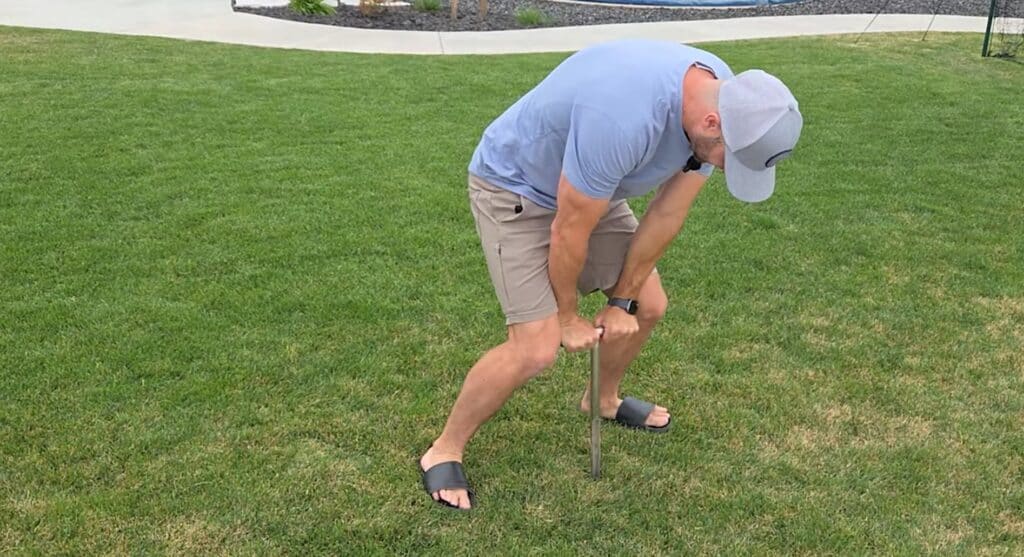
Healthy, properly watered soil should feel slightly moist. It shouldn’t be muddy, but it also shouldn’t crumble apart like dry dust.
If the soil plug is darker and holds together, that usually means there’s moisture in the soil.
If the soil is light-colored, crumbly, and dry, your lawn probably needs more water.
What Dry Soil Looks and Feels Like
The best way to test if you’ve overwatered and underwatered your lawn is to look directly at the soil. Dry soil (underwatered grass) may show these signs:
- The screwdriver is hard to push into the ground
- The soil core sampler won’t go down very far
- The soil crumbles apart in your hand
- The soil looks lighter in color
- The grass has brown or yellow patches
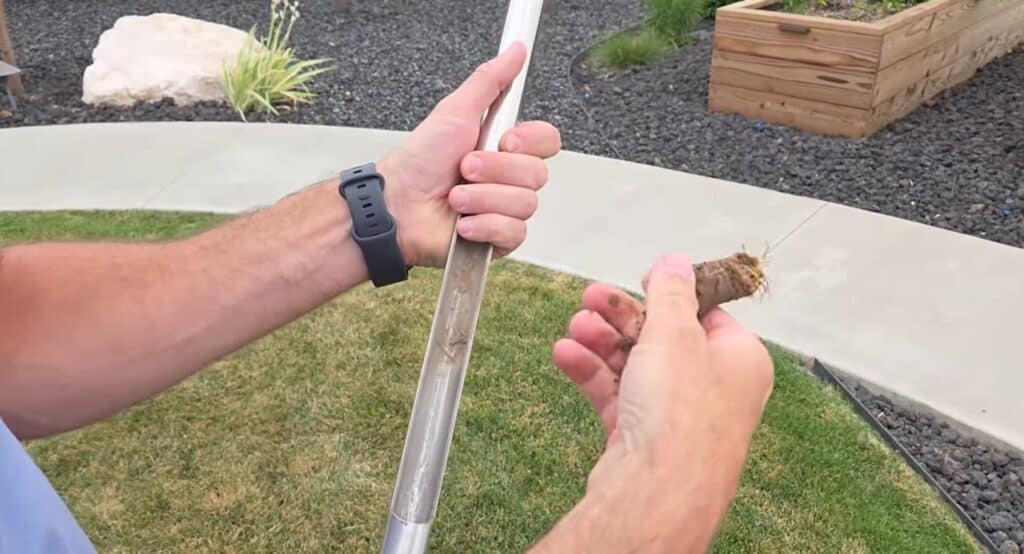
In clay soil, dry areas may feel very hard below the first couple inches. That’s a sign that water may not be getting deep enough into the root zone.
What Moist Soil Looks and Feels Like
Soil with enough moisture usually has these signs:
- A screwdriver goes into the ground with little resistance
- A soil sample comes out in one solid plug
- The soil feels damp but not soaked
- The soil is darker in color
- Grass roots may be visible a few inches down
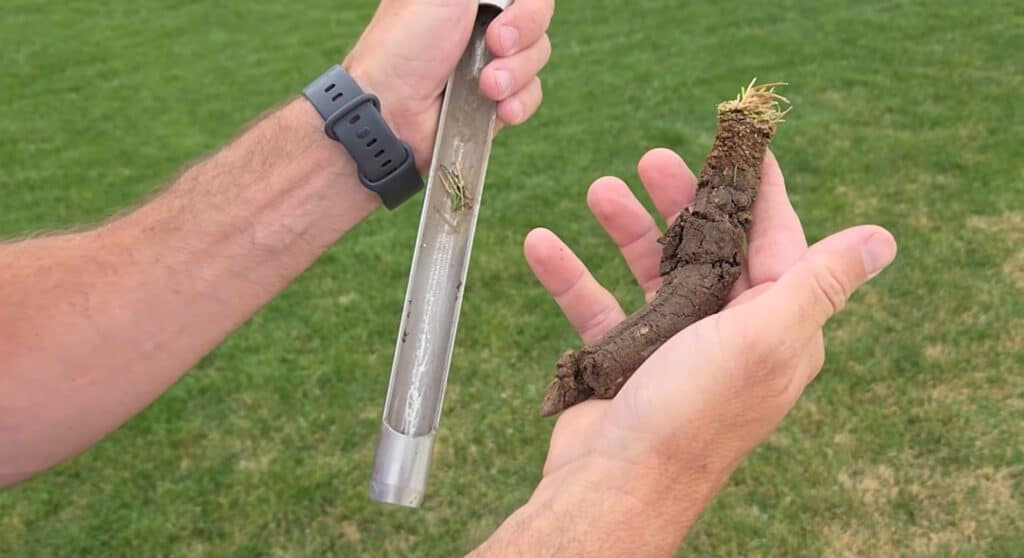
This doesn’t always mean the grass problem is solved, though. If the soil has enough moisture but the grass still looks rough and the lawn is ugly, something else may be causing the issue.
Or, if the plug of soil you just pulled out is wet and muddy, then you’re likely overwatering your lawn and you’ll want to pull back on the watering a bit.
What If the Soil in the Grass Has Enough Moisture?
If your soil feels moist and your lawn still has yellow or brown spots, watering may not be the problem.
Other possible causes of brown, dry grass include:
- Overfertilizing
- Lawn disease
- Heat stress
- Poor soil conditions
- Insect damage
- Pet urine spots
- Dull mower blades
In my lawn, one area that looked dry actually had enough moisture in the soil. The issue was likely tied to overfertilizing, not underwatering.
That’s why testing the soil for overwatering or underwatering matters. It helps you avoid adding more water when your lawn doesn’t need it.
What If the Soil in My Lawn Is Too Dry?
If the screwdriver is hard to push in and the soil sample is dry and crumbly, start by increasing water in that area of your lawn.
Most lawns need about 1.5 to 2 inches of water per week, depending on your grass type, soil, weather, and sprinkler setup.
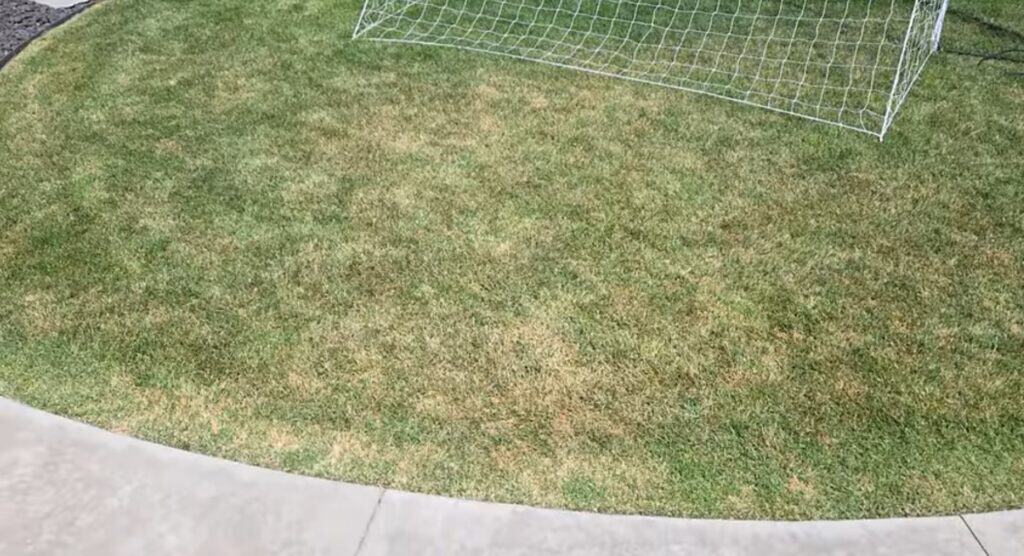
A dry, underwatered section of lawn may need extra attention. You can adjust your sprinkler heads or hand water that spot for a few days to help moisture reach deeper into the soil.
After watering, test the area again. If the screwdriver goes in more easily and the soil sample feels moist, you’re moving in the right direction.
Don’t Rely Only on Sprinkler Run Time
Running sprinklers for a certain number of minutes doesn’t always mean your lawn is getting enough water. Different sprinkler heads put out different amounts of water. Some areas may get plenty, while others stay dry.
That’s why one part of your yard can look green while another section turns brown, even if the whole lawn is on the same watering schedule.
If one area keeps drying out, check sprinkler coverage and make sure water is reaching that spot evenly. Your lawn might be overwatered or underwatered just by nature of how your sprinklers are covering the grass.
How Long Does It Take Dry Grass To Green Back Up?
Dry grass may not bounce back overnight.
After watering a dry spot deeply for a few days, you may start to see small improvements. Full recovery can take a week or two, depending on how stressed the grass is.
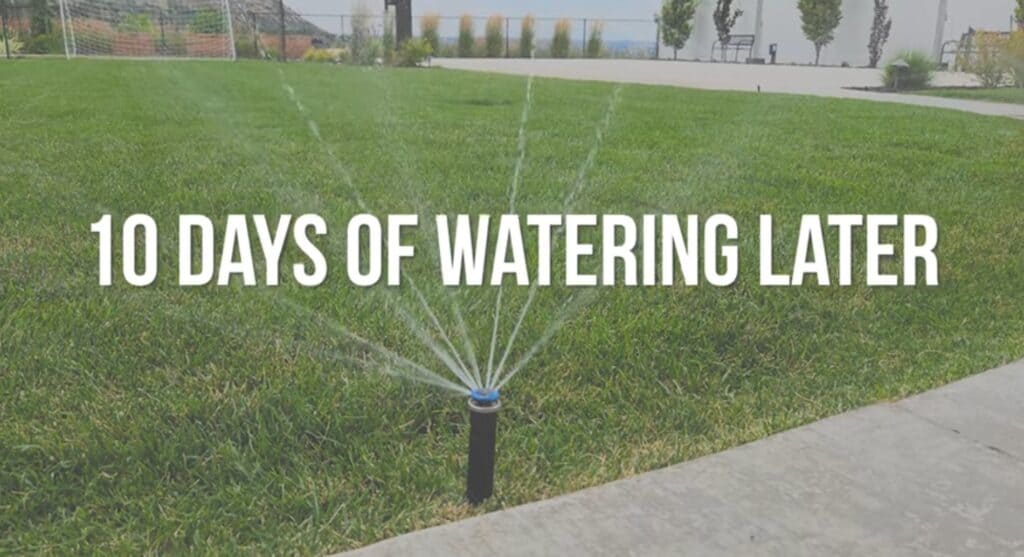
The key is to water in the morning and evening deeply enough so the moisture reaches the root zone. Shallow watering may green up the surface temporarily, but it won’t help the roots grow deeper.
Find Out if You’re Overwatering or Underwatering Your Lawn!
Overwatering and underwatering can look similar from the surface, so don’t guess based only on brown or yellow grass.
Start with the screwdriver test. If the soil feels hard and dry, follow up with a soil core sampler so you can see what’s happening below the grass.
If the soil is dry, increase watering in that area and check your sprinkler coverage. If the soil is already moist, watering probably isn’t the main issue, and it’s time to look at other lawn problems.
These two simple tests can help you make better watering decisions and keep your lawn healthier through the hot summer months.
Join our Skool Community to learn how to get a thicker, greener, healthier lawn!