

Spring is one of the best times to start cleaning up your lawn, but it’s also when weeds seem to show up everywhere.
Even if you applied pre-emergent, weeds can still sneak through. Broadleaf weeds, clover, spurge, dandelions, and even crabgrass can start popping up in your grass once the weather warms up.
The good news is that you don’t always need to tear up your yard or start over. With the right post-emergent herbicides, you can learn how to kill lawn weeds fast while keeping your grass healthy.
In this guide, we’ll walk through how to mix and apply two selective herbicides to help control multiple weed problems at once.
What Is a Post-Emergent Herbicide?
A post-emergent herbicide is used on lawns after weeds have already started growing.
Pre-emergent products help prevent weeds before they come up but can't be used if you are planning to do a project like a spring overseed. Post-emergent products are used when weeds are already visible in the lawn - which is what we'll be going over today.
For this project, we’re using a liquid foliar application. That means the herbicide is mixed with water and sprayed directly onto the weeds and grass blades. The product is absorbed through the leaves, helping target the weeds that are already growing and kill them fast (in under 72 hours!).
Why Mix Two Selective Herbicides to Kill Weeds in Your Lawn?
Different weeds often require different products when treating them in your lawn.
In this spring lawn care project, there were three main types of weeds we wanted to kill quickly:
- Broadleaf weeds like dandelions
- Clover and spurge
- Crabgrass
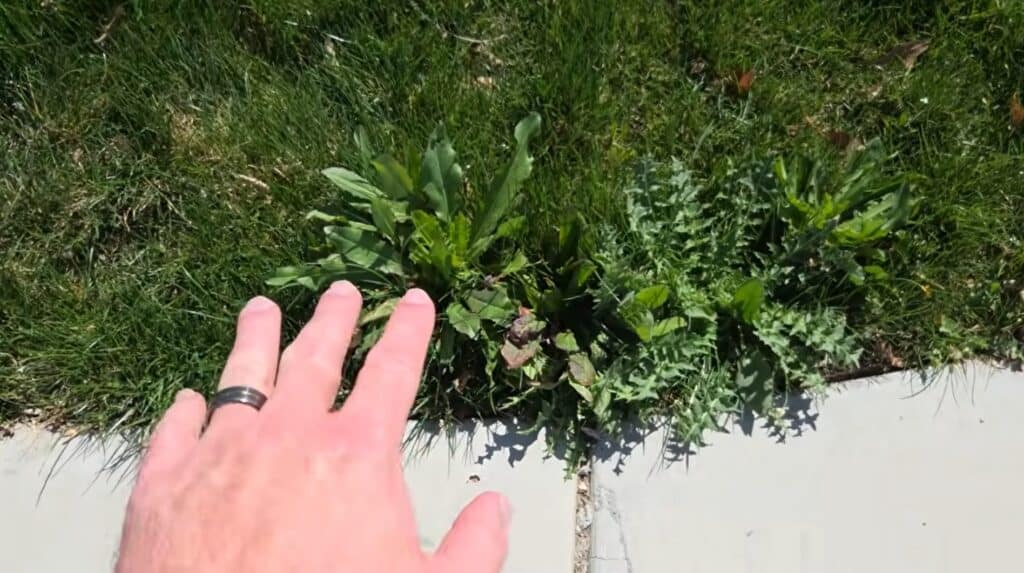
SpeedZone is a great option for many broadleaf weeds, clover, and spurge. It works quickly and can show visible results within about 72 hours.
The one weed SpeedZone does not handle well is crabgrass - so we'll need to mix a couple of products together in order to treat them all.
That’s where a mesotrione-based herbicide like Tenacity or Torocity comes in. Mesotrione can help control crabgrass, but it works more slowly. Crabgrass may start turning yellow after a few days, but it can take 10 to 15 days to see stronger results. In some cases, a second application may be needed in order to kill crabgrass in your lawn.
What Are Selective Herbicides for Lawns?
Selective herbicides are designed to target certain weeds without killing your grass when used correctly.
That’s why products like SpeedZone and mesotrione-based herbicides can be useful for lawn weed control. They allow you to spray problem areas, or sometimes larger sections of the lawn, without wiping out the turf or hurting the grass.
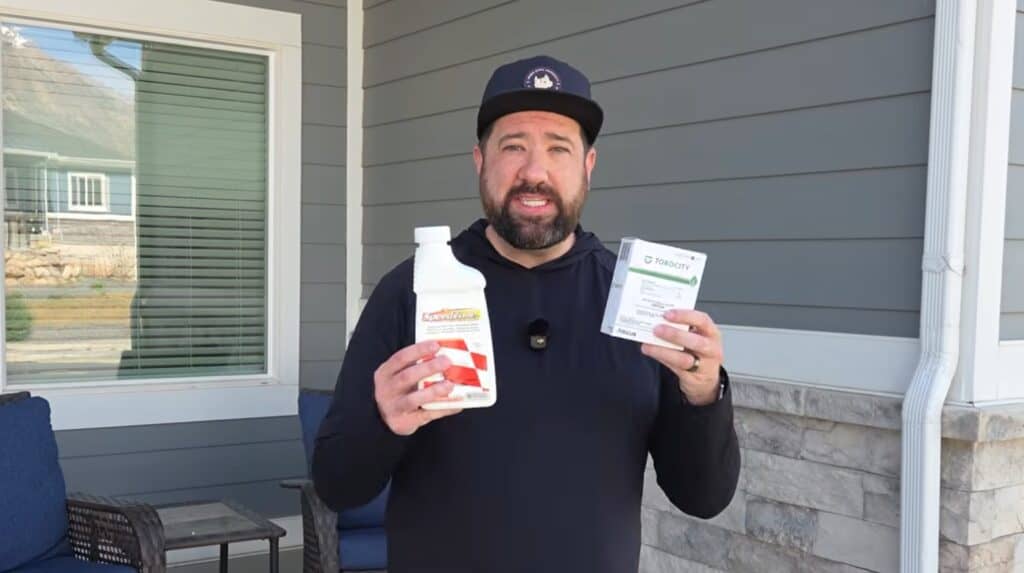
Always check the label before applying any herbicide. Make sure the product is safe for your grass type, follow the listed rates, and avoid spraying during weather conditions that could damage your lawn.
Supplies You’ll Need
Before mixing and spraying the weeds in your lawn, gather everything you need.
For this spring lawn treatment, the main supplies include:
- Petra HD4000 Backpack Sprayer - https://amzn.to/3PwjS0h
- SpeedZone (cool season grasses) - https://amzn.to/4df6gAe
- SpeedZone (warm season grasses) - https://amzn.to/4v0Vqo4
- Tenacity - https://amzn.to/47qNS3E
- Torocity - https://amzn.to/4uWbreO
- Garden Gloves - https://amzn.to/4dfhu7P
- Respirator Mask - https://amzn.to/4bMk2I9
- Mixing Paddle - https://amzn.to/4m116KI
- Rubber Boots - https://amzn.to/4bSuheg
(If you make a purchase using the links in this post, we may earn a commission.)
A backpack sprayer makes the job much easier, especially if you’re treating both the front yard and backyard. A pump sprayer can still work for smaller areas.
How Much Herbicide Should You Use?
For SpeedZone, the application rate to use is 1.8 fluid ounces per gallon of water, with one gallon covering about 1,000 square feet of lawn.
For Tenacity or Torocity, follow the product label. Many mesotrione products come with a measuring syringe or plunger that helps you measure the correct amount based on how many gallons of water you’re mixing.
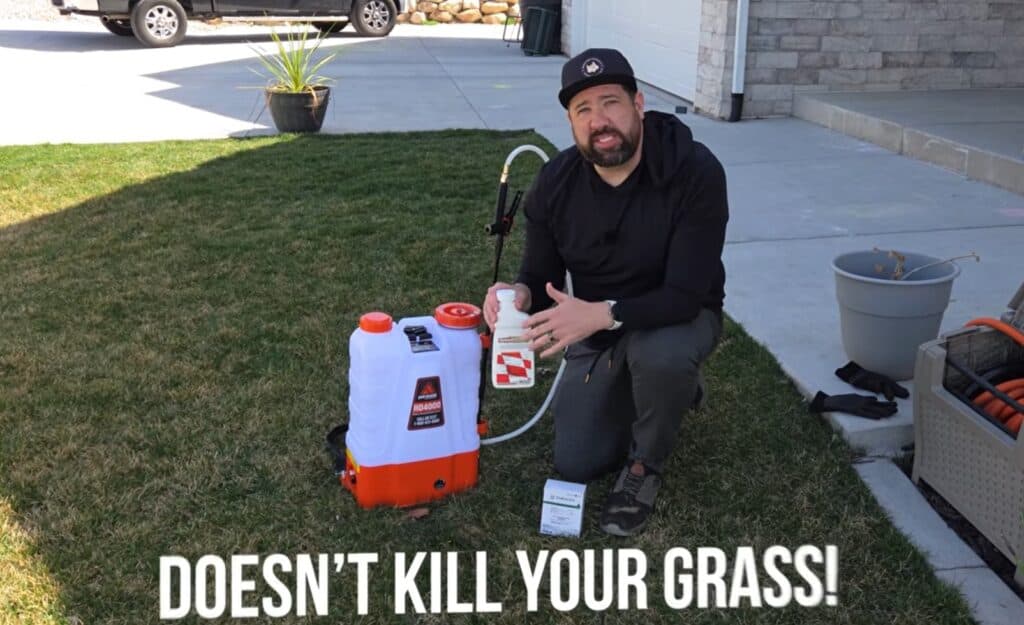
For our weed-killing project, we filled the backpack sprayer with 4 gallons of water, so the SpeedZone amount was adjusted to match that total volume.
Do not guess on herbicide rates when killing weeds in your lawn. More product does not mean better results. Using too much can stress your lawn, damage nearby plants, or create runoff issues.
How To Mix the Selective Herbicides
Start by filling your sprayer with the correct amount of water.
For this application, 4 gallons of water were added to the backpack sprayer. Then SpeedZone was measured and poured into the tank.
Next, measure Tenacity or Torocity using the product’s included syringe or measuring tool. Once both herbicides have been added, stir the mixture well using a drill paddle.
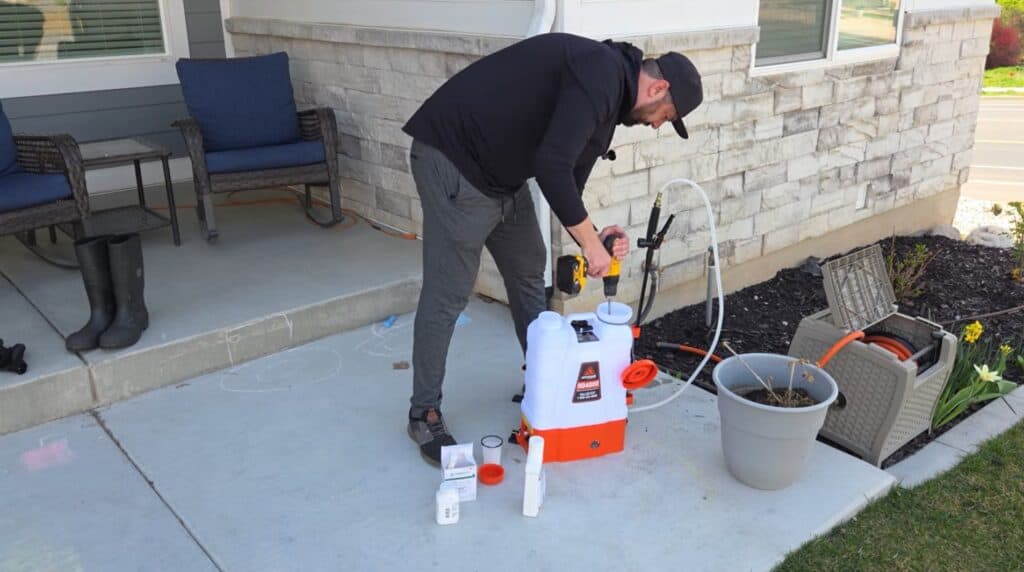
Mixing matters because you want the herbicides evenly distributed throughout the water. A good mix helps you apply the product consistently across the lawn.
Once everything is mixed, put the cap back on the sprayer and get your PPE on before spraying the weeds in your lawn.
How To Spray the Lawn to Kill Weeds
When spraying selective herbicides, try to apply an even coat across the weeds and problem areas in the lawn.
Avoid spraying weed killer on windy days. Wind can cause drift, which may move the herbicide onto flowers, garden plants, trees, or neighboring lawns.
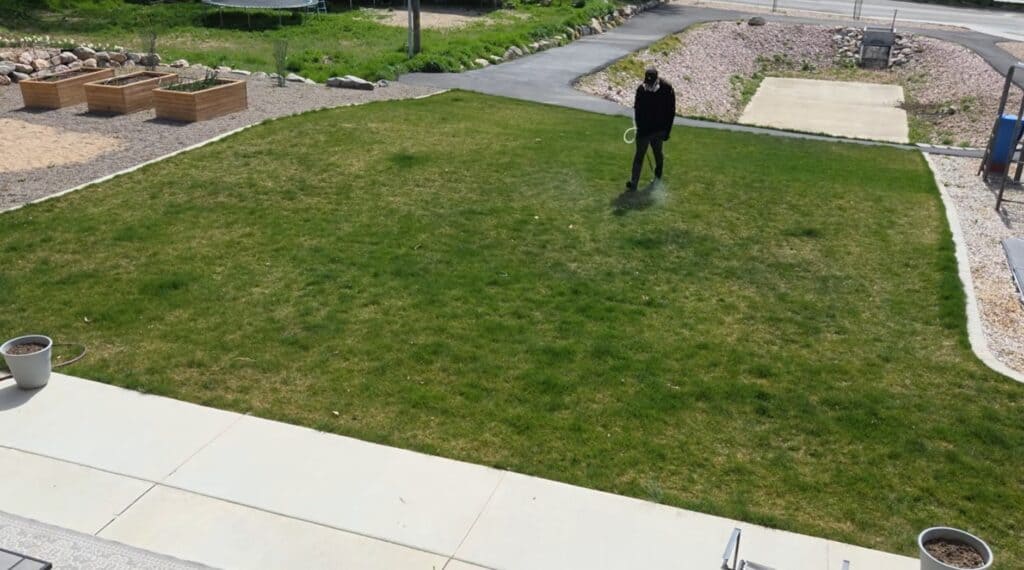
Also avoid spraying herbicides on your grass right before rain unless the label says it’s okay. Most foliar herbicides need time to dry and absorb into the plant.
After spraying all of the crabgrass, clover and broadleaf weeds in your lawn, keep people and pets off the grass while the product dries. The expected dry time of these two weed killers is around 3 to 12 hours, but waiting 24 hours is a safer option.
Clean the Backpack Sprayer After Applying Weed Killer to Lawn
Once you’re done spraying the lawn to kill weeds, clean your sprayer right away.
A simple way to clean your backpack sprayer is to rinse it with water, then run water and dish soap through the tank, hose, and nozzle. After that, rinse again with clean water.
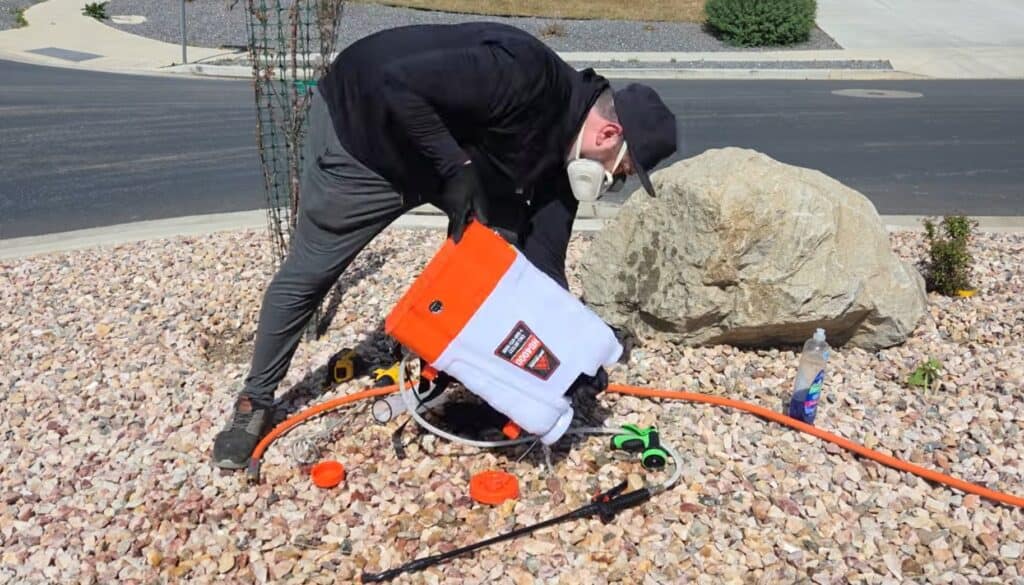
This step helps prevent herbicide residue from sitting in your sprayer. It also reduces the risk of accidentally damaging plants the next time you use that sprayer for another project.
What Results Can You Expect From Using Weed Killer?
After about 72 hours, the broadleaf weeds treated with SpeedZone should show major damage.
Dandelions, clover, spurge, and other broadleaf weeds may look scorched, wilted, or completely knocked back within a few days. That’s one reason SpeedZone is popular. It works quickly on many common lawn weeds.
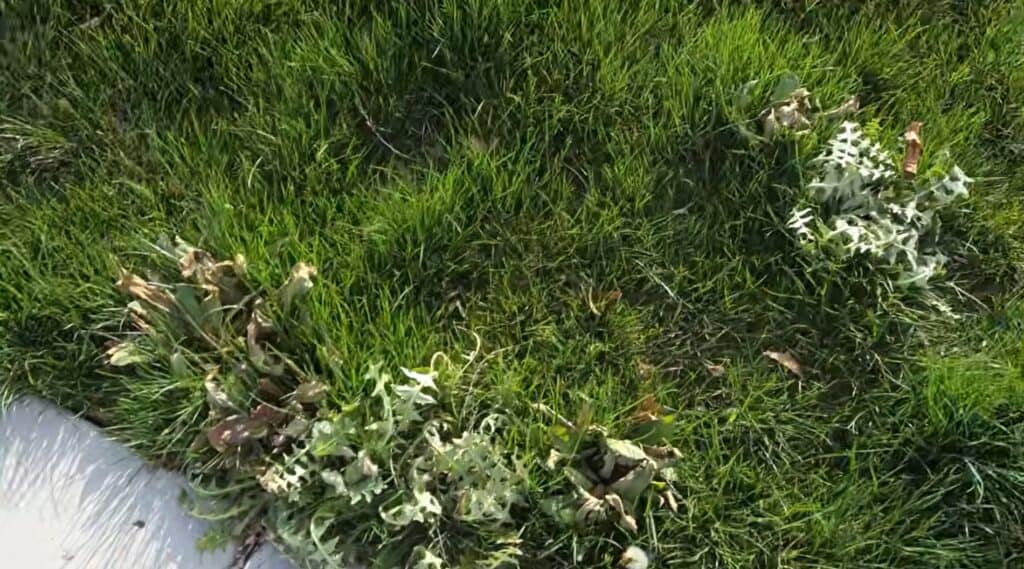
Crabgrass is a little different.
Mesotrione works more slowly. You may notice crabgrass in your lawn starting to yellow after a few days, but it usually takes longer to fully die off. Expect the process to take closer to 10 to 15 days, and don’t be surprised if a second application is needed.
Important Safety Tips When Using Herbicides
Herbicides can be very helpful when killing weeds in your lawn fast, but they need to be handled carefully.
Before spraying, always:
- Read the full product label
- Confirm the product is safe for your grass type
- Wear gloves, boots, and a mask
- Keep kids and pets off the lawn until the product is dry
- Avoid spraying in wind
- Avoid spraying near ponds, drains, or water sources
- Follow all listed rates exactly
The label is the final authority. It tells you where the selective herbicide can be used, how much to apply, how often to apply it, and what grass types it works on.
Killing Weeds in Your Lawn is Easy!
If spring weeds are taking over your lawn, a liquid post-emergent application can help you get control fast.
SpeedZone is a strong option for broadleaf weeds like dandelions, clover, and spurge. It can show visible results in as little as 72 hours.
For crabgrass, you’ll need a product with mesotrione, such as Tenacity or Torocity. Crabgrass control takes longer, but mixing a mesotrione product with SpeedZone can help you tackle multiple weed problems in one application.
When used correctly, selective herbicides can help kill weeds in your lawn quickly without harming your grass. Just make sure you follow the label, wear proper protection, and give the products enough time to work.
Join our Skool Community to learn how to get a thicker, greener, healthier lawn!