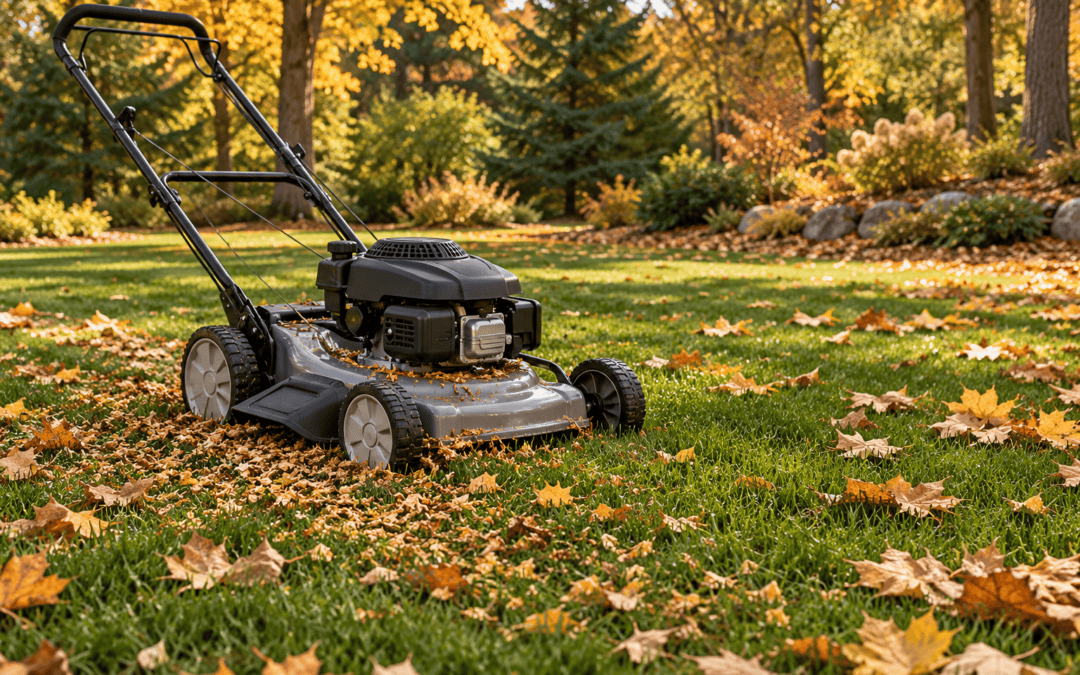
Fall leaf cleanup used to mean bagging everything and hauling it off my lawn. I wanted to try another approach: chop the leaves finely enough to leave them in the grass. With a compatible mulching blade for my mower and a second pass, I got the leaf pieces much smaller than they were after the first pass. Here is how we approach that job without leaving a heavy mat over the lawn.
For a full walkthrough on how to mulch leaves on your lawn, watch this!
Start with a compatible leaf mulching setup
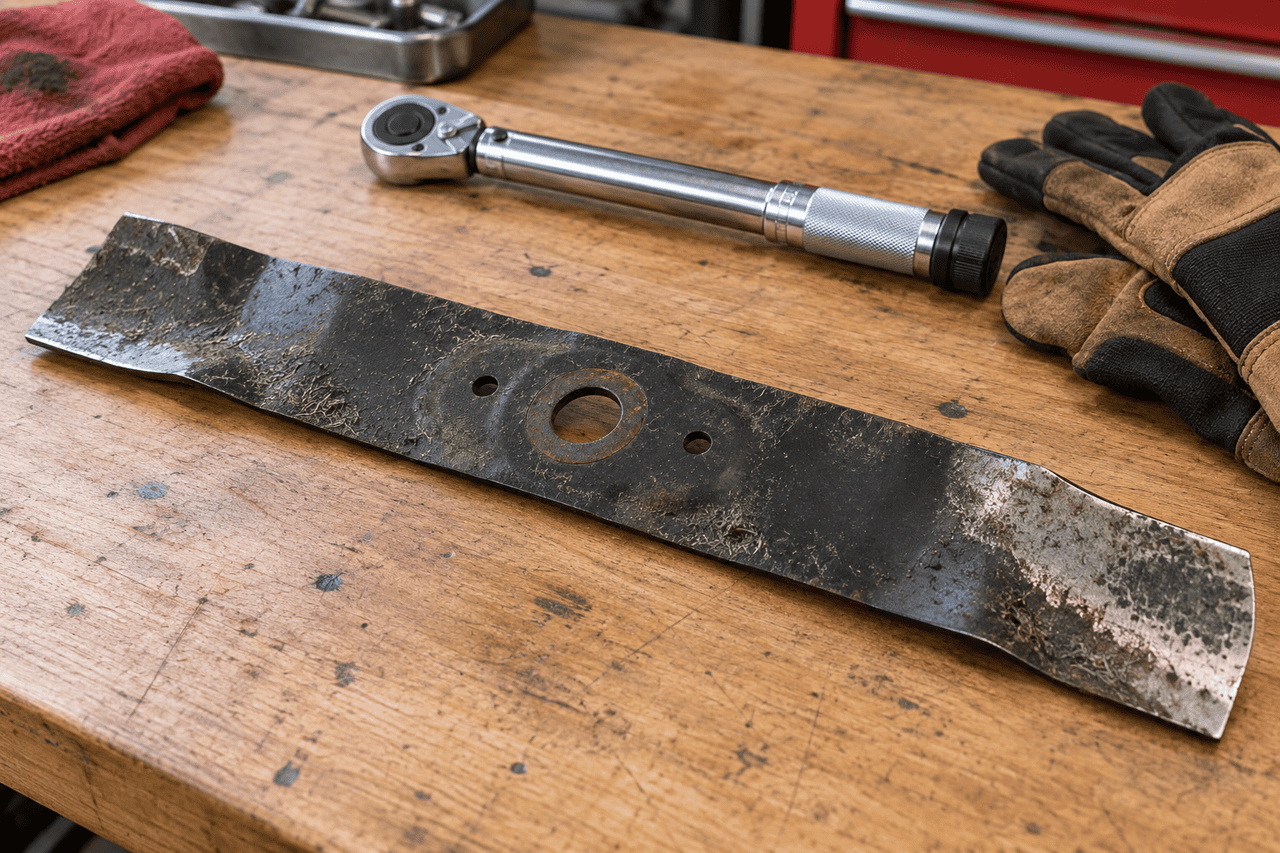
We need a mower that supports mulching and the correct blade for its model and deck size. A mulching blade helps recirculate and cut material into smaller pieces. Matching the mounting pattern and mower instructions matters more than buying something labeled universal. If the existing blade needs attention, our guide to choosing a mower blade sharpener explains another maintenance option.
For this job I removed the collection bag and used the mower’s intended mulching configuration. We keep the manufacturer’s required guards, plugs, and discharge protection in place. Removing the bag does not mean leaving an unprotected opening. Stop the machine and disconnect its power source before changing the setup or inspecting the blade.
Raise the mower deck and make the first mulching pass
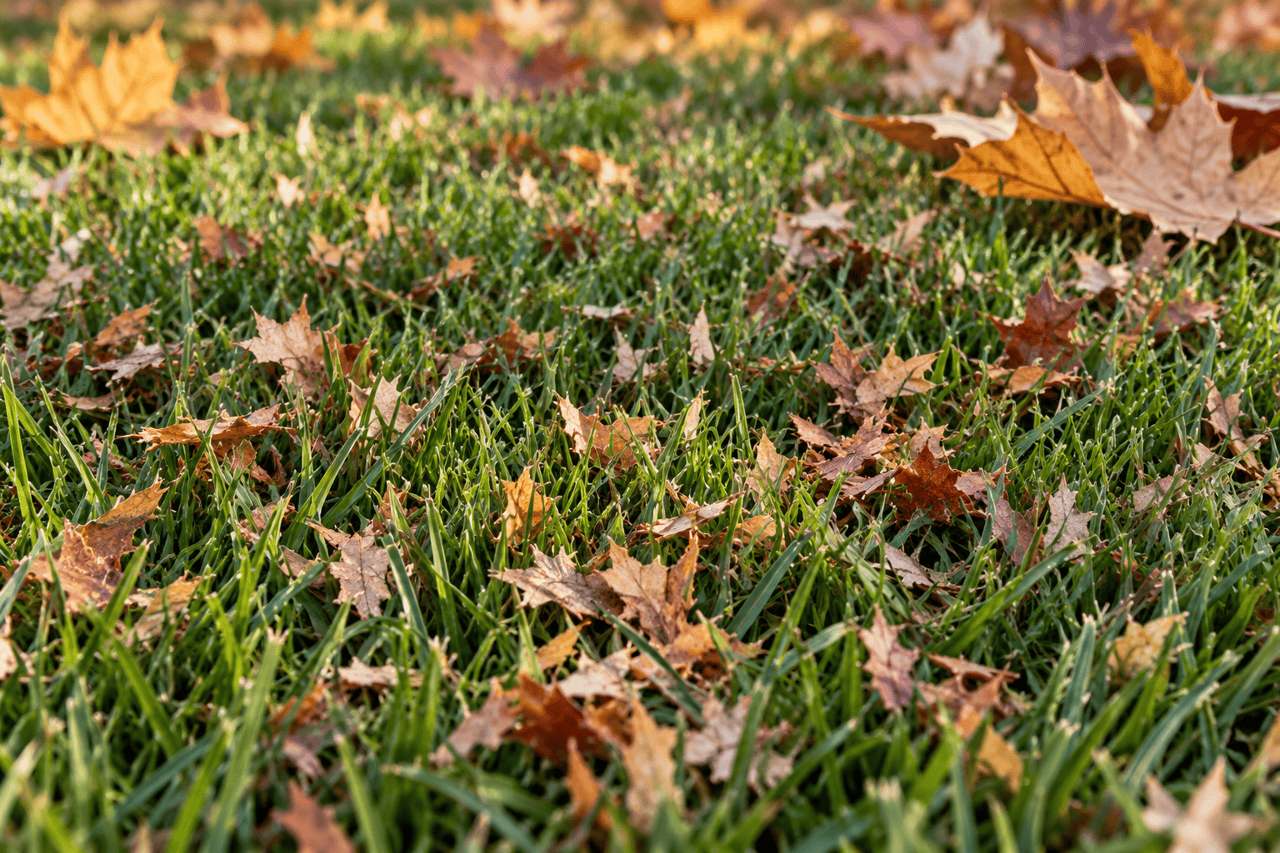
I raised the deck slightly above the grass because the immediate goal was to pick up and shred leaves, rather than take more height off the lawn. I also blew loose leaves from the sidewalk onto the grass so I could process them with the mower. We work in manageable amounts instead of piling an entire yard’s leaves into one dense strip.
The first pass collected and chopped much of the leaf cover, but some pieces remained larger than I wanted. That is our cue to inspect the result at ground level. Look between the grass blades: small fragments can settle into the canopy; broad overlapping pieces can still block it.
Use a second mulching pass when leaf pieces are too large
A second pass made the difference in my yard. The leaf pieces looked much more like confetti and were easier to work down into the grass. We do not treat two passes as a universal number. Leaf type, moisture, the mower, and the amount on the lawn all affect how well a pass works.
If the mower is bogging down or leaving clumps, we slow down and reduce the amount being processed. More passes are useful only while the material is getting finer and settling in. When there is still a dense layer covering the turf, collect some of it for compost or a suitable garden bed rather than repeatedly grinding an overloaded lawn.
Finished Results: Mulching leaves the lawn, not leaves, in view
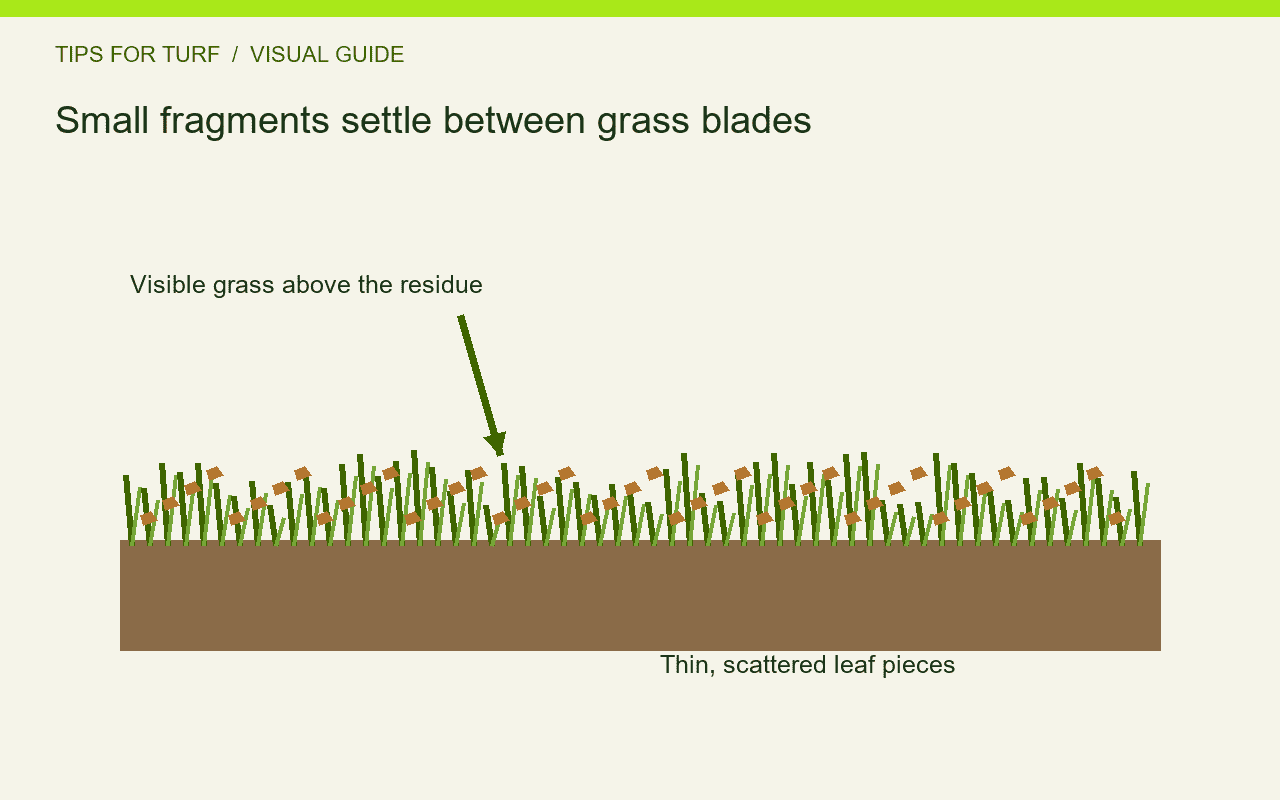
What we want to leave behind is a light distribution of small leaf fragments, with grass still visible. We do not want intact leaves packed together into a wet mat. Check corners and sheltered areas where chopped material collects, then redistribute or remove excess. New leaf fall means checking and repeating the job as needed through the season.
Finely chopped leaves can return organic material to the lawn; they are not a precise substitute for a fertilizer program. For the research behind the approach, see this university reference. If you are still deciding whether to collect or mulch, our mulching-versus-bagging guide covers that choice.
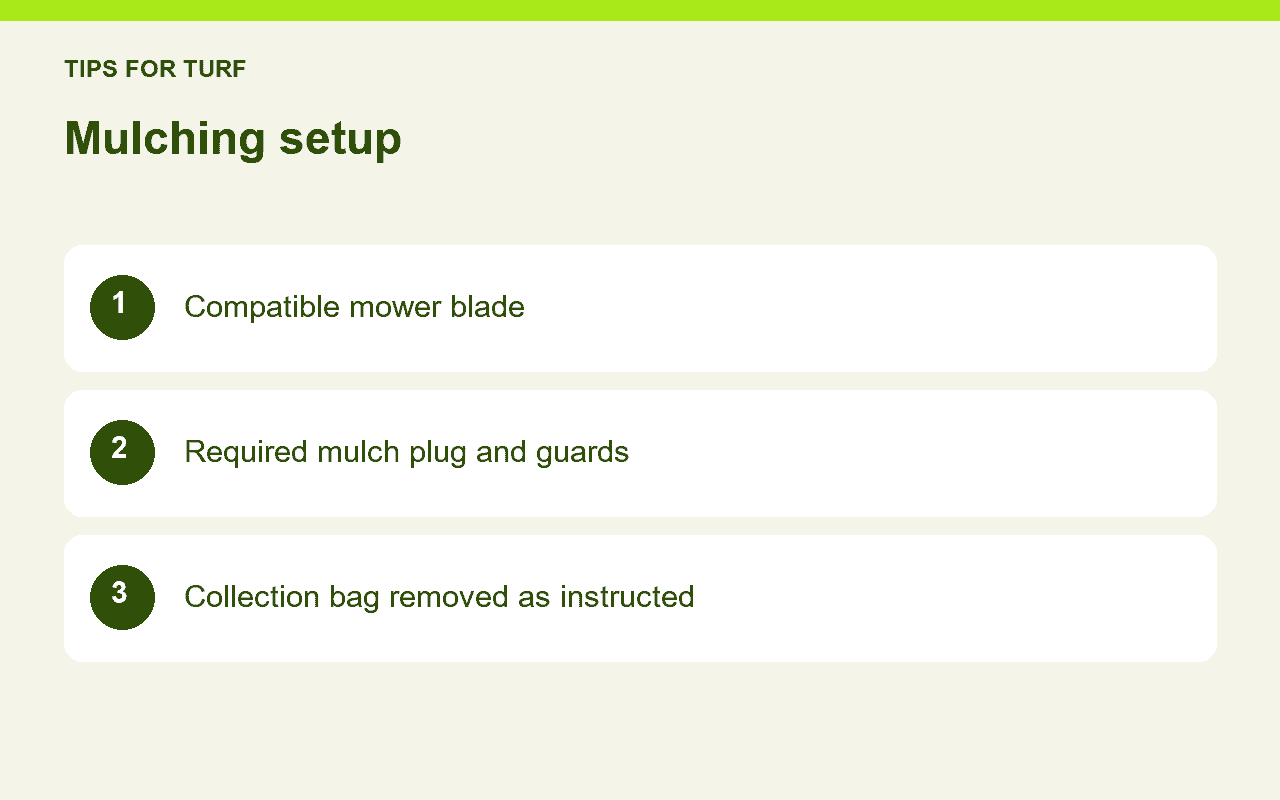
What we check before calling the leaf cleanup finished
One useful part of my lawn mulching test was comparing the material close up instead of judging everything from the sidewalk. From a distance, the first pass looked fairly clean. Down in the turf, I could still find broad pieces alongside the smaller confetti. That difference is why we inspect several areas, including the heaviest accumulation, before putting the mower away. A tidy-looking stripe does not tell us what is sitting beneath the grass canopy.
I also had leaves on the sidewalk that needed moving onto the grass before mowing. That made the blower useful twice: first to gather loose material, and then to move scattered debris back where the mower could process it. We keep that material spread out. Turning scattered leaves into one deep pile makes a harder job for the mower and leaves us with more residue to inspect afterward.
The practical decision is whether another pass is improving the result. In my yard, the second pass made the remaining pieces visibly smaller. If a sheltered corner still holds a thick layer afterward, we deal with that corner separately rather than assume the entire lawn needs another round. The trees still had leaves left to drop, so this was a repeatable autumn task rather than a one-time cleanup. We would rather handle manageable amounts as they arrive than wait until the grass disappears under the full season’s leaf fall. Keep the mower’s instructions handy when selecting a replacement blade; blade length alone does not establish that a part fits the deck or mounting system.
Products and tools from our walkthrough
- EGO Power+ Leaf Blower
- 21 Inch Toro Mulching Blade
- 21 Inch EGO Mulching Blade
- 21 Inch Honda Mulching Blade
- 21 Inch Husqvarna Mulching Blade
- 21 Inch Craftsman Mulching Blade
(If you make a purchase using the links in this post, we may earn a commission.)
Get help with your next lawn project
For lawn care guides, seasonal advice, product recommendations, and feedback from Matt, Greg, and other lawn enthusiasts, join the Tips for Turf community. We can compare notes on your grass, your conditions, and the next practical step.
Frequently asked questions
Do we need a mulching blade?
We use a compatible mulching blade and the mower’s proper mulching configuration. Check your mower manual for the blade and required plugs or guards.
How many passes should we make?
Two passes worked well in my yard. We judge the result by the size and distribution of the fragments, not by a fixed number of passes.
Can we leave a thick layer of chopped leaves?
We want the pieces to settle into the grass. If material still covers the turf in a dense mat, collect or redistribute the excess.
Should we bag some leaves anyway?
Yes. When the leaf volume overwhelms the mower or lawn, collecting part of it can be the better choice. We can mulch the manageable remainder.