
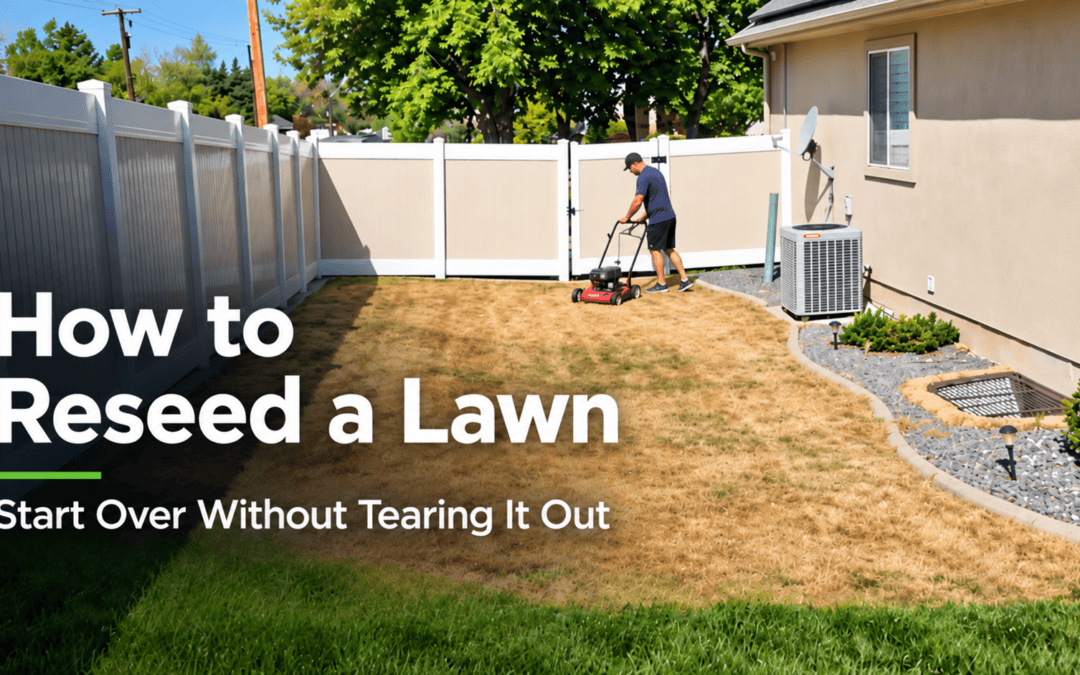
Is your lawn full of dead patches, mismatched grass varieties or grass you simply don’t like anymore?
You don’t necessarily need to tear everything out or bring in heavy equipment to start over. If you want a more uniform lawn or want to switch to a different grass type, you can kill the existing grass and reseed the lawn from scratch using the soil and lawn area you already have.
That’s exactly what I did with one section of my lawn.
I wanted to test Dark 30 perennial ryegrass and see how its dark green color compared to the Kentucky bluegrass growing in the rest of my yard. Instead of overseeding it into the existing lawn, I killed an entire section and started fresh.
Here’s the complete process I used to reseed my lawn in video format, otherwise keep reading below:
How To Reseed a Lawn in 6 Steps
The basic process is:
- Kill the existing grass.
- Wait until the lawn is completely dead.
- Scalp and scarify the area.
- Spread the new grass seed.
- Add a light top dressing.
- Keep the seed consistently moist until it germinates.
The process itself is pretty straightforward. The most important parts are getting good seed-to-soil contact and keeping your new grass seed moist.
Step 1: Kill the Existing Grass
If your goal is to completely start over rather than simply overseed an existing lawn, the first step is killing the grass that’s already there.
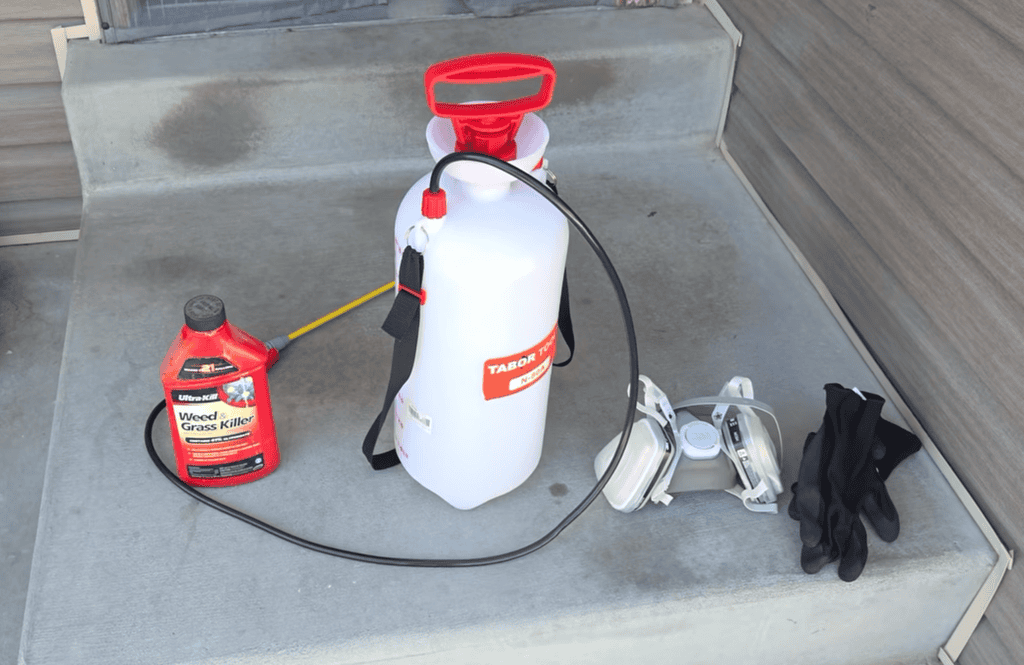
I used a non-selective herbicide because I wanted to kill both the existing grass and weeds in the section I was renovating.
Follow the directions on the herbicide label carefully, including all application and personal protective equipment requirements.
I mixed mine in a pump sprayer and applied it across the entire section I wanted to reseed. A backpack sprayer would work as well, especially if you’re renovating a larger area.
Be Careful About Herbicide Overspray
One thing I learned is that you need to be extremely careful about where you walk after spraying.
I wore rubber boots while applying the herbicide. Once those boots were wet, I made sure not to walk back across the healthy portion of my lawn.
Otherwise, you can end up leaving a trail of dead footprints everywhere you walk.
You’ll also want to pay attention to overspray around the edges of the area. I ended up getting a small amount onto the neighboring grass, but because I was already reseeding, it was something I could easily repair later.
Step 2: Wait Until the Existing Lawn Is Completely Dead
This isn’t necessarily a one-day lawn renovation.
After spraying my lawn, I waited about 12 days before moving on to the next part of the process. At that point, the existing grass was completely dead and ready to prepare for seed. The exact timing can vary, so pay attention to how the grass actually looks rather than rushing to the next step.
Once the lawn is dead, it’s time to create the best possible environment for your new grass seed.
Step 3: Scalp and Scarify the Lawn
Next, I lowered my mower as far as I could and scalped the dead grass.
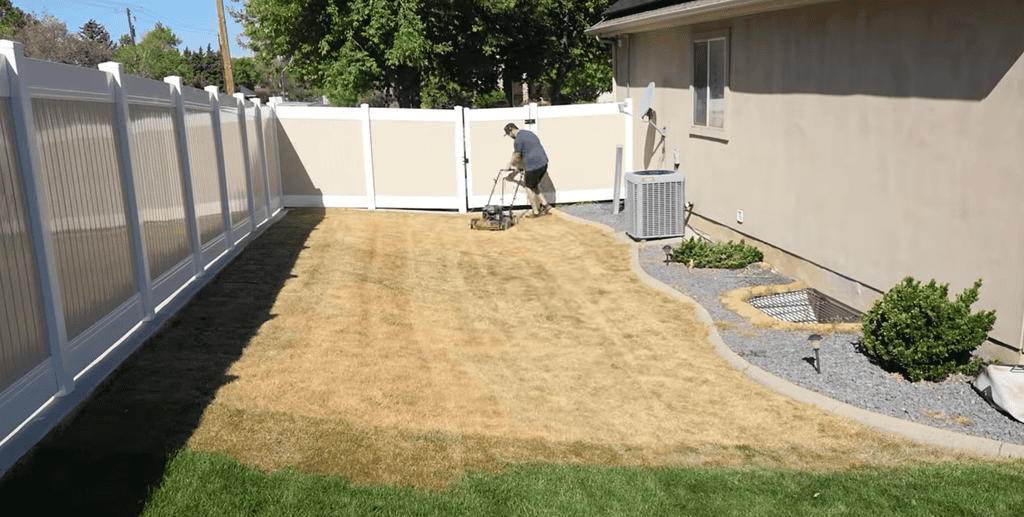
After mowing it low, I scarified the area.
Scarifying helps create small openings and seed pockets in the surface of the soil. That gives your grass seed somewhere to settle and helps improve seed-to-soil contact.
Good seed-to-soil contact is one of the most important parts of successfully reseeding a lawn.
You don’t want your grass seed simply sitting on top of a thick layer of dead grass where it has trouble reaching the soil.
Step 4: Spread Your New Grass Seed
For this lawn renovation, I used Dark 30 perennial ryegrass from Lawn Life. There were two reasons I wanted to try it.
First, it’s supposed to produce an extremely dark green lawn, and I wanted to compare it directly against my Kentucky bluegrass.
Second, perennial ryegrass germinates quickly. Under good conditions, you can start seeing germination in roughly 5–7 days, making it a great option when you want to establish a lawn relatively quickly.
Overseeding Rate vs. New Lawn Seeding Rate
Because I had killed the existing grass, I wasn’t treating this like a normal overseeding project.I was essentially planting a brand-new lawn.
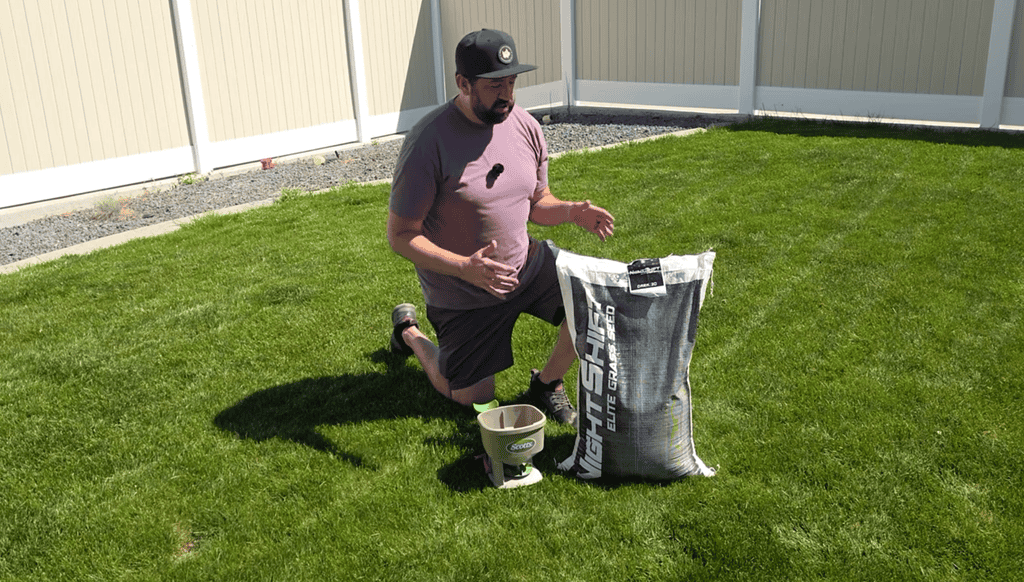
The Dark 30 new-lawn rate I used was:
7–10 pounds of grass seed per 1,000 square feet
Always check the recommended seeding rate for the particular grass seed you’re using.For my small side yard, I used a hand spreader because it gave me plenty of control.
I started around the perimeter and then spread seed in one direction followed by another pass in the opposite direction.That crosshatch approach made it easier to distribute the seed evenly throughout the lawn.
Don’t Forget the Edges
If your lawn has concrete curbing, mow strips or other borders, pay extra attention to those areas.I hand-seeded around the edges to make sure I had enough grass seed there to create consistent coverage.
Those little details can make a noticeable difference once the new lawn starts filling in.
Buy 👉 Nightshift Dark:30 Grass Seed – https://thelawnlife.com/products/dark-30-formerly-blackout-2-0-pre-sale?sca_ref=9570198.tnSsFSCU50O&sca_source=website
(If you make a purchase using the links in this description, we may earn a commission at no additional cost to you.)
Step 5: Add a Light Top Dressing
Once the grass seed was down, I added a top dressing.
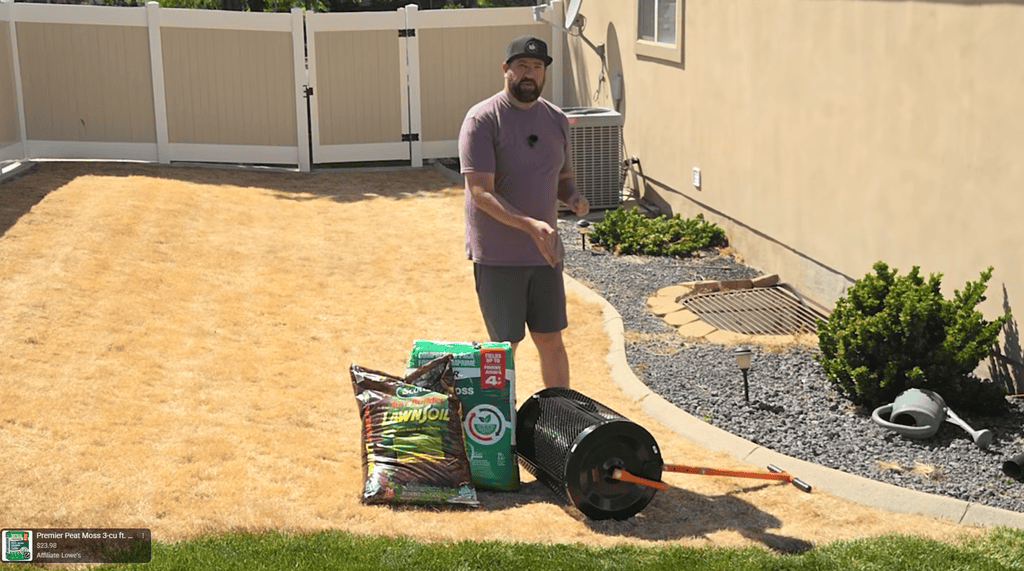
This is one of my favorite steps because it can significantly improve seed-to-soil contact and help create a better environment for germination. I used a peat moss spreader along with peat moss.
I also mixed in some turf-building overseeding soil that contained starter fertilizer, but that part is optional. If you don’t have a product like that available, peat moss by itself can work just fine.
The peat moss spreader does two things at once:
- It applies a thin, even layer over the seed.
- Rolling the spreader over the lawn helps push the grass seed toward the soil.
Buy 👉 Peat Moss Spreader – https://amzn.to/4guY3Il
(If you make a purchase using the links in this description, we may earn a commission at no additional cost to you.)
How Much Peat Moss Should You Use?
You don’t need a thick layer. I aimed for approximately ¼ inch of top dressing.
Too much material can smother the seed, so the goal is simply to apply a light layer over the lawn.I rolled the spreader in one direction and then the other until I had a thin, even coating across the area.
Buy 👉 Peat Moss – https://amzn.to/4gwtPUU
(If you make a purchase using the links in this description, we may earn a commission at no additional cost to you.)
Step 6: Keep the Grass Seed Moist
Once your seed and top dressing are down, watering becomes one of the most important parts of the entire process.
New grass seed needs consistent moisture to germinate successfully.
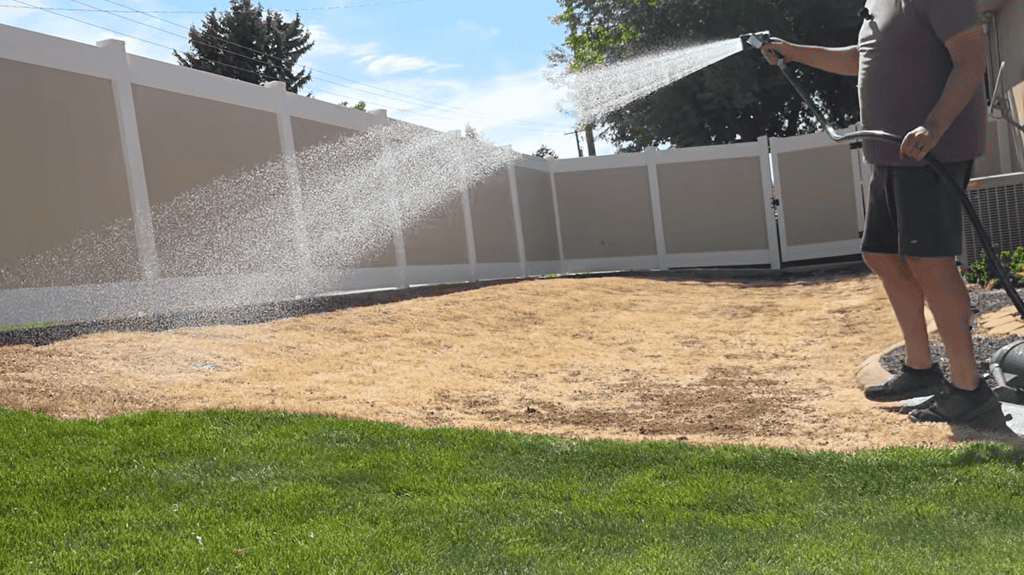
When I planted this lawn, daytime temperatures were reaching the 70s and 80s, so I used short watering cycles two or three times per day. The goal wasn’t to soak the lawn. I just wanted to keep the seed and top layer of soil consistently moist.
Short, frequent watering is much more useful during this stage than allowing the seedbed to completely dry out between long watering sessions.
Under good conditions, you may start seeing perennial ryegrass coming through within several days.
What New Grass Looks Like After the First Week
By day eight, I was finally starting to see green grass coming through. Some areas were easier to see than others.
Because I still had dead grass covering portions of the lawn, the new grass was actually growing through that material but wasn’t tall enough yet to be very noticeable.
The bare areas and heavily seeded edges made the new growth much easier to spot. Once those first blades started emerging, the lawn began growing much more quickly.
What My Reseeded Lawn Looked Like After 3½ Weeks
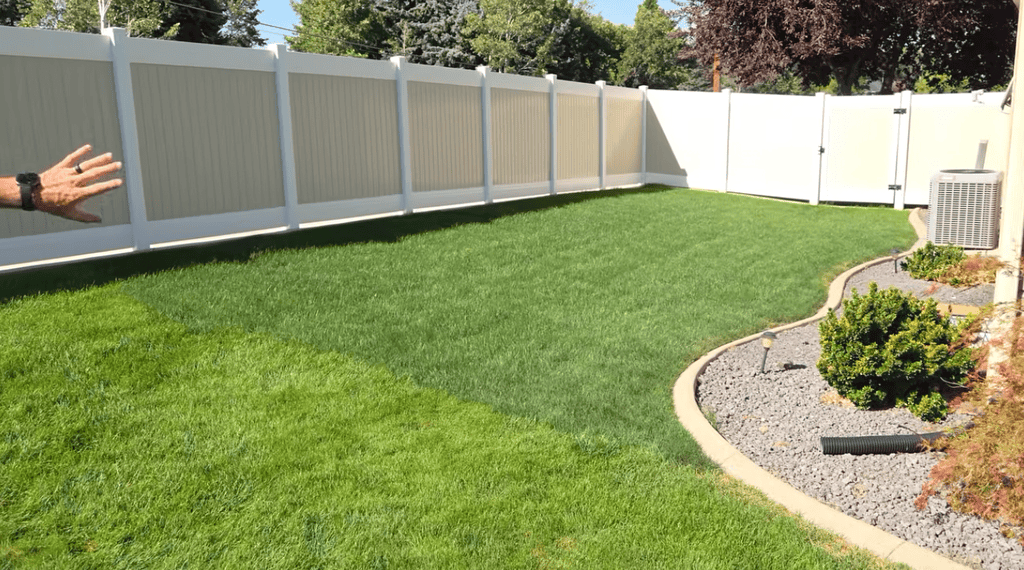
At around 3½ weeks, the lawn had filled in really well.
My results were a little slower than I normally expect from perennial ryegrass because nighttime temperatures were unusually cold during the first couple of weeks. Once the weather improved, growth accelerated significantly.
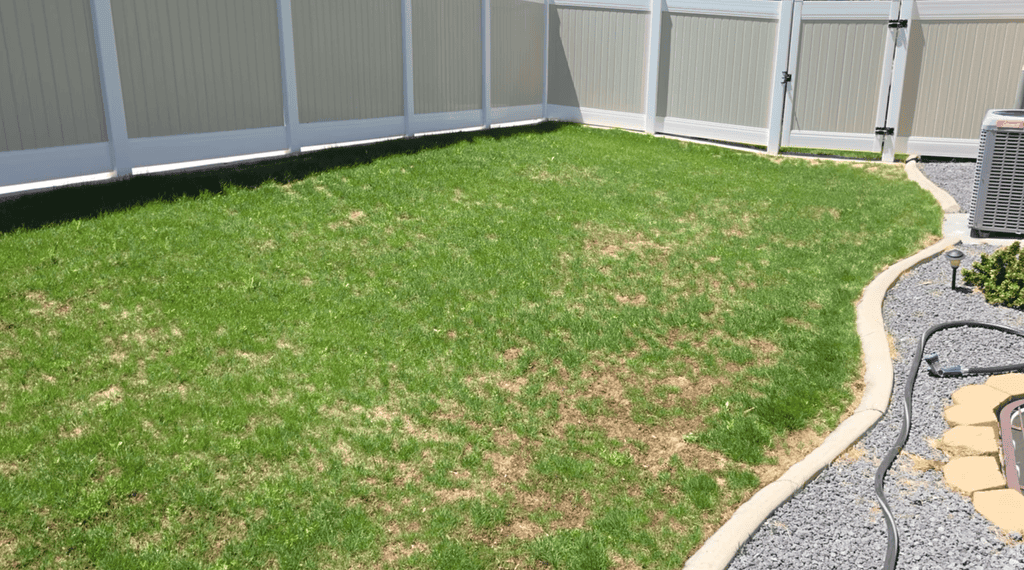
And the biggest thing I noticed?
The Dark 30 Was Really Dark
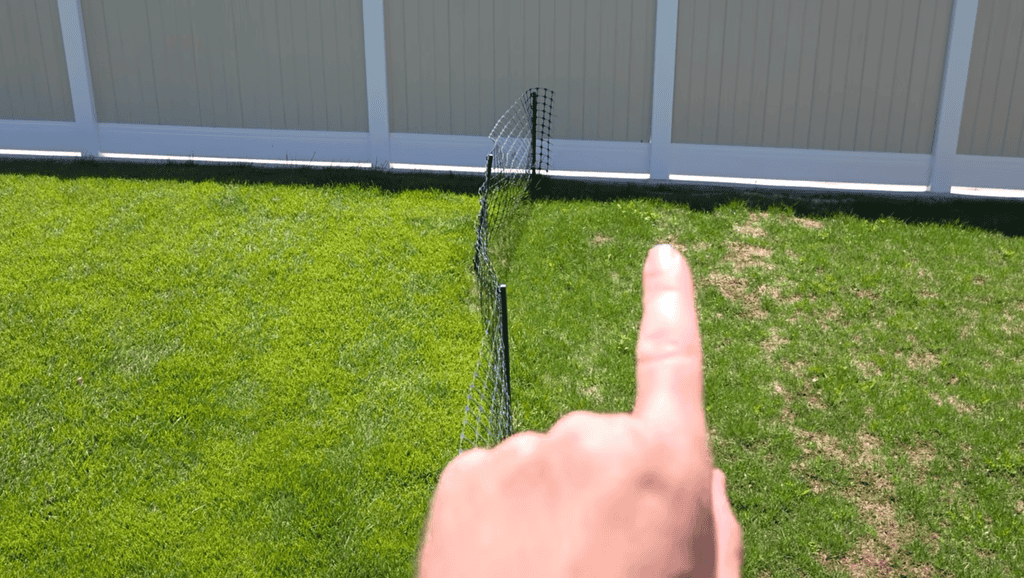
Even though the grass was only about a month old, the new Dark 30 perennial ryegrass was noticeably darker than the Kentucky bluegrass growing on the other side of my fence.
And because the grass was still young, I expected the color to continue developing as the lawn matured.
If your goal is a really dark green lawn, that was one of the most impressive parts of this test.
How To Fix Thin Spots After Reseeding
Even when you do everything correctly, you may end up with a few thin spots. That’s normal.
I had several small areas that didn’t fill in as thickly as the rest of the lawn.
Fortunately, the fix is simple:
- Add additional grass seed to the thin area.
- Cover it with a small amount of peat moss.
- Keep the area consistently moist.
- Give the new seed time to germinate and fill in.
You don’t have to redo the entire lawn just because you have a couple of thin patches.
What About Weeds in a Newly Seeded Lawn?
You may also see broadleaf weeds appear while your new lawn is establishing.I had some show up in mine as well.
That doesn’t mean the reseeding project failed. Weeds can appear when you’re establishing a new lawn, and they can be dealt with separately once the new grass is ready for the appropriate weed-control approach.
The important thing during those first few weeks is getting the new grass established.
How Long Does It Take To Reseed a Lawn?
The timeline will depend heavily on your grass type and weather conditions.
In my project:
- I waited about 12 days after applying the herbicide before preparing the lawn.
- The Dark 30 perennial ryegrass was expected to germinate in roughly 5–7 days under favorable conditions.
- I started seeing noticeable growth around day eight.
- The lawn had filled in significantly by about 3½ weeks.
Cold nighttime temperatures slowed my germination and early growth, so don’t panic if your lawn doesn’t follow an exact schedule. Weather matters.
Is It Better To Overseed or Completely Reseed a Lawn?
That depends on what you’re trying to accomplish. If you like your existing grass and simply want to make the lawn thicker, overseeding may be all you need.
But completely reseeding can make sense when you:
- Want to switch to another type of grass.
- Have several different grass cultivars and want a more uniform appearance.
- Have a badly damaged lawn.
- Want to test or establish a specific grass variety.
- Simply want to start over without physically removing the entire lawn.
In my case, I wanted a clean test of Dark 30 perennial ryegrass against my existing Kentucky bluegrass, so starting over with one section made the most sense.
Final Thoughts on Reseeding a Lawn
Starting over with your lawn can look intimidating, but the actual process is much simpler than you might think.
Kill the existing grass, scalp it down, scarify the soil, put down plenty of seed, add a light top dressing and—most importantly—keep everything consistently moist while the new grass germinates.
The biggest keys are good seed-to-soil contact and consistent watering.
A few weeks later, you can go from a dead section of lawn to brand-new grass.
And in my case, the Dark 30 perennial ryegrass gave me exactly what I wanted to see: a thick lawn with an impressively dark green color.
If you’re dealing with weeds after your new grass comes in, check out our guide on how to kill broadleaf weeds without killing your lawn next.
Want more help getting your lawn thicker, greener, and healthier throughout the year? Join the Tips for Turf community for seasonal lawn care guides, equipment and product recommendations, and help from Greg, Matt, and other lawn enthusiasts.
FAQ: How To Reseed a Lawn
Not necessarily. I scalped the dead lawn and scarified it to create seed pockets and improve seed-to-soil contact. Some dead grass remained, and the new grass grew through it.
I used a light top dressing of approximately ¼ inch. You don’t want to bury the seed beneath a heavy layer of material.
During my project, I used short watering cycles about two or three times per day to keep the surface consistently moist. Your watering frequency can vary based on temperature and how quickly the area dries.
The perennial ryegrass I planted was expected to germinate in approximately 5–7 days under good conditions. My lawn began showing obvious growth around day eight because colder temperatures slowed the process.
Yes. In this project, I killed the existing grass, scalped it low, scarified the area and planted directly into the prepared lawn rather than removing all of the old sod.