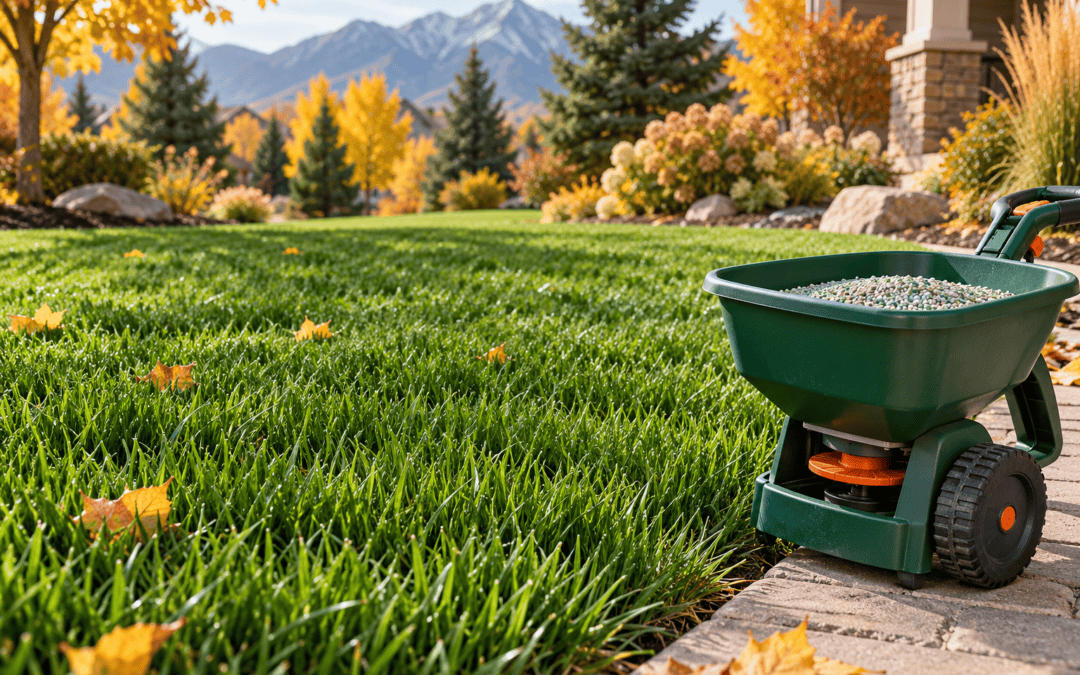
You put in the work to overseed your lawn. The seed is coming in, the weather is cooling down, and now you want that thin, tired grass to fill out.
That's where a fall nitrogen blitz comes in. I use this approach to feed my actively growing cool-season lawn in smaller, repeated applications rather than putting down one large dose of fertilizer.
In the video, I demonstrate it on lawns in two very different conditions: a backyard that needs some help and a healthy, dark-green plot. Those lawns don't need the same feeding schedule. Getting good results means paying attention to what your grass needs, how much nitrogen you've already applied, and how your lawn responds.
Here's how the process works, including the fertilizer math you need before loading your spreader.
For a full walkthrough on how to do a fall nitrogen blitz after overseeding, watch this!
What Is a Fall Nitrogen Blitz?
A fall nitrogen blitz is a lawn-care term for repeated applications of readily available nitrogen during the fall growing season. You'll also hear it called spoon-feeding nitrogen.
The goal is to support color, growth, and recovery while cool-season grass is actively growing. This article focuses on the perennial ryegrass lawn shown in my video; a fall feeding plan for that lawn shouldn't automatically become a plan for dormant warm-season grass.
In my demonstration, I discuss applications of 0.5 pound of actual nitrogen per 1,000 square feet, spaced one or two weeks apart depending on lawn condition. That's an intensive approach, not a default schedule every homeowner needs to follow.
Before copying it, check your fertilizer label and regional extension recommendations. Set a seasonal nitrogen budget that includes any starter fertilizer or other lawn food you've already used.
Why I Feed My Cool-Season Lawn in Fall
After summer, parts of my lawn can look rough. When the grass is actively growing again, I want to give it the nutrition it needs to recover and fill in.
Overseeding adds another reason to pay attention. You've invested in new seed, and you want to support that new growth without pushing the existing grass so hard that it overwhelms the seedlings.
My goal is a thicker, greener lawn heading toward winter, with a good foundation for the following spring. Fertilizer is one part of that process. Watering, mowing, sunlight, and soil conditions still matter.
A struggling lawn also doesn't automatically need more nitrogen. If one area stays thin despite good care, investigate problems such as shade, drainage, or disease before increasing fertilizer.
When to Start a Nitrogen Blitz After Overseeding
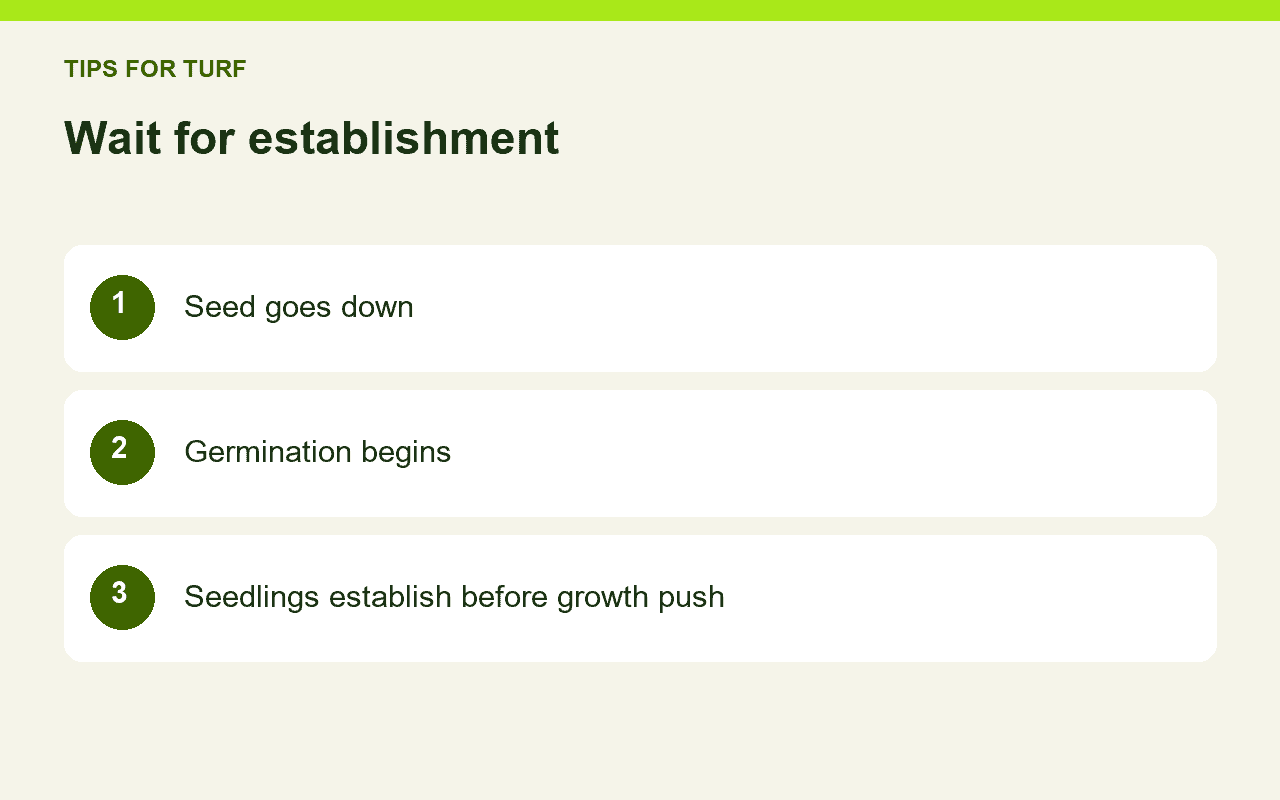
Don't use the seeding date alone to decide when to fertilize again. Look at how the new grass is developing and what fertilizer you've already applied.
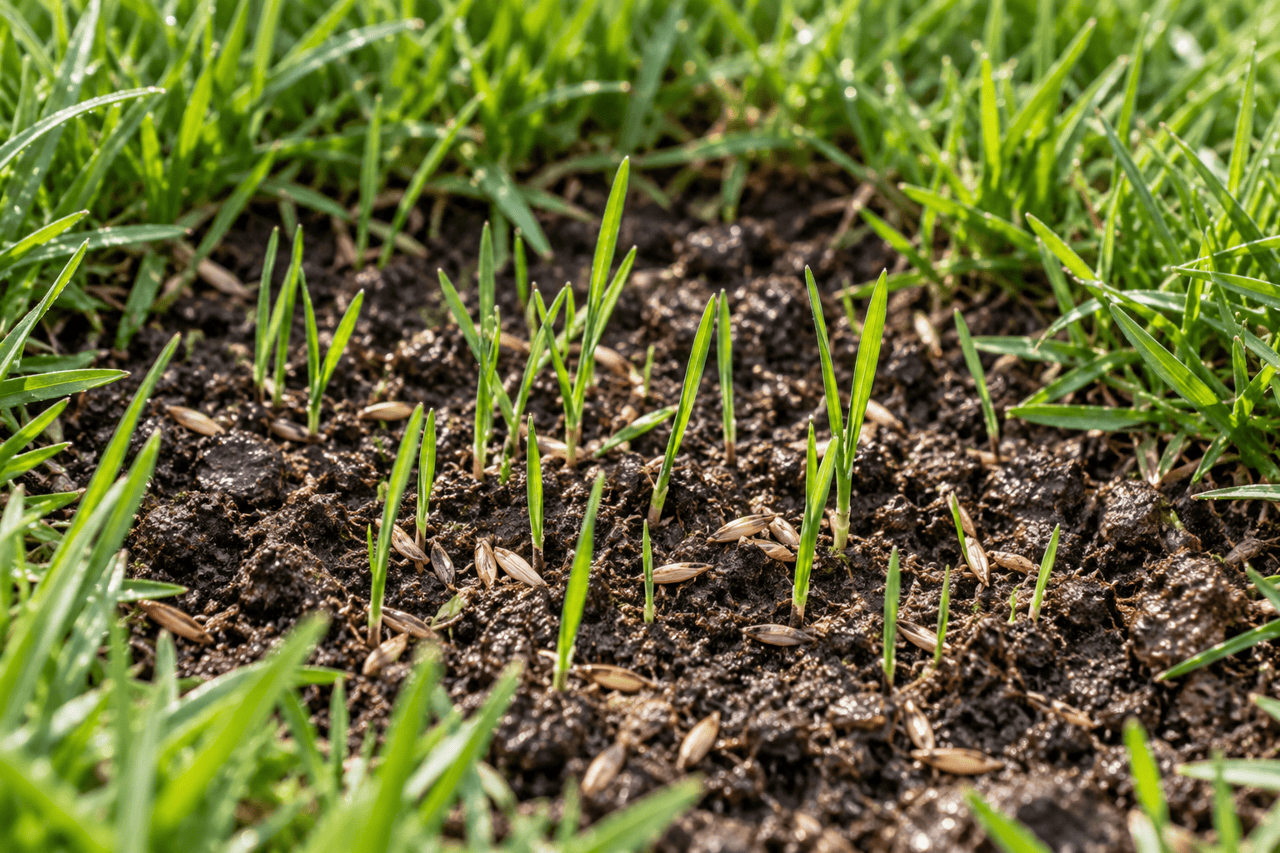
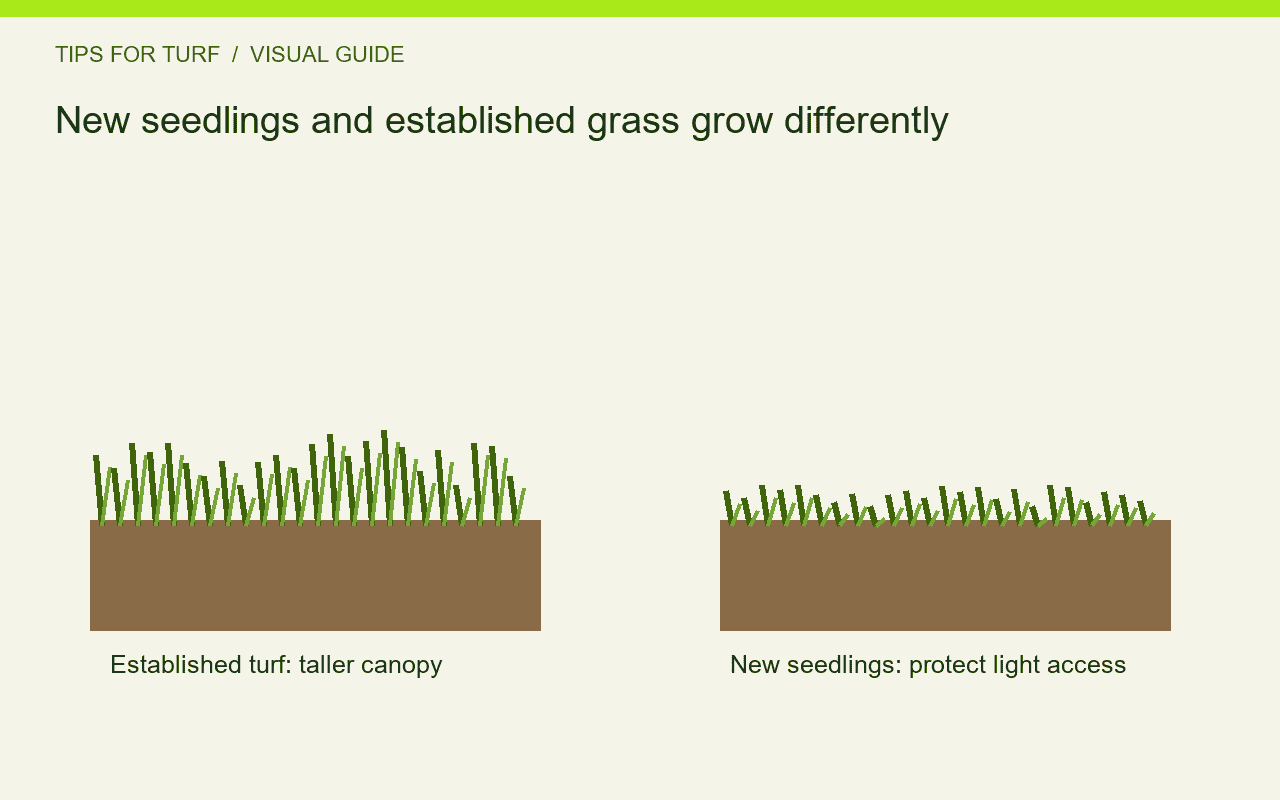
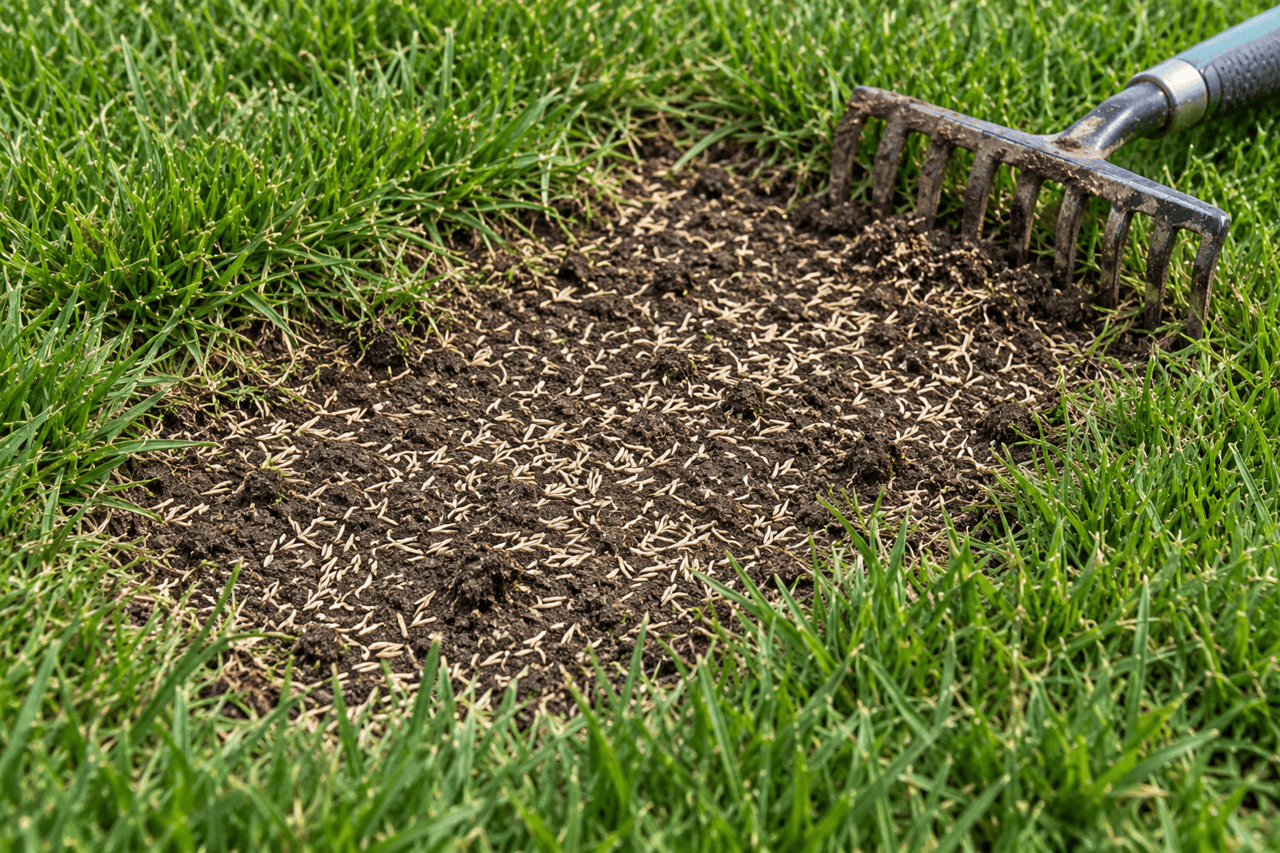
In my video, I was about two weeks past overseeding with perennial ryegrass. It had germinated and was growing, so I was ready to begin feeding that particular lawn. Newly emerged grass is still establishing, though; two weeks doesn't make every seeded lawn mature.
A slower-germinating grass, such as Kentucky bluegrass, can be on a very different timeline. If you're still waiting for seedlings, pushing rapid growth in the existing lawn can make it harder for them to compete.
For comparison, Penn State Extension's lawn-establishment guidance describes a follow-up application of 0.5 pound of nitrogen per 1,000 square feet four to eight weeks after starter fertilizer. That's a useful reminder to account for the first feeding rather than automatically adding another dose two weeks after seeding.
Choosing Fertilizer for a Fall Nitrogen Blitz
I like ammonium sulfate for this project. It's the nitrogen source I discuss in the video, and I've liked the color response in my lawn.
I also prefer a product with small granules, or prills. The fine texture makes it easier for me to distribute the fertilizer across the lawn. Larger granules can still work, but even coverage depends on the spreader, its settings, and your walking pattern too.
Read the analysis on the bag before calculating an application. A product labeled 21-0-0 contains 21% nitrogen by weight. A 20-0-0 product contains 20%. That small difference changes how much product you need.[2]
Choose a fertilizer appropriate for your soil and lawn rather than assuming one nitrogen source is always best. Penn State notes that ammonium sulfate has an acidifying effect, which makes soil pH worth considering when using it repeatedly.[3]
How Much Fertilizer Do You Need?
The most important distinction is actual nitrogen versus total fertilizer weight.
Applying 0.5 pound of nitrogen does not mean spreading 0.5 pound of fertilizer. Use this calculation:
Pounds of fertilizer needed = target pounds of nitrogen ÷ nitrogen percentage as a decimal.
For example, with a 21-0-0 fertilizer:
0.5 ÷ 0.21 = approximately 2.38 pounds of product per 1,000 square feet.
For a 2,000-square-foot lawn, that becomes approximately 4.76 pounds of product. With 20-0-0 fertilizer, the same nitrogen target would require 2.5 pounds per 1,000 square feet, or 5 pounds for that lawn.
In the video, I round the amount to about 5 pounds for my backyard. When you do this at home, weigh the product and use the percentage on your own bag. Filling a spreader to the top doesn't reliably measure fertilizer weight.
How Often Should You Apply Nitrogen in Fall?
My healthier plot doesn't need the same push as my rougher backyard. In the video, I describe feeding the healthy area less frequently and backing off applications as the struggling area improves.
Still, lawn appearance is only part of the decision. Add up the nitrogen before deciding on another application.
At 0.5 pound of nitrogen per 1,000 square feet, four applications supply 2 pounds. Eight applications supply 4 pounds. That's before counting starter fertilizer or anything applied earlier in the year.
Those totals show why a weekly schedule can become excessive. The right amount depends on grass species, maintenance level, growing conditions, and regional guidance. Plan the total first, then decide whether splitting it into smaller applications makes sense.
How to Apply the Fertilizer Evenly
For my small backyard, a hand spreader is convenient. A larger lawn may be easier to cover with a broadcast spreader. Either way, measure the area and weigh the fertilizer first.
Follow this basic process:
- Check the label for application rates, intervals, and watering directions.
- Calibrate the spreader for the product you're using.
- Walk at a steady pace and avoid concentrating fertilizer in overlapping passes.
- Sweep granules off sidewalks and driveways back onto the lawn.
- Water the fertilizer in as directed on the label.
We would recommend watering fertilizer in to help reduce burn risk and keeping fertilizer off hard surfaces where it can wash into waterways.
Afterward, watch the lawn's response before deciding it needs more.
Be Ready to Mow More Often
This is the part I emphasize at the end of the video: be ready to mow.
If feeding increases growth, your usual weekly mow may no longer be enough. In my lawn, that can mean moving to twice a week during a strong growth period.
Keep up with the grass rather than waiting until it's overgrown and cutting it back heavily. If growth is becoming difficult to manage, reassess the feeding schedule instead of continuing automatically.
As fall progresses, taper or stop the repeated feeding program when active growth slows. Follow regional timing guidance and any local fertilizer restrictions, which may require stopping earlier. Don't keep applying just to finish the bag.
Build on Your Fall Overseeding Work
A fall nitrogen blitz can be a useful tool when your cool-season lawn needs feeding and conditions support growth. The key is measuring the product, tracking total nitrogen, and adjusting as the lawn responds.
You don't have to use the most aggressive schedule to get a lawn you're proud of. Give new seedlings time to establish, stay consistent with mowing and watering, and feed within a plan that fits your yard.
Want help working through your own fall lawn-care plan? Join the Tips for Turf community on Skool to connect with other lawn enthusiasts and ask Matt and me questions about your lawn.
Products and tools from our walkthrough
(If you make a purchase using the links in this post, we may earn a commission.)
Get help with your next lawn project
For lawn care guides, seasonal advice, product recommendations, and feedback from Matt, Greg, and other lawn enthusiasts, join the Tips for Turf community. We can compare notes on your grass, your conditions, and the next practical step.
Frequently asked questions
Do we fertilize immediately after overseeding?
We separate a label-directed starter program from an intensive nitrogen push. For the fall blitz, we wait for the new grass to establish so the older turf does not crowd it out.
Is two weeks always long enough?
No. My perennial ryegrass was growing quickly, while Kentucky bluegrass can take much longer to germinate. We look at germination and establishment before deciding.
Is half a pound of nitrogen the same as half a pound of fertilizer?
No. We calculate actual nitrogen from the bag analysis. Dark Matter’s current formulation is 21-0-0, so the old 18-0-0 conversion and feeding schedule should not be copied onto the new bag.
Do we keep feeding after growth stops?
No. We end this fall growth program when the grass stops actively growing, and consider weather, existing fertilizer inputs, and product limits before every treatment.