
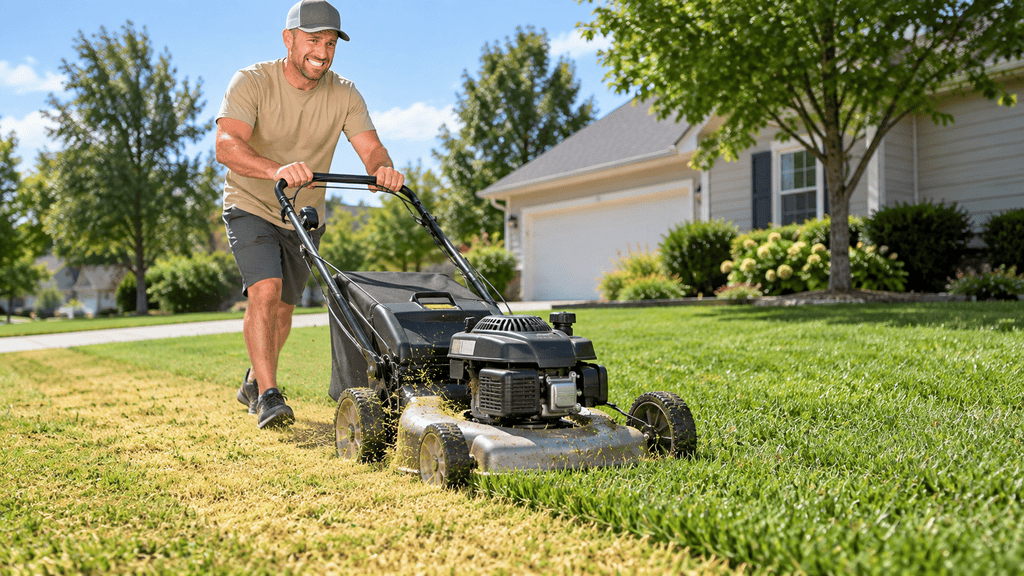
If you’ve heard someone talk about “scalping” a lawn, the name can make the process sound a little extreme. And, visually, it can be. Scalping means cutting your grass much shorter than you normally would, getting as close to the soil level as your grass type and mower safely allow.
It isn’t something you necessarily want to do during every normal mow. Instead, scalping can be useful when you’re preparing your lawn for projects such as overseeding, dethatching, scarifying or leveling. Cutting the existing grass shorter can give you better access to the soil and make it easier to complete the next step in your lawn renovation.
Here’s how to scalp your lawn, why you might want to do it and how to avoid cutting your grass too low.
What Does It Mean To Scalp Your Lawn?
Scalping your lawn simply means lowering your mower deck and cutting the grass much shorter than your normal mowing height. The goal is to remove more of the existing grass growth and some of the dead material that has accumulated while exposing more of the area near the soil surface.
That extra access can be especially useful when you’re about to complete another lawn project. Rather than trying to work through tall grass, you’re creating a shorter, cleaner surface that makes it easier to reach the thatch or soil underneath.
Scalping can make your yard look rough immediately afterward. You may see yellow or stressed-looking areas because you’ve removed so much of the green grass blade. That appearance is normal when you mow extremely low as part of this type of lawn preparation.
Why Would You Scalp a Lawn?
There are several situations where cutting your lawn very short can make the next project easier. In particular, scalping can help before dethatching or scarifying, overseeding and lawn leveling.
Scalping Before Dethatching or Scarifying
Thatch is the dead organic material that can collect near the soil surface. When that layer becomes too thick, it can interfere with air, water and nutrients reaching the soil.
Dethatching and scarifying are designed to pull out some of this material. Scalping beforehand reduces the amount of grass standing above that layer, making it easier to get down closer to where the thatch has accumulated.
If you’re planning a more aggressive lawn renovation, cutting the lawn shorter first can also make it easier to see and work with the surface underneath the existing grass.
Scalping Before Overseeding
One of the most useful times to scalp a lawn is before overseeding.
When you overseed, you’re introducing new grass seed to help thicken the lawn and repair thin or bare areas. For that seed to germinate properly, you want it to reach the soil rather than getting caught on top of long grass.
Leaving your existing lawn too tall can also cause the established grass to crowd the new seedlings and block some of the sunlight and nutrients they need. Cutting the lawn shorter beforehand helps give the new seed better access to the soil and reduces competition from the existing grass.
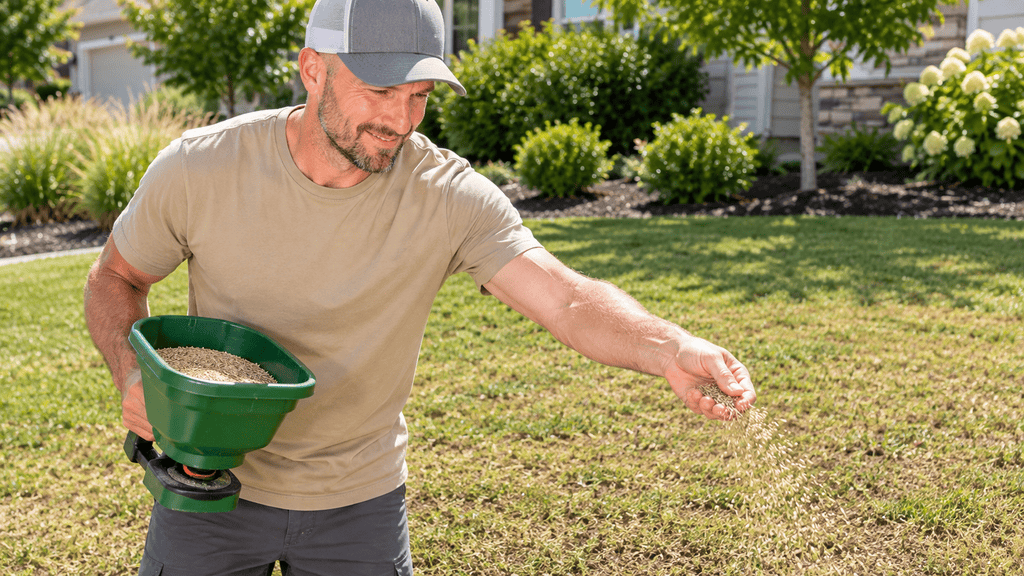
That makes scalping a useful preparation step when overseeding is part of a larger lawn renovation.
Scalping Before Leveling a Lawn
Scalping can also help before leveling your lawn with materials such as sand, screened topsoil or compost.
During leveling, you need to spread the material across the surface of the yard. If the grass is too long, the blades can bend over as you move material across them. Once covered, those blades may become buried.
Keeping the grass short helps it remain more upright while you spread the leveling material. That gives the existing grass a better opportunity to grow back through the material instead of becoming buried underneath it.
How Low Should You Scalp Your Lawn?
How low you should mow depends heavily on the type of grass you have.
The video distinguishes between warm-season and cool-season grasses because they grow differently. Warm-season grasses can generally tolerate a shorter scalping height, while cool-season grasses require more caution because of the location of the crown.
Warm-Season Grass
For warm-season grasses, the video recommends roughly ½ inch to 1 inch when scalping.
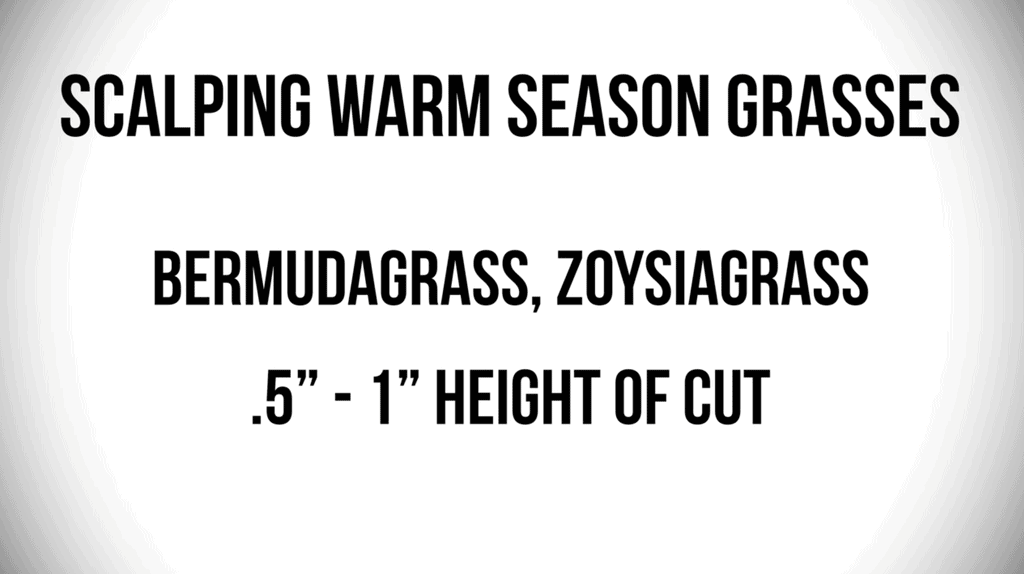
These grasses grow differently than cool-season turf and can generally handle a much shorter cut when you’re preparing for a renovation project.
Cool-Season Grass
For cool-season grass, the suggested range is higher, at approximately 1 to 2 inches.
The important concern is the crown of the plant. If you cut below the crown, you can permanently damage the grass. For that reason, don’t assume that “scalping” always means lowering your mower as far as it can physically go. Your grass type still matters.
How To Scalp Your Lawn Step by Step
Scalping itself is fairly simple, but taking your time can make the job much easier.
1. Check the Lawn for Obstacles
Before lowering your mower, look around the yard for anything you normally mow over at a higher cutting height.
For example, pop-up drains may sit low enough that you can pass over them during a normal mow but high enough to get hit once the mower deck is lowered. Marking obstacles with a flag can help you remember where they are and avoid damaging them while scalping.
This is especially important because the mower will be operating much closer to the ground than usual.
2. Don’t Remove All the Height in One Pass
If your grass is currently fairly long, avoid immediately dropping the mower to the final scalping height.
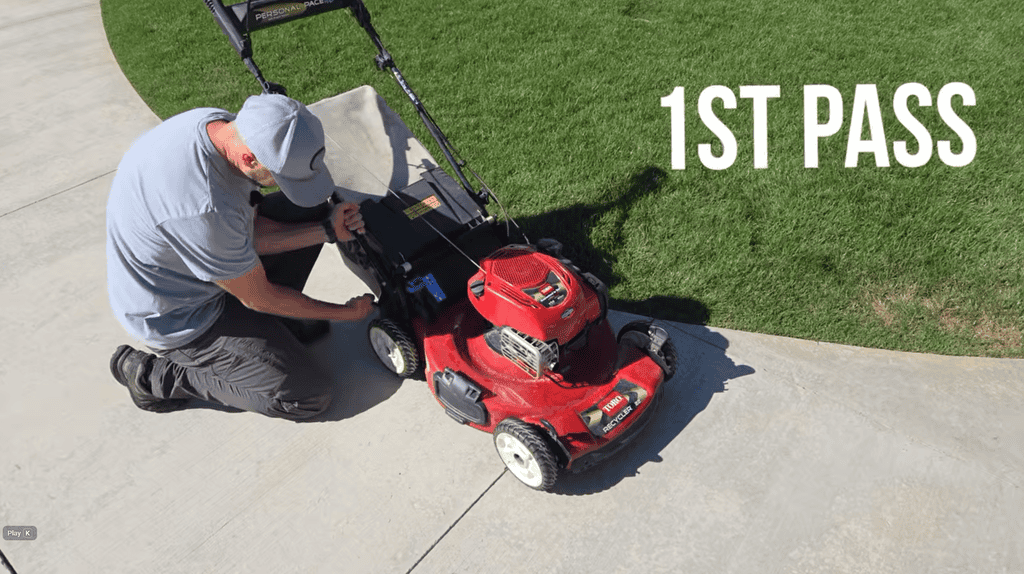
Instead, make an initial pass at a lower setting, then lower the mower again for a second pass. This gives you a more gradual transition instead of trying to remove a large amount of grass at once.
For the lawn shown in the video, the first cut removes some of the height before the mower deck is lowered again for the final pass.
3. Lower the Mower for the Final Pass
After completing the first mow, lower the mower to the appropriate height for your grass type and make another pass.
The goal is to get the existing grass short enough for the project you’re preparing to complete while still staying within an appropriate range for your turf.
4. Slow Down if the Mower Starts Clogging
Scalping removes a lot more material than a normal mow, so don’t be surprised if your mower has a harder time moving all of those clippings.
In the video, the mower chute begins clogging even though the bag itself isn’t full. When you’re cutting that low and removing that much material, you may need to stop periodically, clear the chute and work more slowly.
Trying to rush the job can make the mowing process harder than it needs to be.
What Does a Lawn Look Like After Scalping?
Don’t expect a freshly scalped lawn to look like a perfectly manicured green carpet.
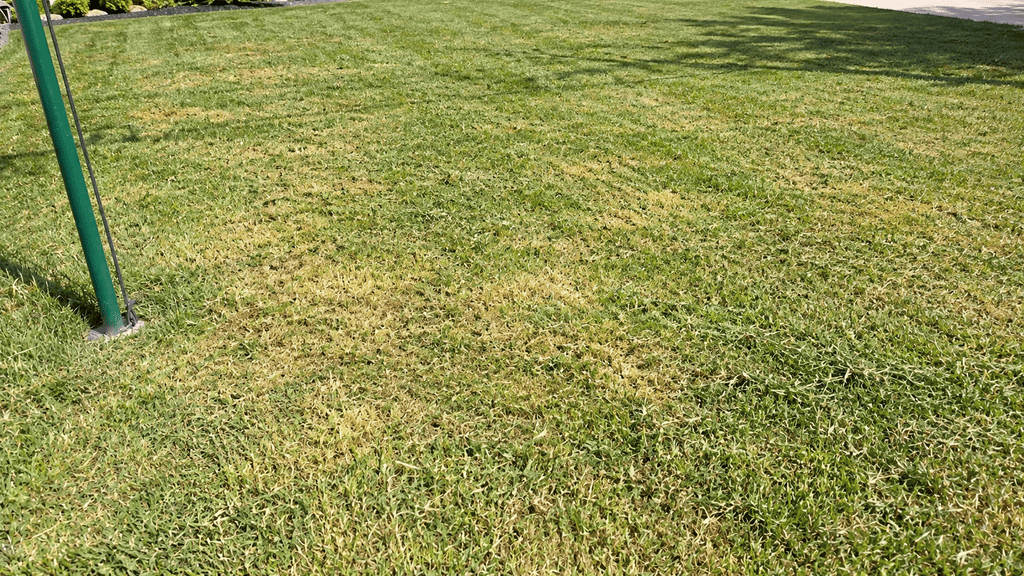
Immediately after scalping, the lawn can look stressed, uneven or yellow in places. You’ve removed a significant portion of the green leaf tissue, so the appearance can be a little shocking if you haven’t scalped a lawn before.
In the video, the finished lawn has several yellow areas after the second pass. That’s part of what can happen when you mow extremely low as preparation for a project such as overseeding, leveling or dethatching.
The important thing is understanding why you’re scalping in the first place. The goal isn’t necessarily to make the lawn look better immediately. It’s to prepare the lawn for the work that comes next.
Can Scalping Damage Your Lawn?
It can if you cut too low for your grass type.
This is particularly important with cool-season grasses. Cutting below the crown can permanently damage the plant, which is why the video recommends keeping cool-season grass higher than many warm-season varieties.
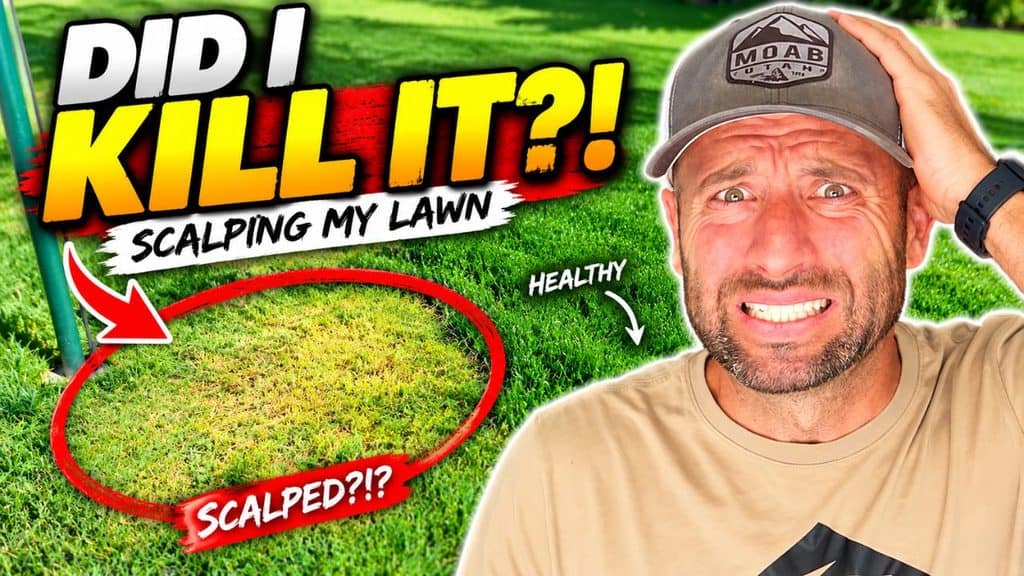
There’s also a difference between temporary stress and permanent damage. Seeing yellow areas after scalping doesn’t automatically mean you killed the lawn. Removing a large portion of the green blade will naturally make the yard look more stressed immediately after mowing.
Knowing your grass type and choosing an appropriate cutting height are two of the most important parts of the process.
Final Thoughts on How To Scalp Your Lawn
Learning how to scalp your lawn comes down to knowing why you’re doing it, understanding your grass type and cutting the lawn down gradually.
If the grass is long, start with one lower mowing pass rather than trying to take everything off at once. Check the yard for obstacles before lowering the mower, then make your final pass at a height that’s appropriate for your turf. Be prepared to slow down because the amount of grass being removed can clog the mower more easily than a normal cut.
Once you’re finished, don’t panic if the yard looks yellow or stressed. Scalping can look aggressive because it is an aggressive cut. When it’s being used to prepare for overseeding, leveling, dethatching or scarifying, the real payoff comes from having better access to the lawn surface for the project that follows.
If you’re scalping because you’re getting ready to overseed, your next step is preparing the lawn for new seed so you can start filling in thin and bare areas.
If you’re looking for the EXACT way we get our grass so green, thick and healthy all season then come and join our Tips for Turf Skool Community! In it you’ll find seasonal guides, equipment and product recommendations and troubleshooting help from Matt, Greg and other lawn enthusiasts like yourself. Click the link to join!