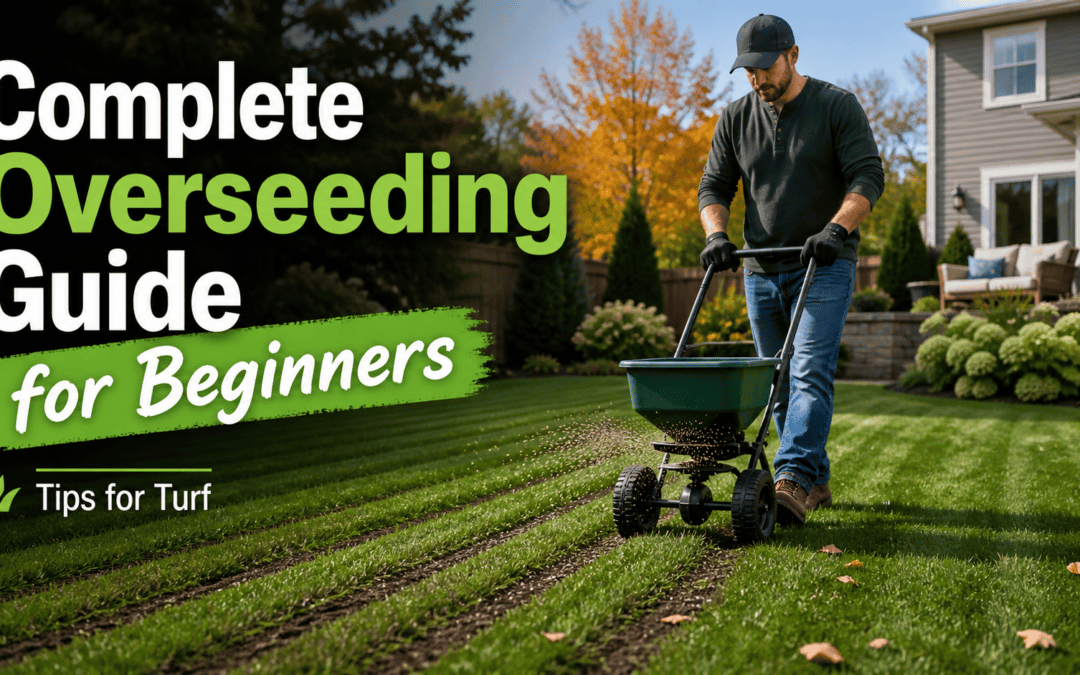
Overseeding your grass is one of the best ways to fill in thin spots, improve your lawn’s color, and help your yard grow thicker over time. If your grass looks patchy, stressed, or worn out, adding new grass seed can help bring it back without starting from scratch.
In this overseeding for beginners guide, we’ll walk through the full process step by step, including how to prep the lawn, how much seed to put down, whether top dressing is worth it, and how often to water after overseeding.
For this project, we overseeded a Kentucky bluegrass lawn in Utah with turf-type tall fescue. Since Utah is dealing with drought conditions, turf-type tall fescue is a great grass seed choice because it’s known for being more drought-resistant and can help reduce water needs over time.
What Is Overseeding?
Overseeding is the process of spreading new grass seed over an existing lawn. Instead of tearing everything out and starting over, overseeding lets new grass grow into the thin areas of your yard.
Homeowners usually overseed their lawn to:
- Fill in bare or thin spots
- Improve lawn thickness (and crowd out weeds)
- Add a more drought-tolerant grass type
- Improve grass color
- Help the lawn recover from heat, drought, pets, foot traffic, or disease
The key to a successful overseed is seed-to-soil contact. Grass seed needs to touch the soil so it can germinate and grow strong roots. That’s why lawn prep matters so much.
Tools You’ll Need When Overseeding For Beginners
Here is a list of the basic tools you’ll need when overseeding your lawn:
- Nightshift Turf Type Tall Fescue 👉https://thelawnlife.com/products/nightshift-blackout-turf-type-tall-fescue?sca_ref=9570198.tnSsFSCU50O&sca_source=YouTube
- Scotts Hand Spreader 👉https://amzn.to/3OgA3i5
- Sun Joe Dethatcher/Scarifier 👉 https://amzn.to/4vDVMkE
- Peat Moss 👉 https://amzn.to/4cy7AvZ
- Peat Moss Spreader 👉https://amzn.to/4mHnPf2
(If you make a purchase using the links in this post, we may earn a commission.)
Step 1: Scalp the Lawn
The first step when overseeding for beginners is to mow the lawn as low as possible.
Scalping the lawn helps remove extra grass blades and dead material before the new seed goes down. The shorter the existing grass is, the easier it is for new seed to reach the soil.
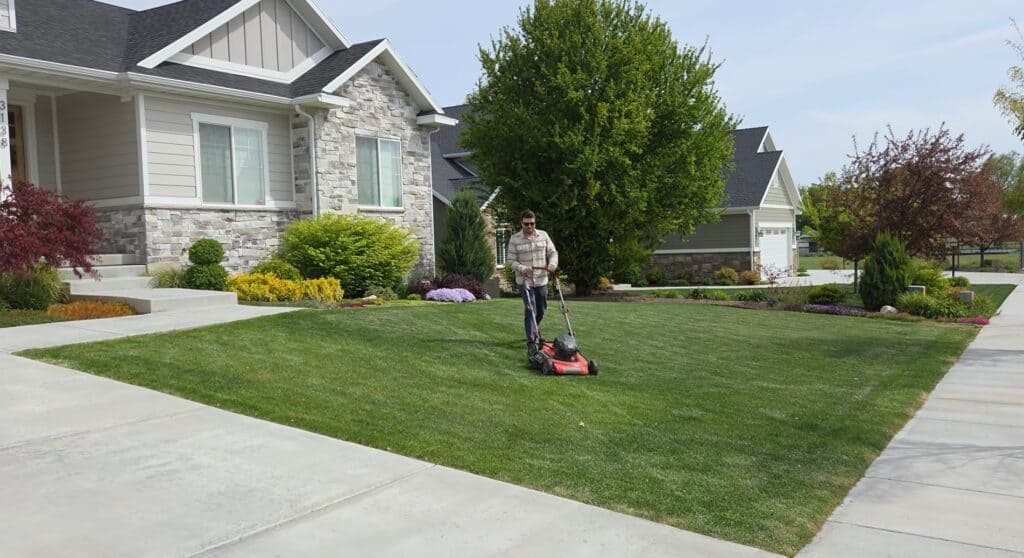
This also makes the next step, scarifying, much more effective.
When scalping your lawn, bag the clippings if possible. Removing the extra grass keeps it from sitting on top of the soil and blocking new seed.
Step 2: Scarify the Lawn
Scarifying is one of the most important steps in the overseeding process.
A scarifier removes dead thatch from the lawn and scratches up the soil surface. This helps the lawn breathe and opens up small pockets where grass seed can settle.
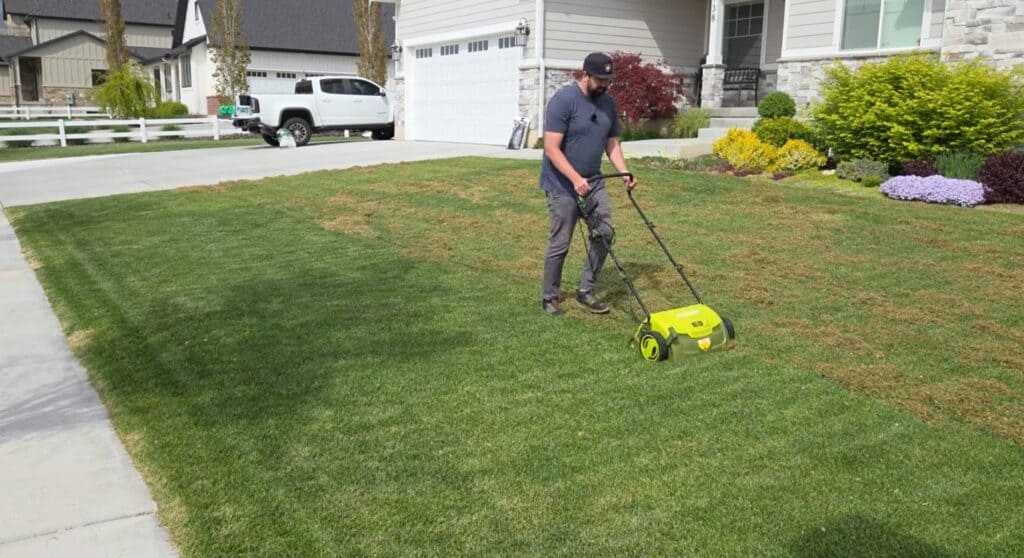
That seed-to-soil contact is what helps the seed germinate faster and grow more evenly.
For best results when scarifying your lawn, make one pass on your lawn with the scarifier in one direction. Then rake up all the dead thatch and debris that comes loose. After that, make a second pass going perpendicular to the first pass.
That second pass helps loosen more dead material and creates even better openings in the soil for the seed.
Step 3: Rake or Mow Up the Thatch
After scarifying, the lawn will probably look rough. That’s normal.
You’ll likely pull up a surprising amount of dead grass, thatch, and debris. Rake all of that material off the lawn before spreading seed.
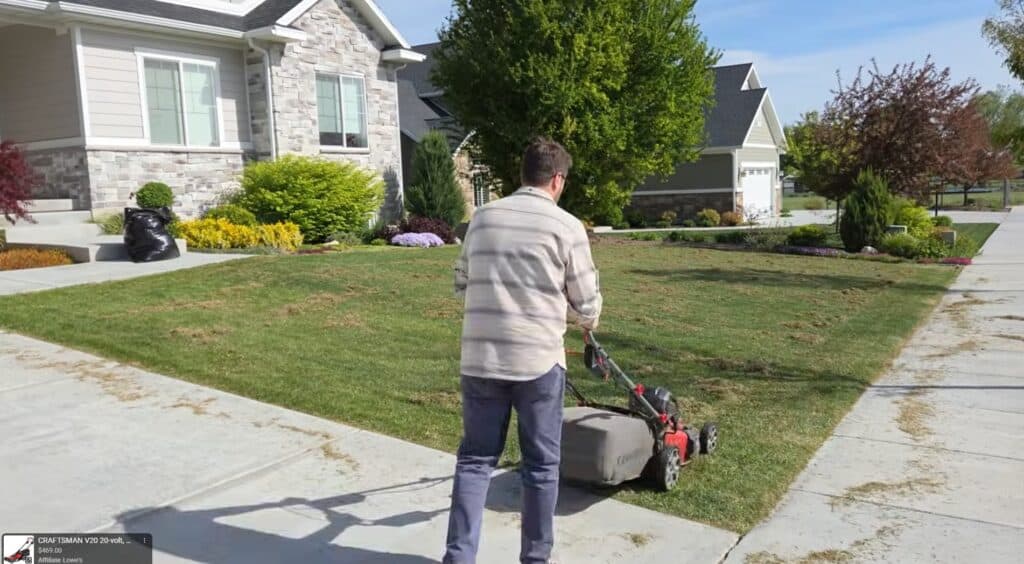
Leaving too much debris on your lawn can block seed from reaching the soil. A clean soil surface gives the seed a much better chance of growing.
Step 4: Spread the Grass Seed
Once the lawn is scalped, scarified, and cleaned up, it’s time to overseed.
For this lawn, we used Night Shift turf-type tall fescue from Lawn Life. Turf-type tall fescue is a great option for homeowners who want a darker, thicker lawn with better drought tolerance.
For overseeding, a good seed rate is usually about 4 to 6 pounds of seed per 1,000 square feet.
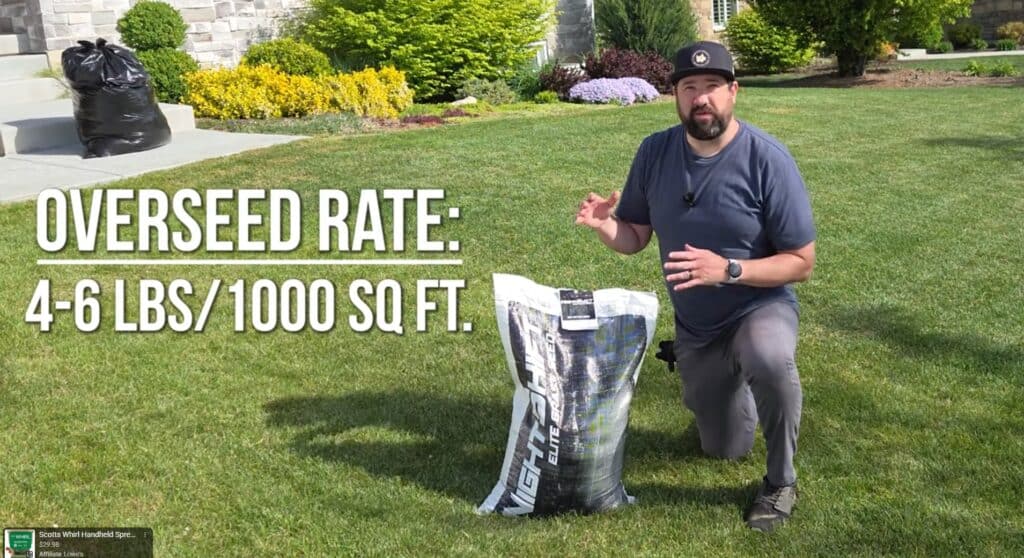
If you’re doing a full renovation or starting over from bare dirt, the seed rate is usually closer to 10 to 12 pounds per 1,000 square feet.
A hand spreader works well for overseeding for beginners with smaller lawns because it gives you more control. For larger yards, a broadcast spreader can help cover the area faster.
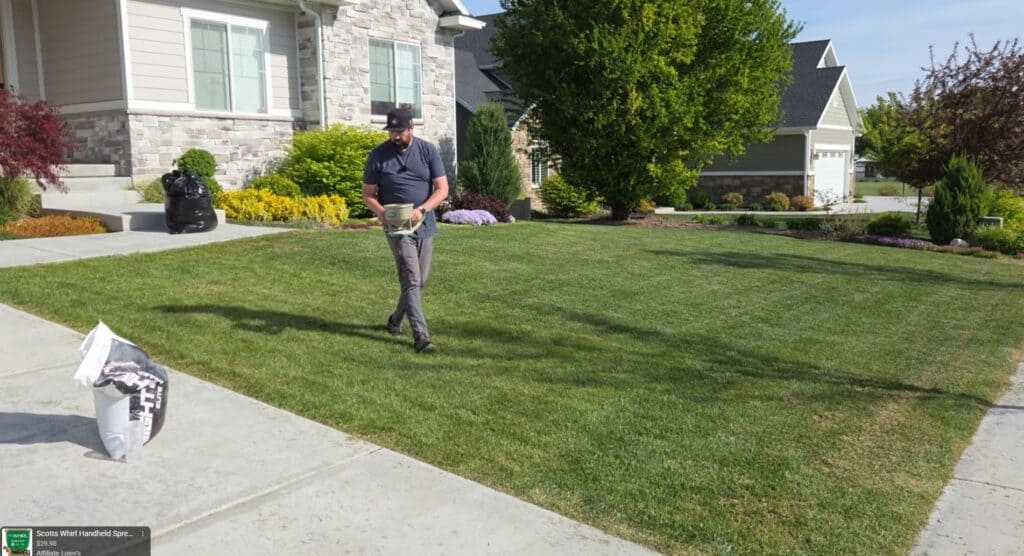
Try to spread the seed as evenly as possible. You don’t want heavy clumps in one spot and barely any seed in another.
Step 5: Add a Light Top Dressing
Top dressing is optional, but it can help improve germination – especially if you’re new to overseeding.
For this beginner overseeding project, we used peat moss as a light top dressing. Peat moss helps protect the seed, hold moisture, and improve seed-to-soil contact.
Use a peat moss spreader to apply a thin, even layer across the lawn.
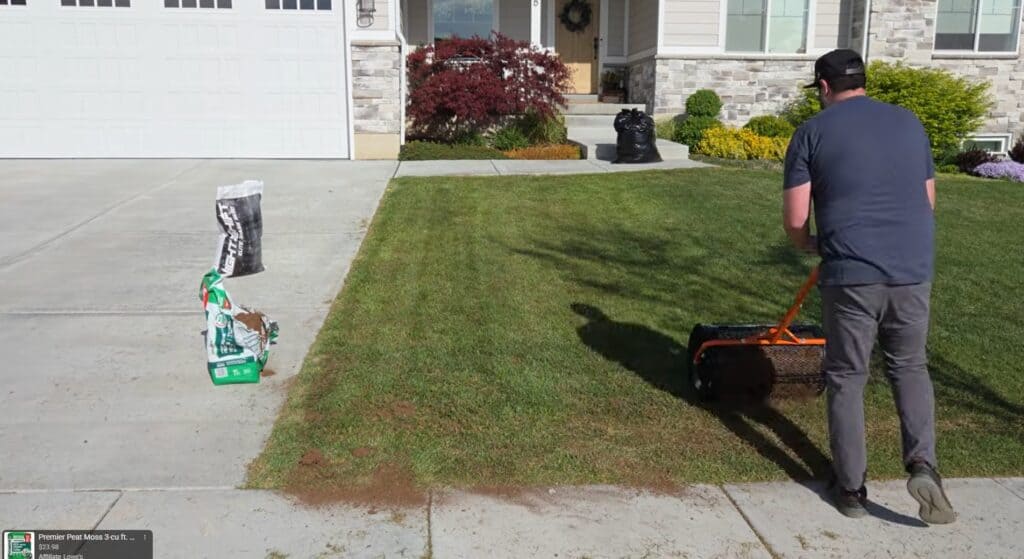
The key word here is thin.
You only want about ¼ inch of peat moss over the seed. If you go much thicker than that, the grass seed may struggle to germinate.
If you don’t want to use peat moss, you can still improve seed-to-soil contact with a lawn roller or even a rake. The goal is to help the seed settle down into the soil instead of sitting on top of the grass.
Step 6: Water the New Seed
Watering is the step that can make or break a project when overseeding for beginners.
New grass seed needs to stay moist while it germinates. If the seed dries out, it may not grow, and a lot of the prep work can go to waste.
A good starting point is to water 2 to 3 times per day for 5 to 7 minutes each time.
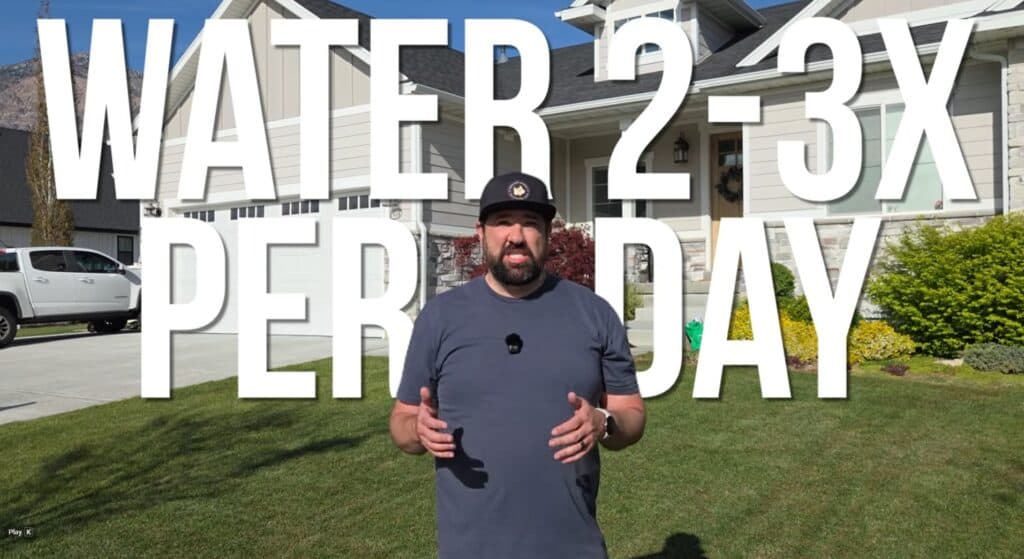
The goal isn’t to flood the lawn when overseeding. The goal is to keep the seed consistently damp. You don’t want to overwater or underwater when overseeding.
For the grass seed used in this project, germination usually takes about 10 days. During that time, consistent watering is extremely important.
Once the new grass starts coming in, you can slowly reduce watering frequency and move toward deeper, less frequent watering.
How Long Does Overseeding Take To Work?
Most grass seed starts showing signs of germination within 7 to 14 days, depending on the grass type, weather, soil temperature, and watering schedule.
Turf-type tall fescue often germinates in about 10 days when conditions are good for overseeding.
The lawn may still look a little thin at first, but it should continue to fill in as the new grass grows and matures.
Beginner Overseeding Checklist
Here’s the simple version of overseeding for beginners:
- Mow the lawn as low as possible.
- Bag or remove the clippings.
- Scarify the lawn in one direction.
- Rake up the thatch.
- Scarify again in a perpendicular direction.
- Rake up the remaining debris.
- Spread grass seed evenly.
- Add a light ¼-inch layer of peat moss, if desired.
- Roll or rake the seed for better soil contact.
- Water 2 to 3 times per day until germination.
Common Overseeding Beginner Mistakes To Avoid
Overseeding is simple, but a few mistakes can hurt your results.
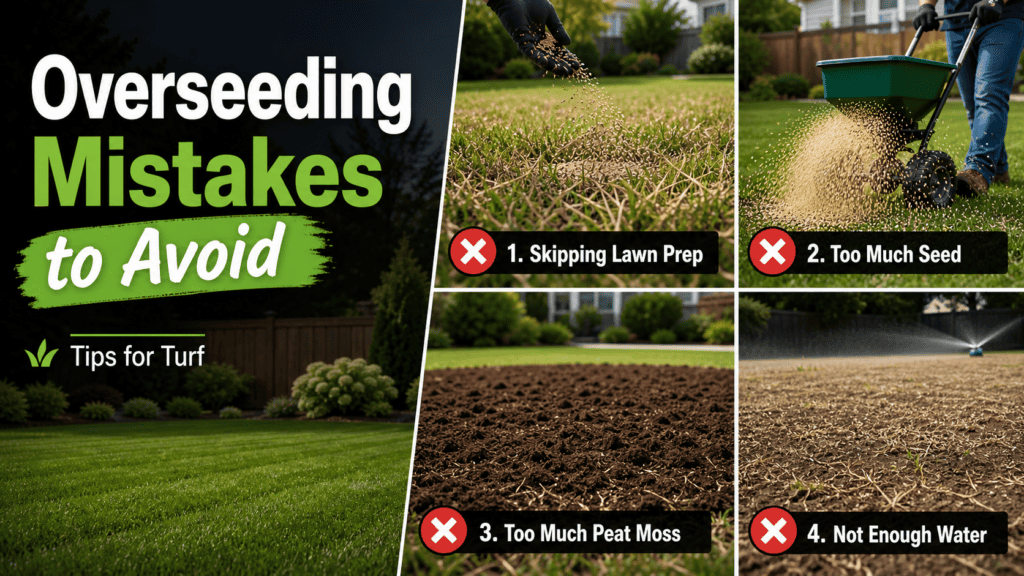
Skipping Lawn Prep
Throwing seed on top of thick grass or thatch usually doesn’t work well. The seed needs to reach the soil.
Using Too Much Top Dressing
A light layer of peat moss can help, but too much can smother the seed. Stick with about ¼ inch.
Not Watering Enough
Grass seed needs consistent moisture. Letting it dry out during germination can stop the seed from growing.
Using the Wrong Seed Rate
Too little seed can leave the lawn thin. Too much seed can cause overcrowding. For overseeding, aim for the recommended rate on your seed bag, which is often around 4 to 6 pounds per 1,000 square feet for turf-type tall fescue.
Lawn Overseeding Can be Easy!
Overseeding is a great weekend lawn project for beginners. With the right prep, good seed, solid seed-to-soil contact, and consistent watering, you can help your lawn grow thicker, darker, and healthier in no time.
The basic formula for overseeding is simple:
- Scalp the lawn
- Scarify it
- Clean up the thatch
- Seed it the lawn
- Lightly top dress with Peat Moss
- Keep it watered
Do those steps well, and you’ll give your new grass seed the best chance to grow.
Join our Skool Community to learn how to get a thicker, greener, healthier lawn!