
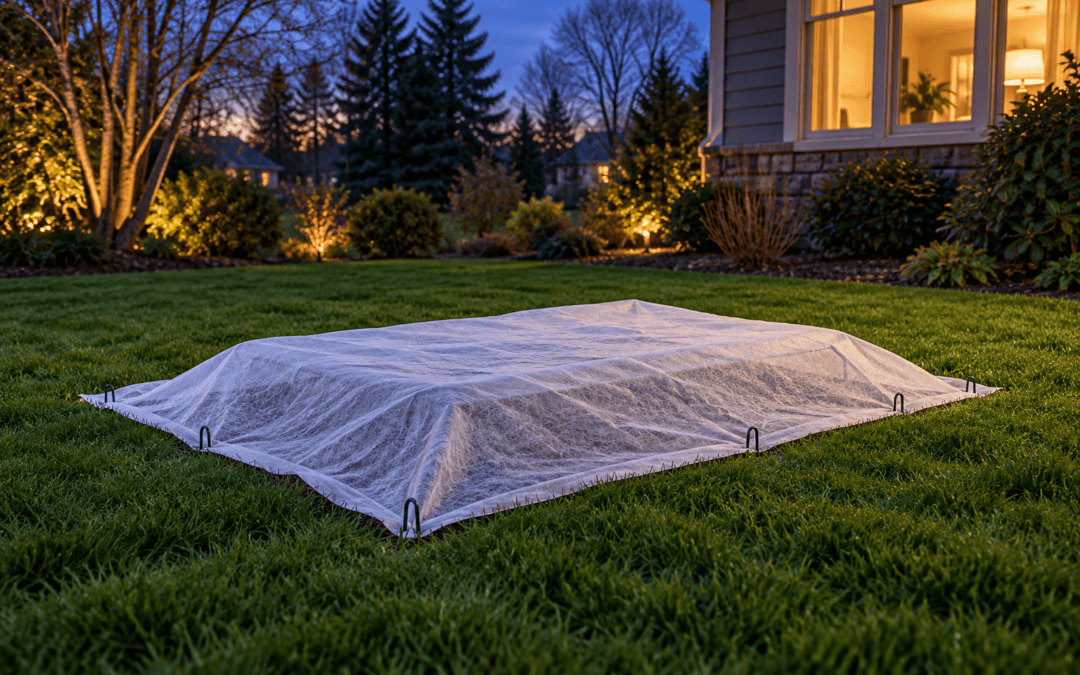
You dethatched, seeded or overseeded, and watered your lawn. Then the forecast changed. Suddenly, those warm spring afternoons came with an overnight freeze warning.
I ran into exactly that after scarifying and dethatching my front yard, then overseeding with a dark perennial ryegrass. Around day six, just as I expected germination, the forecast started sliding toward the upper 20s.
If you're wondering whether frost will kill grass seed, here's the short answer: ungerminated cool-season grass seed can often survive freezing weather, but newly germinated grass is more vulnerable. Keeping the soil appropriately moist and using a suitable frost blanket may help protect a fresh overseeding project during a brief cold snap. Neither guarantees survival during a severe or prolonged freeze.
For a full walkthrough on how to save your overseed from an early freeze, watch this!
Has Your Grass Seed Germinated Yet?
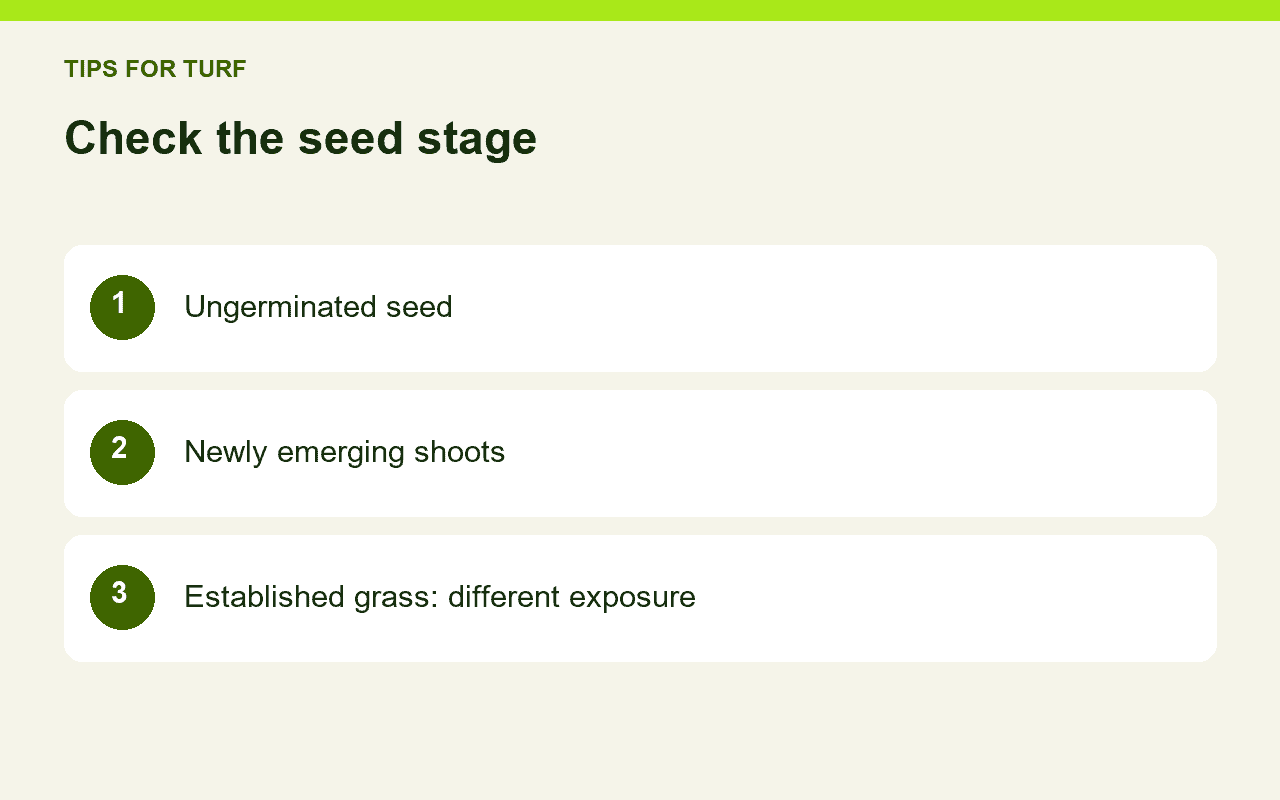
Before you do anything else, take a close look at your seeded areas.
Seed that hasn't germinated is in a different position than a tiny plant with new roots and leaves. In fact, dormant seeding relies on cool-season grass seed remaining in place through winter until conditions support growth.
Once germination starts, the risk changes.
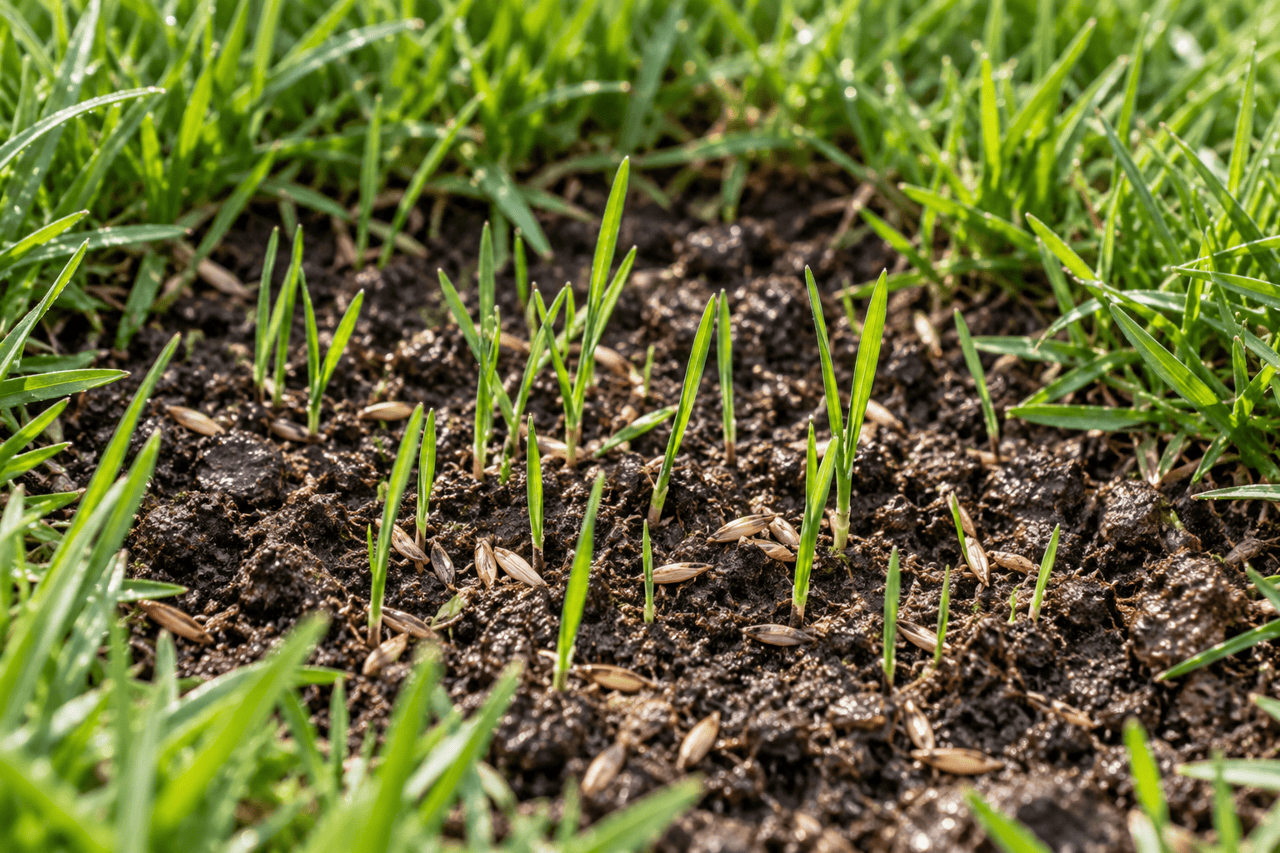
Check your bare patches for fine green shoots. Look closely around any light topdressing, which can make new growth hard to spot. Avoid digging around or disturbing the seedbed.
In my lawn, I couldn't see sprouts before the freeze. That may have helped my seed get through the cold. Still, no visible shoots doesn't prove germination hasn't started below the surface.
How Cold Is Too Cold for New Grass?
There isn't one temperature that tells you exactly what will happen to every newly seeded lawn. Grass species, seedling development, soil temperature, wind, and time below freezing all affect the outcome.
A brief dip near freezing is generally less concerning than a longer, colder freeze. As the forecast moves into the upper 20s or lower, take the risk seriously, especially if seedlings have emerged. Treat 28°F as a reason for closer attention, rather than a guaranteed survival cutoff.
Frost and freezing air temperatures aren't quite the same thing. Iowa State University Extension explains that frost can form when leaf surfaces reach freezing even if the reported air temperature stays slightly above 32°F.[3]
Look beyond the overnight low. Check how long the cold is expected to last and whether another freezing night is coming.
1. Keep the Soil Moist Before the Freeze
The first step is to check soil moisture. Moist soil stores heat better than dry soil, which can offer some protection as temperatures fall. For this reason, it's recommended to water in soil before cold temperatures.
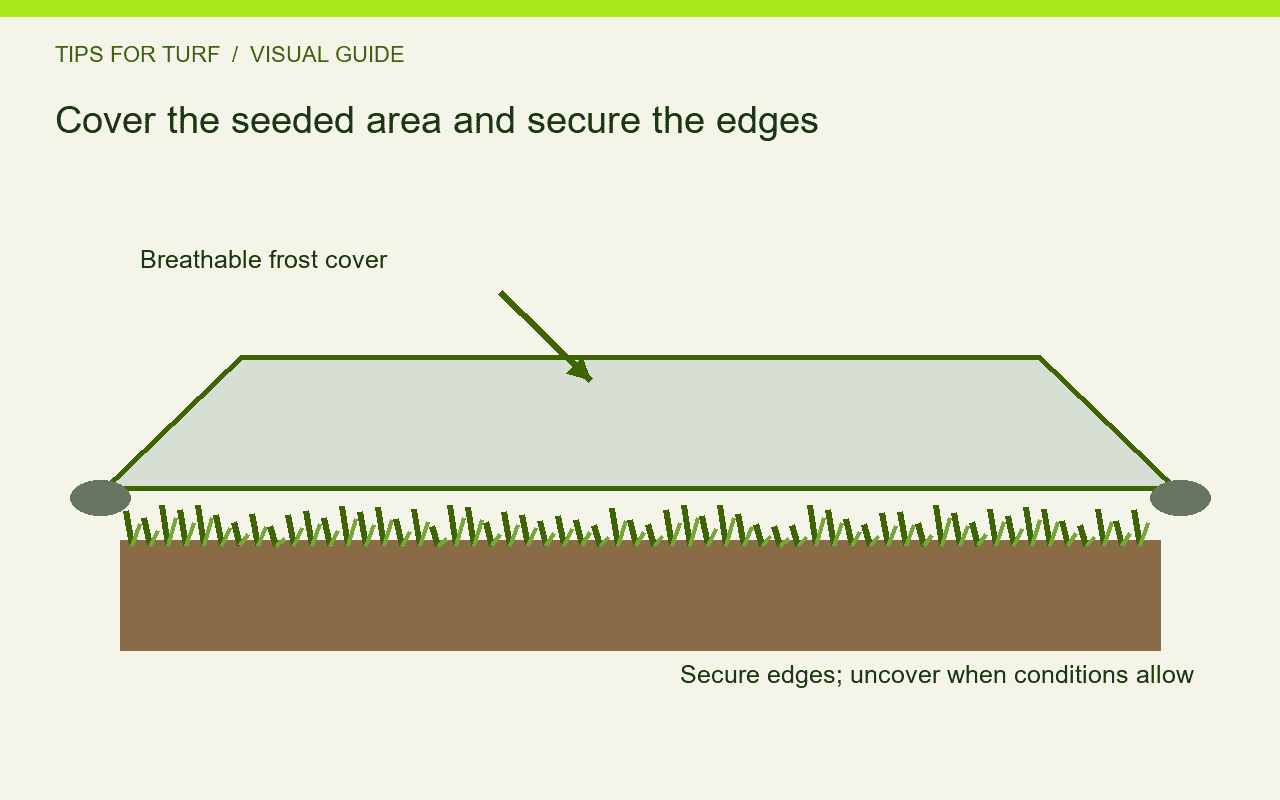
For a newly seeded lawn, the goal is an evenly moist seedbed, without puddles or runoff.
If the surface is drying out, water while temperatures are still above freezing and allow time for the water to soak in before nightfall. If rain has already moistened the soil, you may not need more water.
Don't saturate the lawn just because a cold night is coming. You also shouldn't treat an occasional sprinkler cycle during freezing weather as a reliable frost-protection system. For a home overseeding project, focus on soil moisture ahead of the cold rather than trying to coat your seedlings in ice.
In my case, rain and snow had already wet the lawn before the first night. Before the second, milder night, I watered near dusk. New sprouts appeared afterward, but that doesn't establish how much the watering contributed to survival.
2. Cover Vulnerable Areas With a Frost Blanket
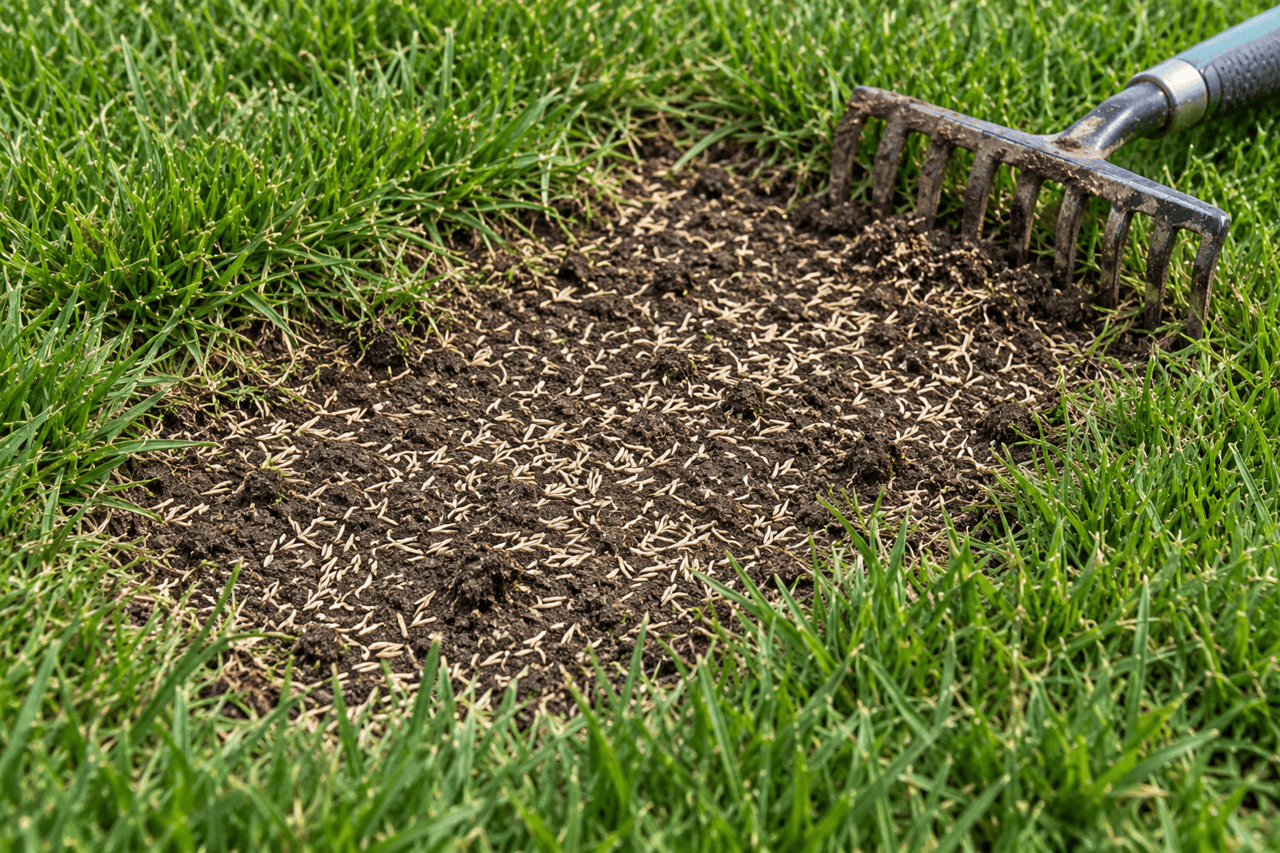
A frost blanket adds another layer of protection by slowing heat loss from the ground. Choose a lightweight, breathable product intended for frost protection, and check its temperature rating and installation instructions.
Here's how to approach it:
- Put the cover in place before temperatures drop for the night.
- Cover the full seeded patch, allowing enough material to secure the edges.
- Anchor it so wind can't lift or shift it.
- Follow the product instructions about direct contact with seedlings or supporting the fabric above them.
- Handle the material gently to avoid pulling up new growth.
I used frost blankets across my small front yard and secured them with landscape pins roughly every four to five feet. Covering the entire area was manageable for me, although it earned some confused looks from the neighbors.
For a bigger lawn, start with the bare patches you're most concerned about. Covering a few repair areas is much more practical than trying to wrap an entire property.
When Should You Remove the Frost Blanket?
Once temperatures recover above freezing, remove an overnight cover carefully so you can inspect the lawn. For my project, I took the blankets off the next morning.
Some breathable row covers are designed to stay in place longer, so follow the manufacturer's directions. Monitor heat and moisture underneath instead of assuming every cover must stay on or come off at the same time.
What Happened to My Overseeded Lawn?
The first night dropped to roughly 27–28°F. I covered the front yard with frost blankets. The following night was closer to 31–32°F, and I used watering without the covers.
After temperatures warmed again, I spotted small, light-green shoots in the areas I'd seeded. Seeing those sprouts was a relief after all the work I'd put into the lawn.
That was the outcome in my yard, rather than a controlled test of either method. Some seed may not have germinated before the freeze, and I can't say every seed survived. What I could see was that the cold snap hadn't wiped out the project.
What to Do After a Frost on Newly Seeded Grass
Give the lawn time to warm up before deciding you need to start over. Avoid unnecessary traffic while the grass is frosted or the ground is soggy.
As conditions improve, keep the seedbed moist and watch for new growth. Cold weather may push back your expected germination timeline. Wait for suitable growing conditions and the normal germination window for your seed before deciding which patches need reseeding.
One cold night doesn't automatically mean you've lost your new lawn. Check whether the seed has sprouted, prepare for the forecast, and give it a chance to recover.
For more hands-on lawn projects, follow Tips for Turf. If you're planning your next overseeding project, watch our spring overseeding walkthrough to see how I prepared and seeded this lawn from start to finish.
Products and tools from our walkthrough
(If you make a purchase using the links in this post, we may earn a commission.)
Get help with your next lawn project
For lawn care guides, seasonal advice, product recommendations, and feedback from Matt, Greg, and other lawn enthusiasts, join the Tips for Turf community. We can compare notes on your grass, your conditions, and the next practical step.
Frequently asked questions
Will a freeze always kill grass seed?
No. We distinguish ungerminated seed from tender new seedlings, and consider how cold it gets and for how long. My seed continued sprouting after the cold nights.
Should we cover the entire lawn?
I covered a small front yard, but that may be impractical elsewhere. We prioritize exposed seeded patches when coverage is limited.
Can watering guarantee protection?
No. I kept the soil moist, including watering before dusk on one night. We do not treat that as a guarantee or a reason to flood the lawn.
When do we take frost blankets off?
I removed them after sunrise as conditions warmed. We follow the cloth instructions and restore light and airflow rather than leaving a damp lawn covered all day.