
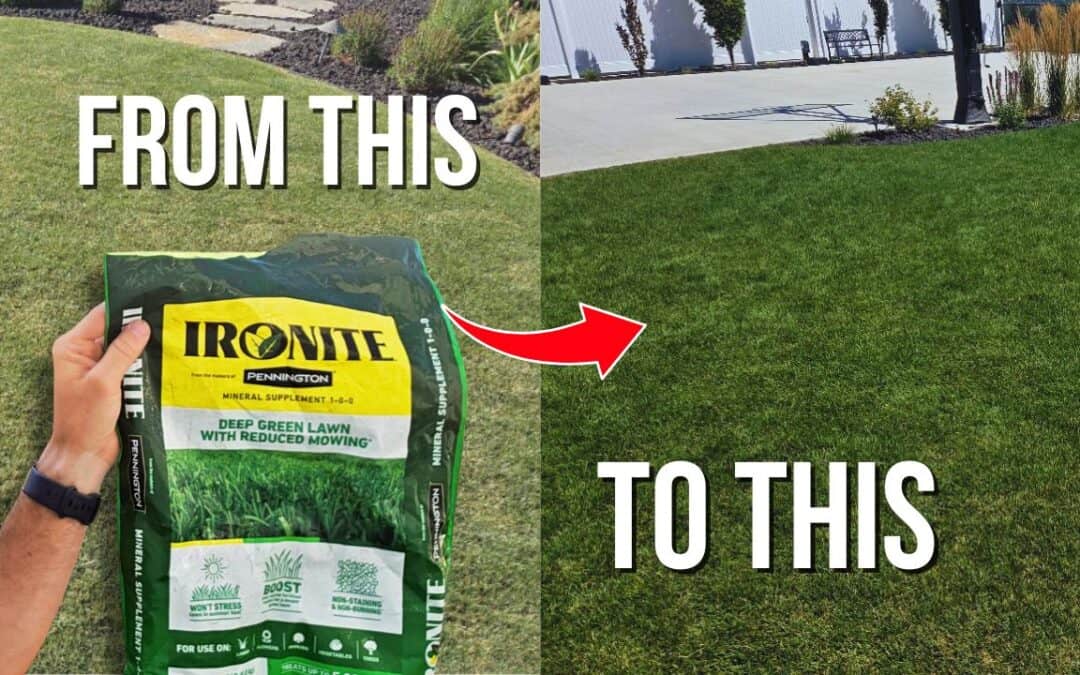
Want to give your lawn a quick green-up without pushing a bunch of extra growth? Ironite is one of the easiest lawn products to use when your grass looks a little pale, yellow, or just not as dark green as you’d like.
Ironite is mainly used as an iron supplement for your lawn. Instead of working like a heavy nitrogen fertilizer, it helps bring out that deeper green color many homeowners want, especially during the growing season.
Here’s how to know when to use Ironite, how often to apply it, and the right way to put it down without staining your concrete.
What Does Ironite Do for Grass?
Ironite helps green up your lawn by adding iron and other micronutrients to the soil. Iron plays a big role in the color of your grass, so when your lawn is actively growing but looks light green or slightly yellow, an iron application can help bring back a darker, richer color.
One of the nice things about Ironite is that it’s usually a lower-risk application compared to heavy fertilizer treatments. You still need to follow the directions on the bag, but when applied correctly, Ironite can be a simple way to improve lawn color without overfeeding your grass.
You can technically apply too much iron, so don’t just throw it down randomly. Always check the label for your spreader setting, coverage rate, and watering instructions.
When Should You Apply Ironite to Your Lawn?
You can apply Ironite during the main growing seasons:
- Spring
- Summer
- Fall
The key to knowing when to apply Ironite to your lawn is making sure your grass is actively growing. Ironite works best when your lawn is healthy enough to take in the nutrients.
If you apply Ironite in the summer, try to do it in the morning or evening when temperatures are cooler. A good rule for when to apply Ironite to your lawn is when temperatures are below 80 degrees. That’s a smart approach for many lawn products because hot weather can add extra stress to your turf.
For best results, mow your lawn before applying Ironite to the grass. Mowing first helps the product settle into the lawn better and gives you a cleaner surface for even coverage.
How Long Does Ironite Last?
An Ironite application usually lasts around 2 to 4 weeks. That’s why you can use it more than once during the growing season if your lawn needs another boost.
Many homeowners apply it in spring for an early green-up, again in summer if the lawn starts to fade, and once more in fall to help the yard look good before the season ends.
Just make sure you’re following the product label and not applying more than recommended.
How Do You Know If Your Lawn Needs Ironite?
A lawn that may benefit from Ironite often looks:
- Light green instead of dark green
- Slightly yellow
- Dull even though it’s growing
- Healthy overall but missing that deep color
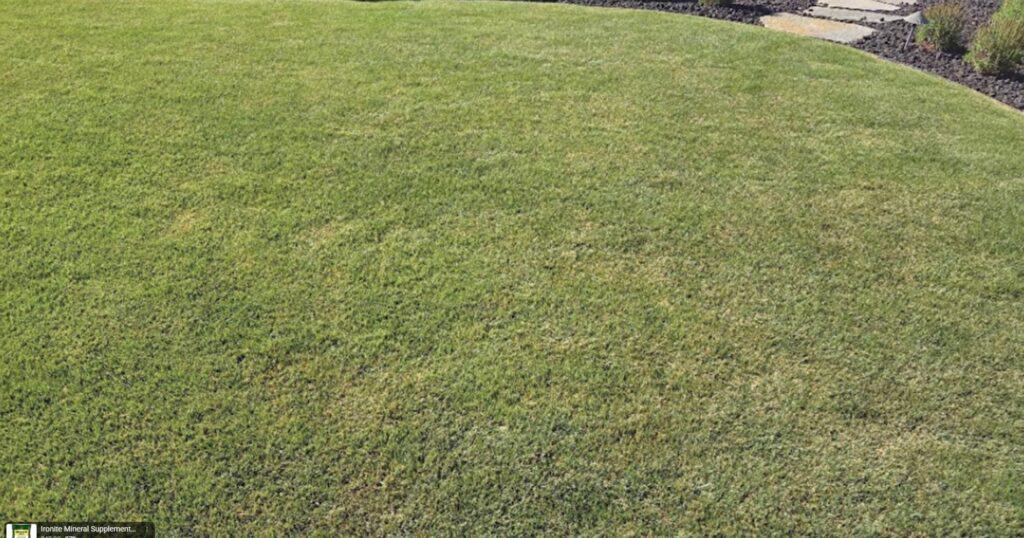
That said, yellowing grass can mean a lot of different things. Your lawn could be dealing with heat stress, watering problems, compacted soil, grubs, disease, or a nutrient issue.
That’s why a soil test is one of the best ways to know what your lawn actually needs.
A basic soil test can show you which nutrients are high, low, or right where they should be. You can take a few soil samples from different parts of your yard, send them in, and usually get a report back in about 1 to 2 weeks.
Soil testing is helpful for grass, but it can also be useful for trees, shrubs, garden beds, and other plants that are struggling. Testing once a year is a great habit if you’re serious about improving your lawn.
What You Need to Apply Ironite
You don’t need much to apply Ironite. For this project, you’ll need:
- Ironite – https://amzn.to/4lQTLMz
- Scotts Whirl Hand Spreader – https://amzn.to/46DCpON
- Gloves – https://amzn.to/4leHEbn
- Safety Glasses – https://amzn.to/4f2HwKm
- Soil Testing Kit – https://amzn.to/45c8gn8
- Soil Sampler Probe (I have the 21″ version) – https://amzn.to/41c2WyY
(If you make a purchase using the links in this post, we may earn a commission.)
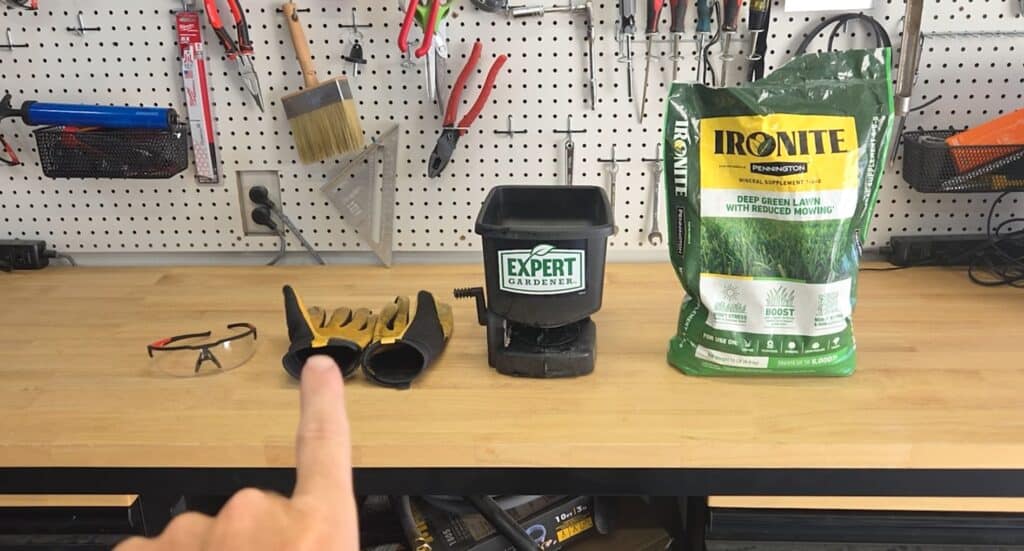
A hand spreader works well for smaller areas because it gives you a lot of control. A push spreader can also work, especially for larger lawns, but some people notice streaks or uneven lines if the spreader isn’t calibrated well.
Whatever spreader you use, check the back of the Ironite bag for the correct setting. The label should tell you how much product to use based on your lawn size and spreader type.
How to Apply Ironite to Your Lawn
Before applying Ironite, mow your lawn first. This gives the product a better chance to reach the soil and grass blades evenly.
Once your lawn is mowed, load the Ironite into your spreader and set the spreader according to the label directions.
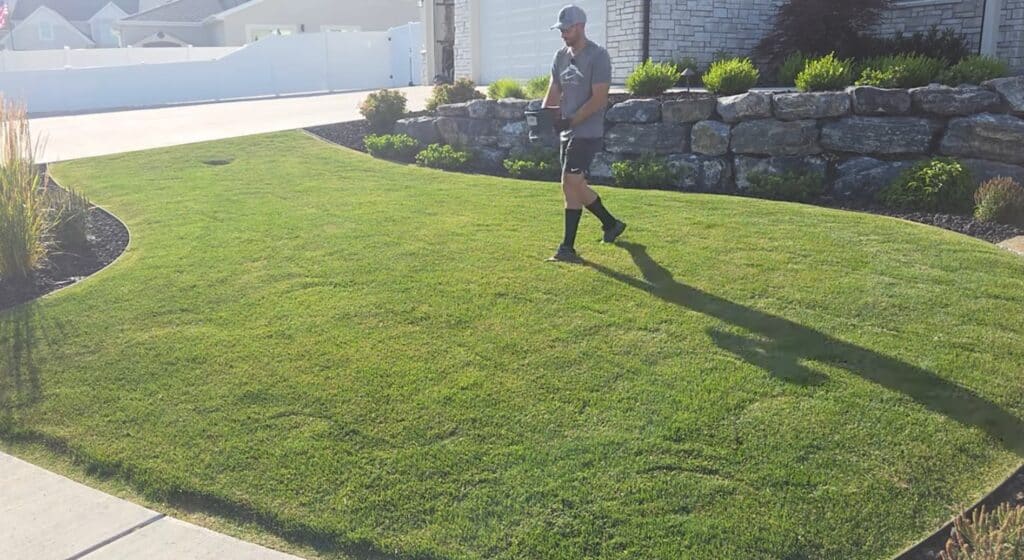
A good application pattern is:
- Go around the perimeter of the lawn first.
- Walk back and forth across the yard in one direction.
- Then apply in a crossing pattern for better coverage.
This helps prevent missed spots and gives your lawn a more even green-up.
Don’t rush the process. Try to walk at a steady pace so the product spreads evenly across the lawn.
Don’t Forget This Step: Blow Ironite Off Concrete
This is one of the most important parts of applying Ironite.
Iron can stain concrete, sidewalks, driveways, patios, and other hard surfaces. If the granules sit on your concrete and get wet, they can leave rust-colored spots that look terrible and can be hard to remove.
Before watering your lawn, use a leaf blower to clear any Ironite off your driveway, sidewalk, curb, or patio.
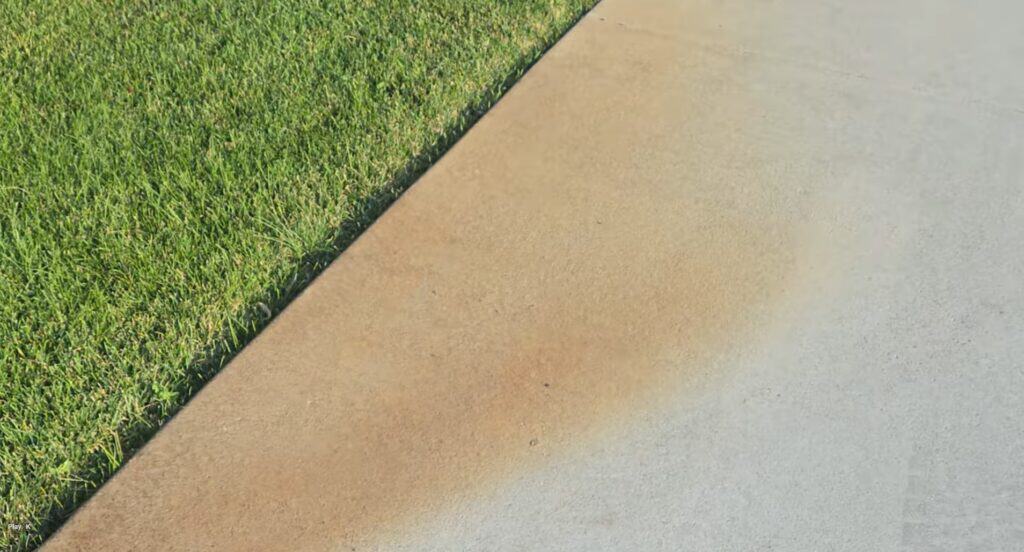
Don’t skip this step. It only takes a few minutes and can save you from a big headache later.
Water Ironite In After Applying
After you’ve applied Ironite and blown it off any hard surfaces, water it into the lawn.
Watering helps move the product into the soil and activates the application. Follow the directions on your specific bag of Ironite, but in most cases, a light watering after application is the final step.
After that, give it some time. You may start to see your lawn darken up within about a week, depending on your grass type, weather, soil, and overall lawn health.
When Should You Apply Ironite to Your Lawn? Do it Right Now!
Ironite is a simple way to help your lawn get a darker green color during the growing season. You can apply it in spring, summer, or fall as long as your grass is actively growing, and it’s a great option when your lawn looks a little pale but doesn’t necessarily need a heavy fertilizer feeding.
For the best results, mow first, apply evenly, blow the granules off concrete, and water it in.
And if you’re not sure whether your lawn actually needs iron, get a soil test. Guessing based on color alone can be tricky because a lot of lawn problems look the same at first. A soil test gives you a clearer answer so you can treat your lawn the right way.
If you don’t know your lawn’s square footage, check out our guide on how to measure your yard so you can buy and apply the right amount of Ironite, fertilizer, or any other lawn product.
Join our Skool Community to learn how to get a thicker, greener, healthier lawn!