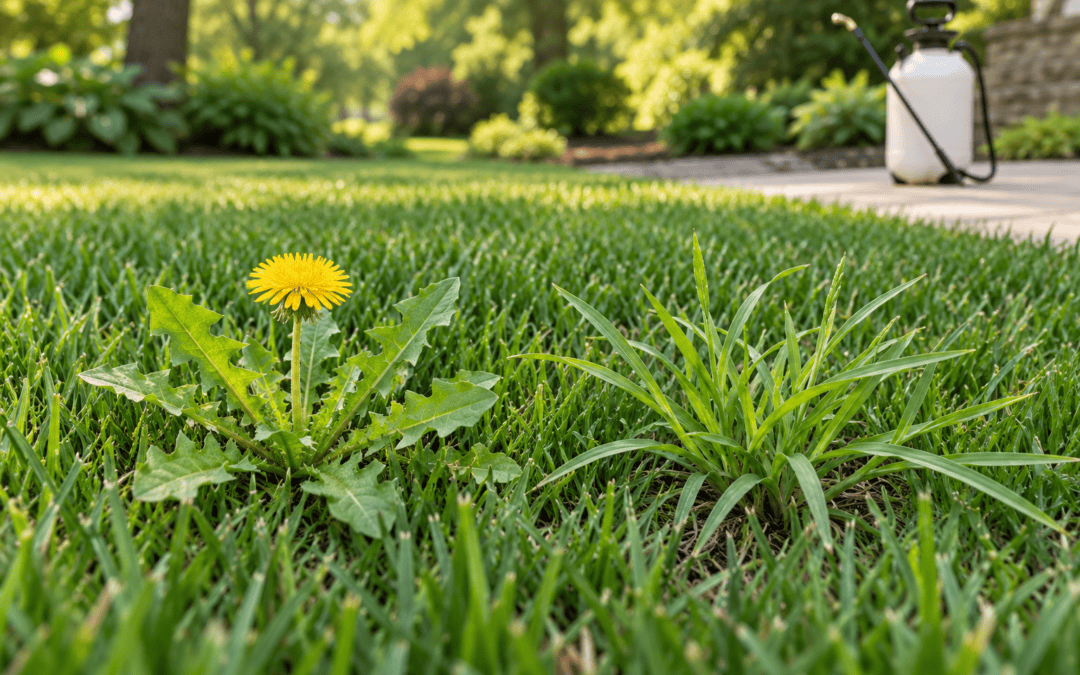
A few weeds can spoil the look of an otherwise green lawn. The frustrating part is that spraying the first weed killer you find doesn't always solve the problem. Different weeds respond to different treatments, and the grass you're trying to protect matters too.
In my yard, I found several different weeds growing close together. I photographed them, used ChatGPT to help narrow down their identities, and chose a ready-to-use lawn herbicide that included crabgrass control. Then I spot-treated the weeds and checked the results a week later.
If you want to identify lawn weeds and deal with them more effectively, start with three steps: figure out what's growing, match the treatment to the weed and your turf, and apply it according to the label.
Here's how that process worked in my lawn.
For a full video walkthrough on how to spot treat weeds in your lawn, watch this!
Start by Identifying the Weeds in Your Lawn
Before choosing a weed killer, take a close look at the plants you want to remove. Are they grassy weeds, broadleaf weeds, or something else? Are they growing upright, forming low mats, or spreading through runners?
The University of Maryland Extension recommends identifying weeds before selecting a herbicide so the treatment matches both the plant and its growth stage.
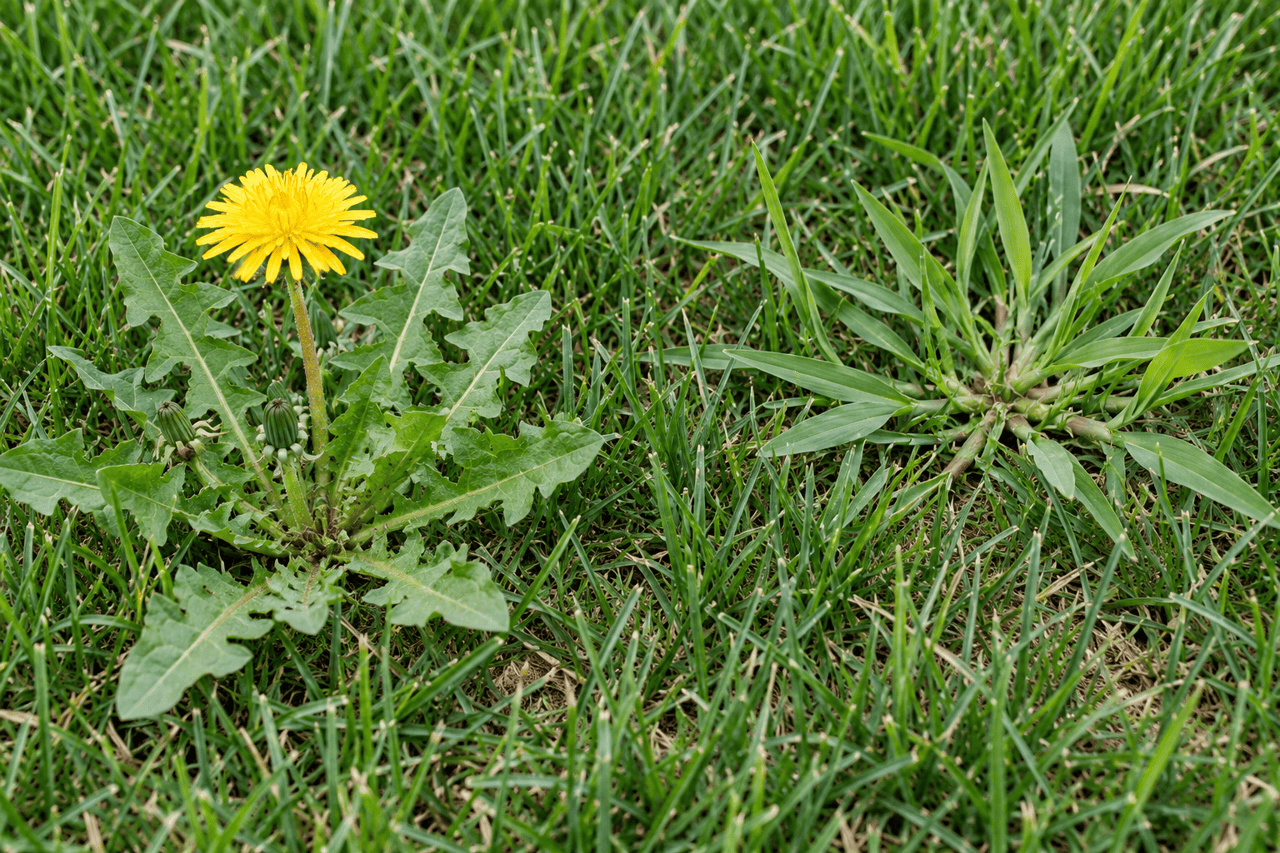
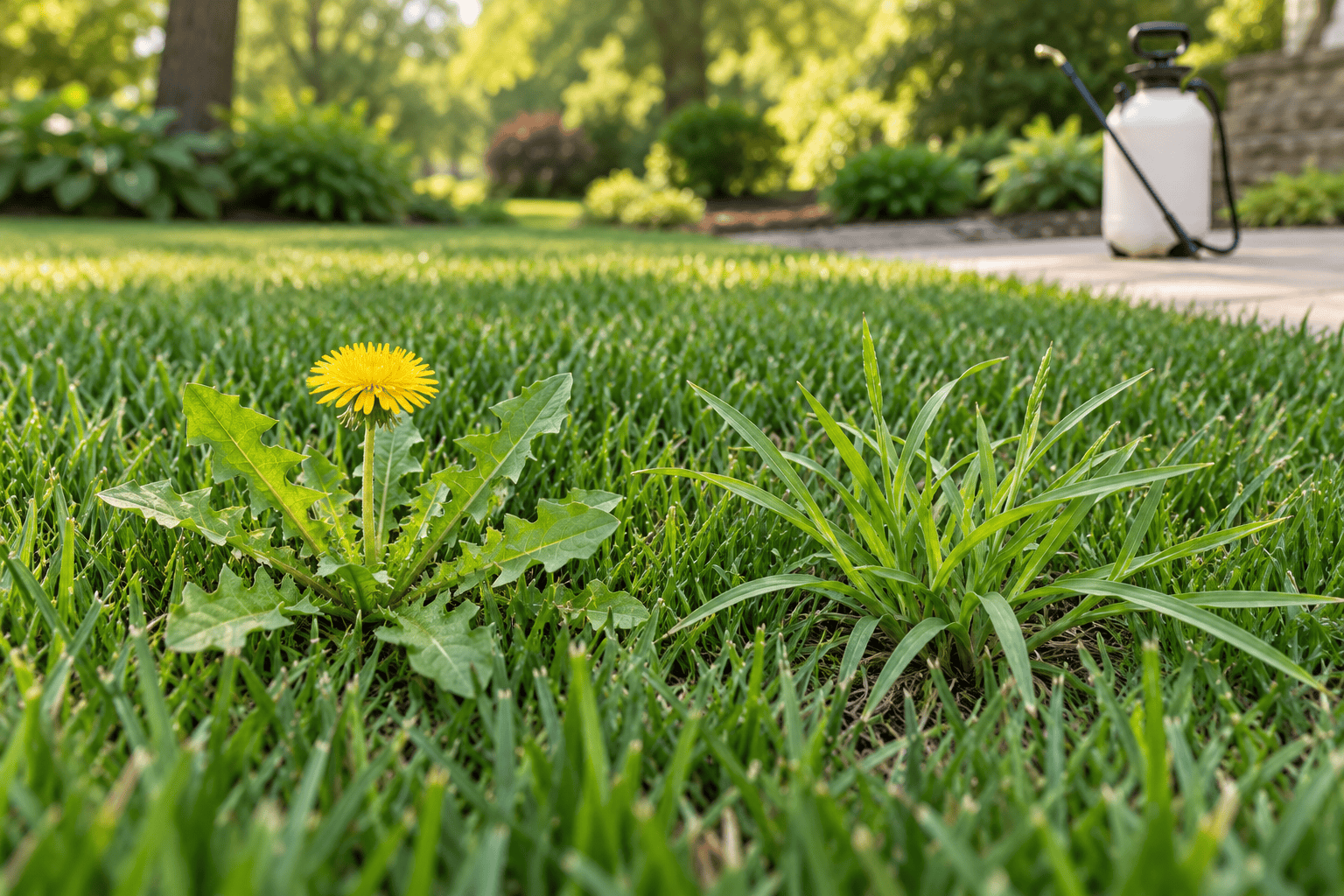
In my video, I looked at crabgrass, spurge, and other broadleaf weeds, including plants I recognized as dandelions. “Broadleaf” is a category rather than a complete identification. Narrowing a plant down to that group is useful, but knowing the species helps you choose a more suitable treatment.
Take Clear Photos of Each Weed
Move surrounding grass aside and photograph one weed at a time. Include a close-up of the leaves and another image showing the whole plant.
If you can safely remove a sample, the base and roots may provide additional clues. Also note how it spreads. Connected plants with underground stems can need a different approach than isolated seedlings.
A clear image of one plant is much more useful than a distant photo of an entire weedy lawn.
Use ChatGPT to Help Identify Lawn Weeds
In the video, I attached weed photos to ChatGPT and asked a simple question: “What kind of weed is this in my lawn?”
You don't need a complicated prompt to get started. Attach the image and describe what you want it to examine. Adding your region, season, and observations gives it more context.
For example: “Help identify this lawn weed in [location]. It's growing in [grass type] during [season]. What features support your identification, what similar plants could it be, and what additional photos would help?”
In my demonstration, the responses suggested crabgrass and spurge and described features to look for. That gave me a useful starting point for comparing the plants in front of me.
Treat the answer as a suggestion to verify. AI can confuse similar plants or sound certain when the photo doesn't show enough detail. Compare the suggested weed with local extension photos, or ask your extension office to identify a sample before selecting a chemical treatment.
Choose a Weed Killer That Matches Your Weeds and Grass
Once you know what you're targeting, check that a product lists the weed and permits use on your turfgrass species. Also review restrictions for recently seeded or stressed lawns.
For my project, I used an Ortho Weed B-gon product with crabgrass control and a built-in spray wand. I chose it because I wanted to address existing crabgrass as well as broadleaf weeds.
A lawn herbicide that controls dandelions doesn't necessarily control crabgrass. Penn State Extension identifies specific postemergence herbicides used against crabgrass and other summer annual grassy weeds.
The important distinction is treatment versus prevention. A postemergent product targets weeds already growing. A preemergent product targets susceptible weeds as they germinate or emerge. Don't buy a crabgrass preventer expecting it to remove the mature crabgrass you can already see.
What Does “Selective” Mean?
A selective herbicide controls certain plants while allowing use on specified desirable grasses under labeled conditions. It doesn't mean the spray is harmless to every grass or nearby landscape plant.
Keep applications focused on the intended weeds. A nonselective product can also damage the lawn you want to keep, so check the product type before spraying.
If you only have a few weeds, hand removal may be enough. Widespread chemical treatment isn't automatically necessary for a handful of isolated plants.
Prepare for Spot Treatment
A ready-to-use product can make a small project easier because it eliminates measuring and mixing concentrate. A built-in wand also lets you focus on individual weeds.
Before starting, read the label's directions for protective equipment, weather, watering, mowing, and access to the treated area. Wear the specified gloves and clothing, along with eye or respiratory protection when required. An ordinary face covering doesn't replace a required respirator.
I chose a cooler part of the day for my application. Morning or evening may be convenient, but use the actual temperature limits and conditions on your container. Avoid drift onto flowers, shrubs, or other plants you want to protect.
Check the timing of rainfall and sprinklers too. Some products need a period without rain or irrigation after application. The watering, reentry, and retreatment intervals mentioned in my video shouldn't be treated as universal instructions for every formulation.
Spot-Treat the Weeds Instead of Soaking the Lawn
For my wand sprayer, setup involved opening the product valve, extending and unlocking the wand, and adjusting the nozzle. Other packages work differently, so follow the instructions on yours.
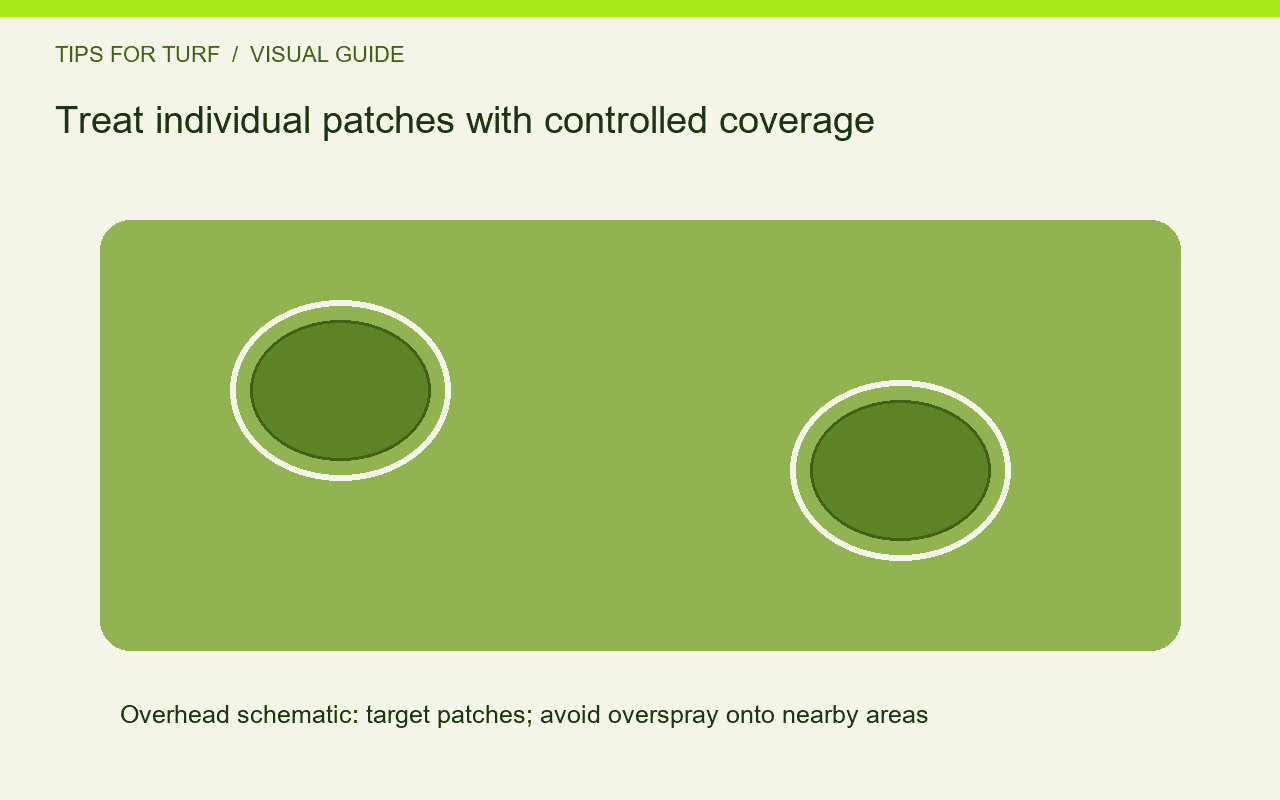
Choose a nozzle setting that lets you direct the spray at the target without excessive mist or runoff. Apply the labeled amount to the weed's foliage. Don't assume that soaking the soil or using extra product will improve control.
I worked around the yard, treating the weeds I'd already located rather than spraying every square foot of grass. Most were close to concrete edges and other lawn borders.
When finished, secure the container and store it as directed. Keep people and pets out of the treated area for the label-specified period.
Check the Results After Treatment
I revisited the weeds about a week later. Several dandelions had browning leaves, and the crabgrass was discoloring. Those were encouraging signs that the treatment was affecting the plants.
One weed still had plenty of surviving growth. I considered another application, but the next step is to check the product's minimum interval, maximum applications, and other restrictions before retreating.
Discoloration is a sign of injury, rather than proof that every root is dead. Allow the labeled response time and monitor for recovery. If a weed survives, revisit its identification and the application conditions before assuming it needs more spray.
Why Weeds Keep Appearing Along Lawn Edges
In my yard, many weeds showed up within a foot or two of the concrete. I noticed that those edges could be thinner, cut shorter, or less evenly watered than the center of the lawn.
That made them worth checking beyond the immediate spray treatment. If the same border repeatedly fills with weeds, look at mowing height, sprinkler coverage, and bare soil. Our guide to telling whether you're overwatering or underwatering your lawn can help you investigate moisture problems.
After addressing the weeds, work on the growing conditions that left room for them. Our guide to making your grass dense and thick covers care practices that support stronger turf.
Build a Weed-Control Plan Around Your Lawn
The most useful part of this project was the order of operations. I identified the weeds first, selected a product for those targets, and treated the affected spots. A week later, I could see what was responding and what needed another look.
If recurring weeds come with weak or patchy grass, investigate the soil before adding fertilizer by guesswork. Our step-by-step MySoil test guide shows how I collect and submit a sample to learn more about nutrients and pH.
Better identification makes treatment more focused. Better lawn care helps you protect the space you've reclaimed.
Products and tools from our walkthrough
(If you make a purchase using the links in this post, we may earn a commission.)
Get help with your next lawn project
For lawn care guides, seasonal advice, product recommendations, and feedback from Matt, Greg, and other lawn enthusiasts, join the Tips for Turf community. We can compare notes on your grass, your conditions, and the next practical step.
Frequently asked questions
Can we use any lawn weed killer for spot treatment?
We use only a product labeled for the application method, weed, and desirable grass. Ready-to-use and concentrate versions can have different instructions.
Can a photo identify the weed for us?
A clear photo can help narrow the possibilities. We confirm the identification with reliable information before selecting a treatment.
Should we soak the weed and soil?
No. We apply the label-directed coverage to the target foliage and avoid runoff or unnecessary exposure of surrounding grass.
When do we spray a surviving weed again?
We first allow the labeled response period, then check the repeat-treatment interval and limits. A plant that is not dead after a few days is not a reason to ignore those directions.