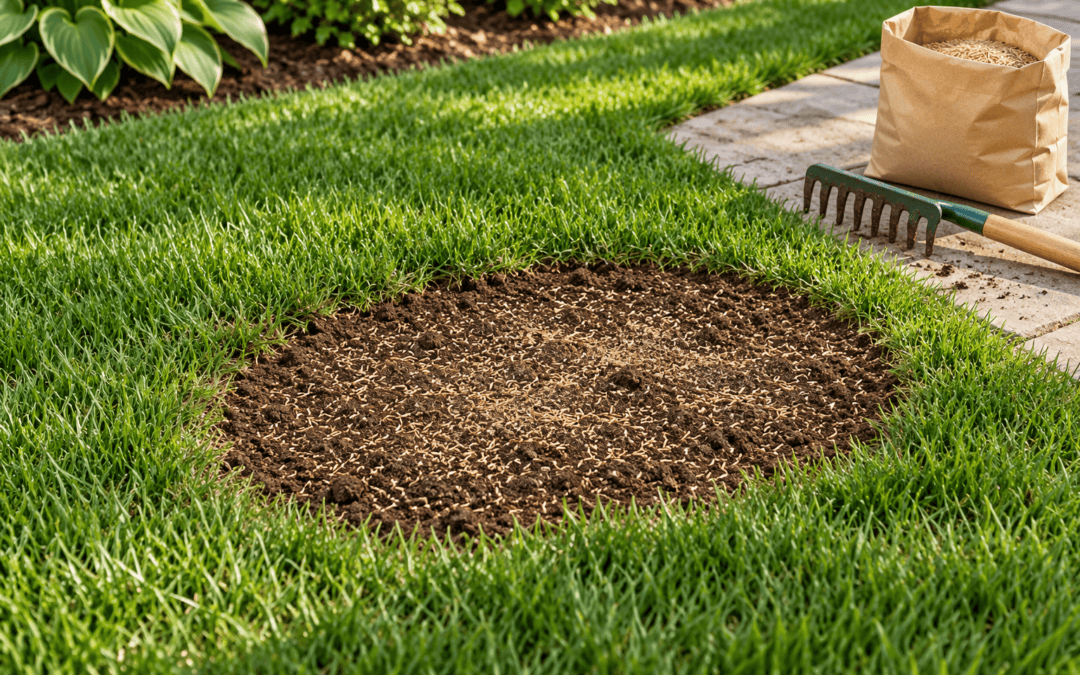
Lime-green patches really stand out when you're trying to grow a dark, even lawn. In my yard, I had areas that looked and felt different from the surrounding Kentucky bluegrass. The roots were shallow, and the patches were spreading outward.
I wanted the unwanted grass gone, even if that meant temporarily creating a bare spot.
In this project, I treated the patches with a nonselective herbicide, removed the dead material, and reseeded with perennial ryegrass. I saw new growth about seven days after seeding and more coverage by day 16, despite a stretch of intense summer heat.
If you're researching how to get rid of poa in your lawn, here's how my patch-repair process worked, starting with an important distinction: not every grass called “poa” needs the same treatment.
For a full walkthrough on how to remove poa from your lawn, watch this!
Identify the Poa Before Treating It
Two common unwanted bluegrasses are Poa annua, or annual bluegrass, and Poa trivialis, or roughstalk bluegrass. They're different plants, and a treatment plan for one shouldn't automatically become your plan for the other. Kentucky bluegrass is also a Poa species, so “poa” alone isn't a diagnosis.
Poa trivialis is a perennial grassy weed that can form light-green patches and spread through aboveground runners called stolons. Poa annua commonly produces conspicuous seedheads, including in closely mown turf.
In my video, I noticed the lighter color, shallow rooting, and spreading growth. Those observations prompted the repair, but color alone isn't enough to confirm the species. If you're unsure, have a local extension office or turf specialist identify a sample before treating it.
And yes, unwanted poa is still grass. We call it a weed because it's growing where we don't want it.
Why I Chose to Kill the Patches and Reseed
My approach was to remove the unwanted patches and replace them with grass I preferred. That meant accepting some damage to the surrounding lawn inside the treatment area.
Rutgers University describes nonselective control followed by reseeding as an option for roughstalk bluegrass in cool-season lawns. Small patches can also be physically removed. Selective treatment options depend on the weed, desirable turf, product, and site; don't assume there's one spray that will remove every kind of poa while preserving every lawn.
The tradeoff for my project was straightforward: a temporary bare patch instead of an expanding patch of unwanted grass.
Step 1: Treat the Unwanted Grass
Choose a product specifically labeled for the weed, site, and lawn-renovation use you intend. Read its active ingredients and reseeding instructions before applying it.
In the video, I refer to a nonselective herbicide such as Roundup. Don't choose by brand name alone. Products sold under the same brand can contain different ingredients, and extended-control formulations may interfere with reseeding.
Nonselective herbicides can damage desirable grass too. Treat the identified patch carefully, protect nearby plants from drift, and follow the label's rate, protective-equipment, weather, and access instructions.
I included the spreading edges of the patches in my treatment. Define the affected area before spraying so you understand how much lawn you'll need to repair.
Step 2: Check for Surviving Growth
After roughly four or five days, the treated patches looked dry and brown. I started removing material, then noticed some green growth remained. I decided to treat the surviving growth again before seeding.
That was my project sequence, not a recommended four-day reapplication schedule. Follow your product's minimum retreatment interval and required wait before mowing, disturbing the area, or seeding. Count any relevant waiting period from the latest application.
Brown foliage doesn't always mean the entire plant is dead. Poa trivialis can also look brown during summer stress and later recover. Watch for surviving runners or regrowth rather than judging success from color alone.
Step 3: Remove Dead Material and Prepare the Soil
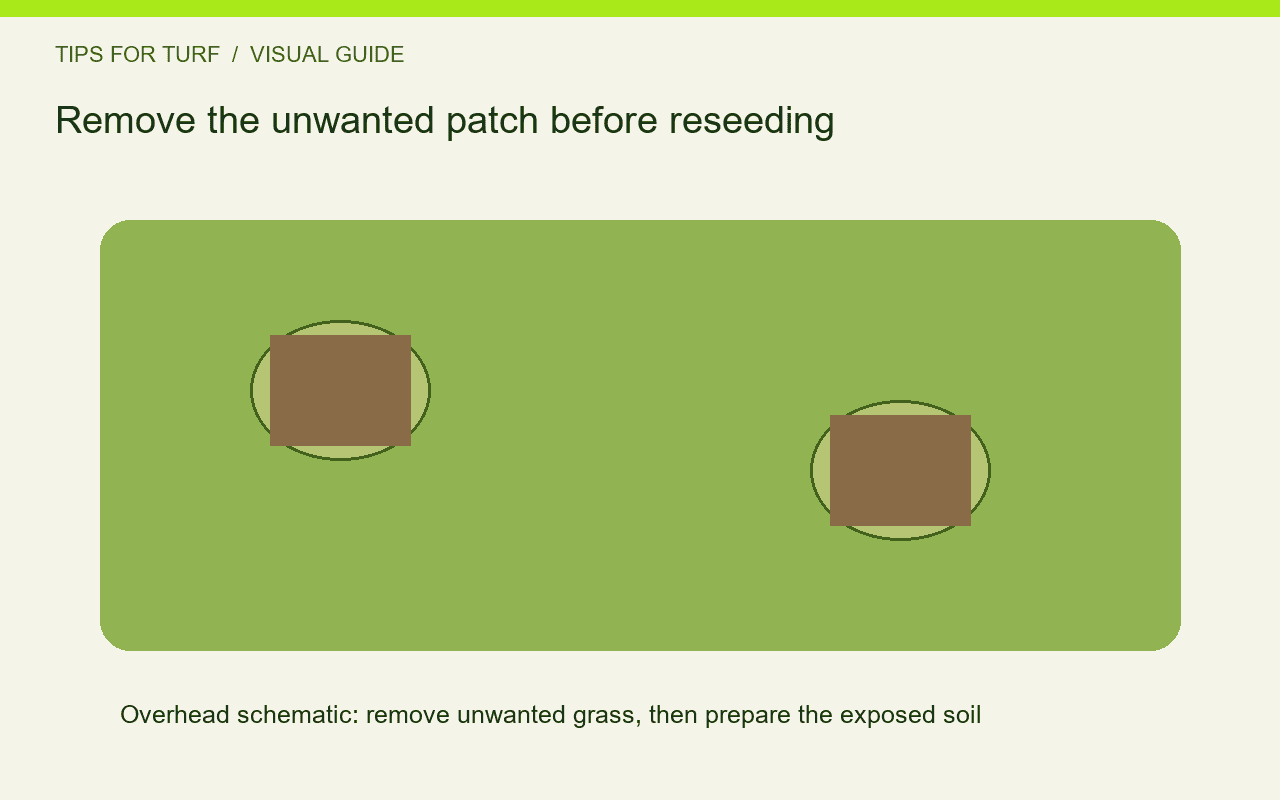
Once treatment and waiting periods are complete, clear the patch so seed can reach the soil.
I mowed the dead area low, used a scarifier to pull out material and scratch the surface, then trimmed and raked the remaining debris. Finally, I used a garden rake to loosen the surface and remove clumps.
A scarifier was handy for my project, but a small repair may only need hand tools. The goal is an exposed, prepared seedbed, rather than seed sitting on a thick layer of dead grass. Avoid moving living poa runners into healthy areas while cleaning up.
For more on lowering the mower before renovation, see our guide to how to scalp your lawn. Keep the low cutting focused on the repair area and protect the surrounding healthy turf.
Step 4: Spread Suitable Grass Seed Evenly
I used Fireball perennial ryegrass because I wanted fast establishment and a dark color. In my lawn, the quick growth was a big part of why I chose it for these repairs.
Choose seed that fits your climate, sunlight, and existing lawn. A fast-germinating grass isn't automatically the best match for every yard, and a different species or cultivar may leave a visible color or texture difference.
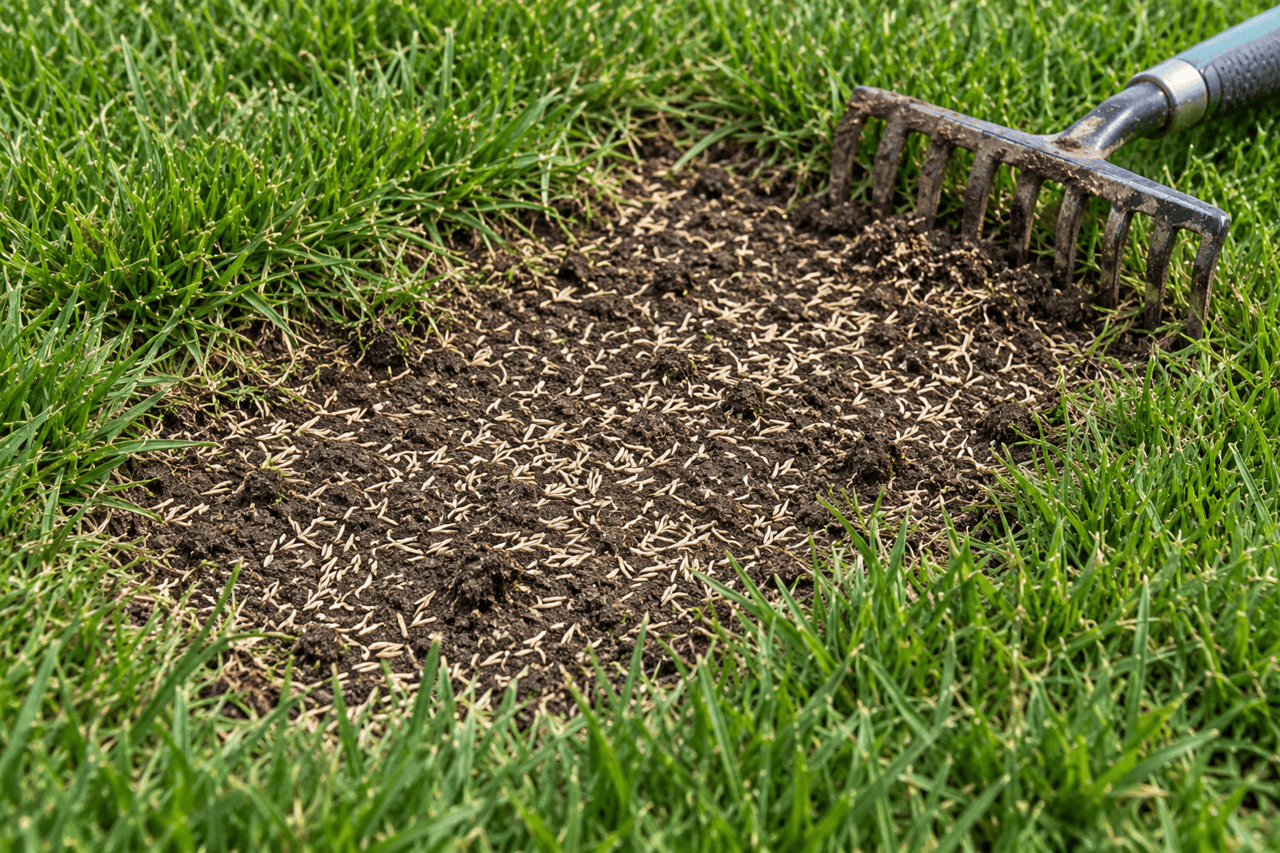
Measure the patch and follow the seed supplier's rate for bare-soil repair. That can differ from an overseeding rate for existing turf. I spread the seed by hand because the patches were small, aiming for even coverage.
More seed isn't always better. Avoid piling it into thick clumps, and lightly rake or gently press it into the prepared surface. You want good contact without burying it deeply or compacting wet soil.
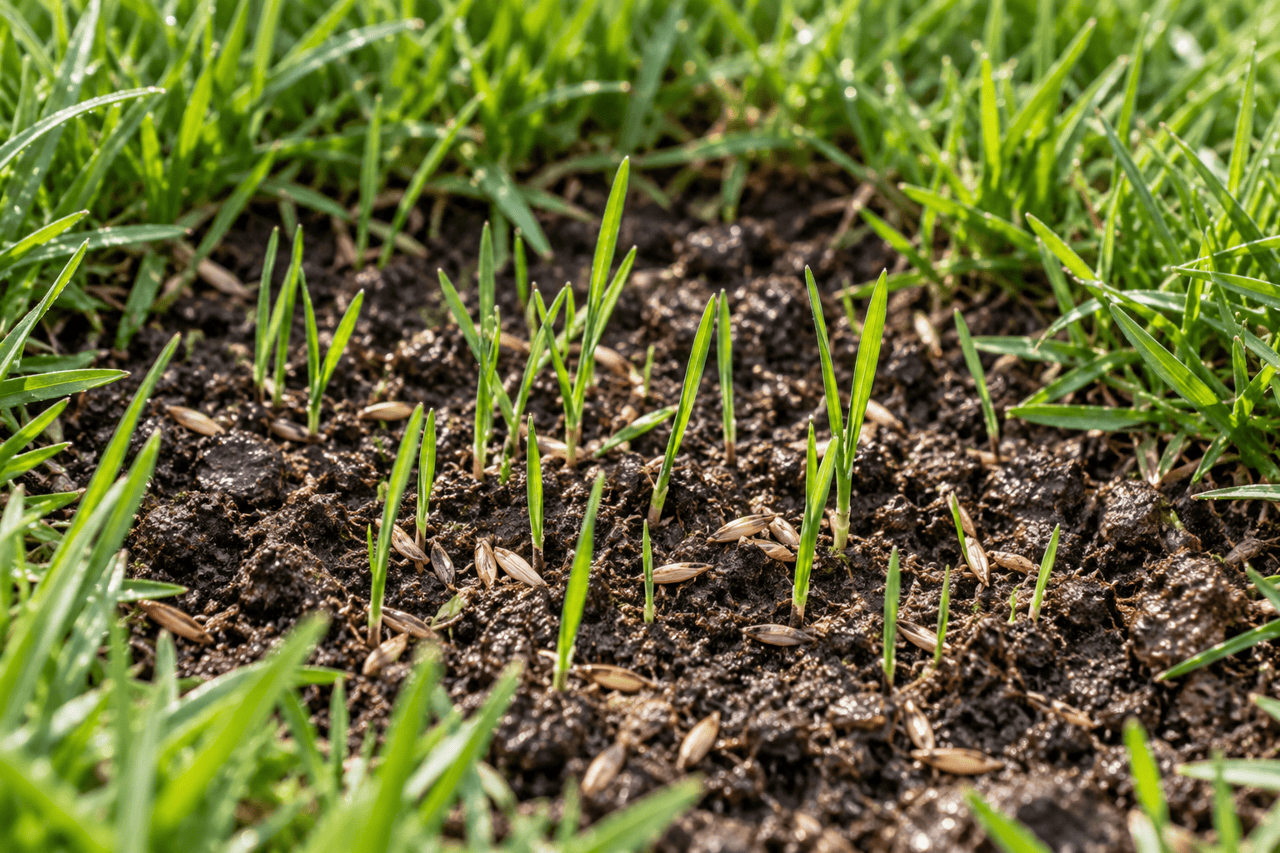
Step 5: Add a Light Topdressing and Water
I lightly moistened the soil and used peat moss as a thin topdressing. I spread it by hand, keeping the layer light instead of covering the seed with a thick blanket.
Peat moss isn't essential for every repair. The important part is protecting the seedbed from drying out while allowing the seedlings to emerge.
The University of Minnesota Extension recommends light, frequent watering during establishment, followed by a gradual move toward deeper, less frequent watering as the grass develops.
My project took place in August, with temperatures approaching 100°F during the following weeks. I used short watering cycles throughout the day to keep the surface moist. That was a response to my conditions, not a schedule every lawn needs.
Check the seedbed and adjust for heat, wind, shade, soil, and rainfall. Keep it evenly moist without puddles or runoff. For a larger project, our fall overseeding guide covers the broader preparation and seeding process.
My Results After 7 and 16 Days
At about seven days after seeding, new grass was coming up in the repaired patches. By day 16, coverage had improved noticeably.
The results weren't perfectly uniform. One patch with some tree shade filled in better during the heat. Other areas still had thin spots, and a ring around one repair needed more time.
I expected some help from the Kentucky bluegrass already in my lawn, but I also recognized that a few areas might need additional seed. This was encouraging early growth, rather than proof that the poa would never return or that every patch was fully established.
Help the Repair Blend Into Your Lawn
Keep unnecessary traffic off the seedlings and continue adjusting watering as they establish. Let the new grass develop before returning to your normal mowing routine.
If patches remain thin, check the growing conditions before adding more seed. If lighter-green runners return, reassess the weed identification and control plan.
My repairs showed that an ugly bare spot can be a step toward a lawn you're happier with. Identify the unwanted grass, plan the treatment around reseeding, and give the replacement grass consistent care. For help with that ongoing work, read our guide to making your grass dense and thick.
Products and tools from our walkthrough
- Sun Joe Lawn Dethatcher & Scarifier
- Fireball Perennial Rye Grass
- Peat Moss
- Peat Moss Spreader
- Roundup
(If you make a purchase using the links in this post, we may earn a commission.)
Get help with your next lawn project
For lawn care guides, seasonal advice, product recommendations, and feedback from Matt, Greg, and other lawn enthusiasts, join the Tips for Turf community. We can compare notes on your grass, your conditions, and the next practical step.
Frequently asked questions
Is all Poa unwanted?
No. Kentucky bluegrass is Poa pratensis and is a desirable lawn grass in many cool-season lawns. We identify the unwanted species before selecting a response.
Will this method preserve the grass inside the patch?
No. My approach used a nonselective treatment and reseeded afterward. We plan for the treated patch to lose desirable grass too.
Can we seed as soon as the patch turns brown?
We wait the seeding interval on the exact product label, including any repeat treatment. Appearance does not override those instructions.
Will Poa stay gone permanently?
We cannot promise that. We monitor for surviving growth and new seedlings while improving the conditions and density of the replacement lawn.