
When drought conditions hit and water becomes more limited, getting the most out of every irrigation cycle becomes especially important. The problem is that when soil becomes extremely dry or compacted, water doesn’t always soak in the way you expect it to.
Instead, water can sit on the surface or run off before it reaches the root zone. One way to improve how water moves into dry soil is by using a lawn surfactant, sometimes called a soil wetting agent.
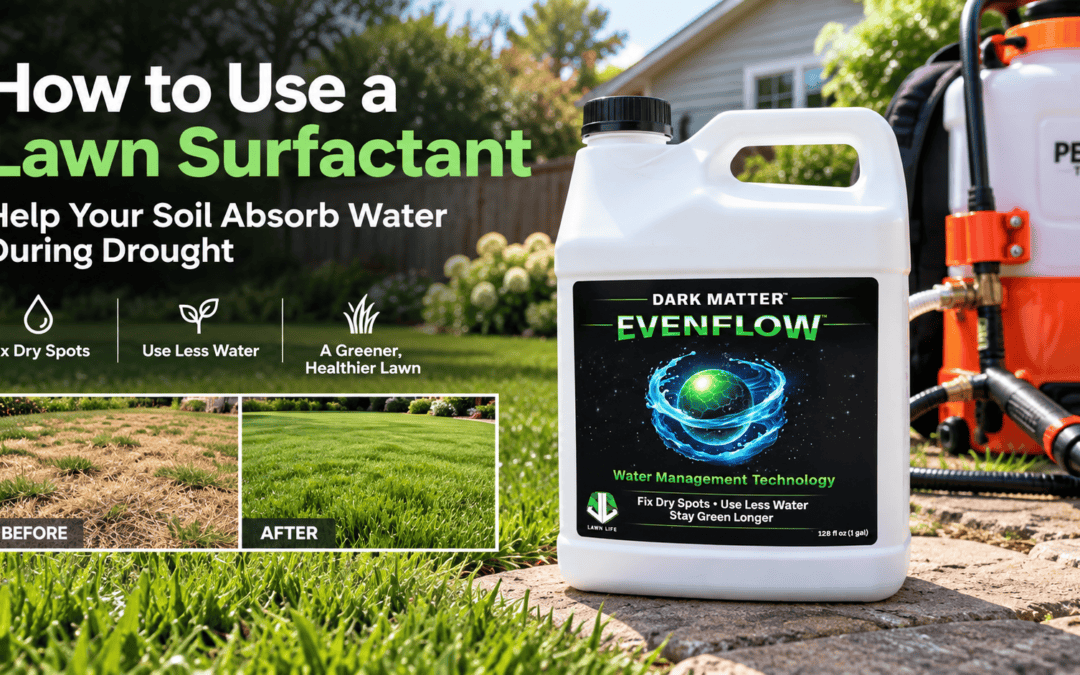
I recently tested a lawn surfactant called EvenFlow from LawnLife on my own cool-season lawn here in Utah. I wanted to see whether it could help water penetrate dry soil more effectively and make my watering more efficient during drought conditions.
Watch the full video tutorial here!:
What Is a Lawn Surfactant?
A lawn surfactant is designed to help water spread through and penetrate soil more effectively. This can be especially useful when soil has become so dry that it begins repelling water instead of absorbing it.
This condition is often described as hydrophobic soil. When it happens, you may notice water pooling on the surface, running down slopes or moving away from dry areas instead of soaking evenly into the ground.
A surfactant helps reduce that surface tension so water can move into the soil more easily. The goal isn’t necessarily to replace watering, but to help the water you’re already applying reach the soil and root zone more effectively.
Why Dry Lawn Soil Can Have Trouble Absorbing Water
During hot, dry weather, soil can become increasingly difficult to rehydrate. Compaction can make the problem worse because water has fewer pathways through which it can move.
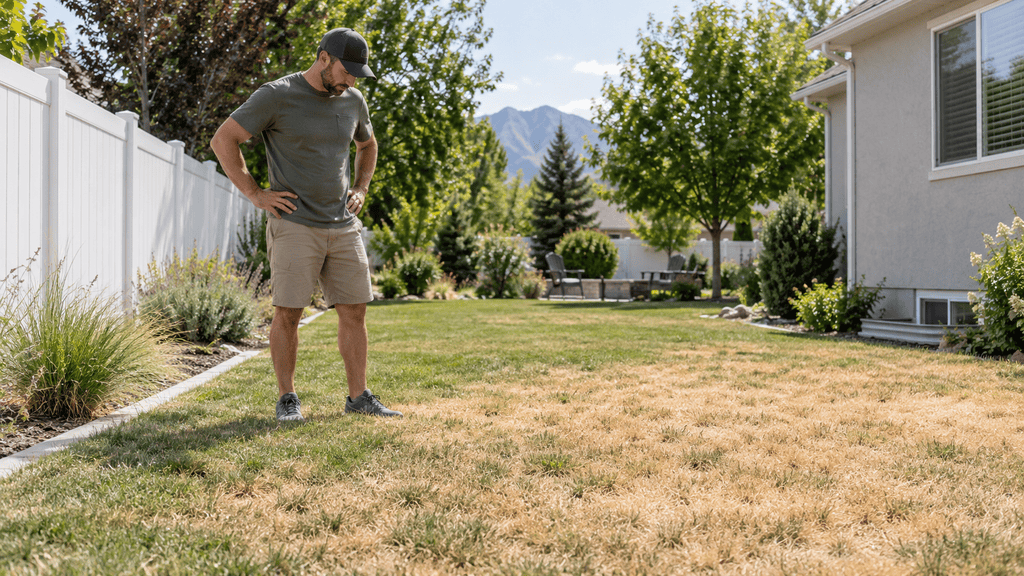
That means you can run your sprinklers and still end up with areas where much of the water never gets very deep. If water remains on the surface or runs away from the area, the grass roots may not receive as much moisture as you intended.
This becomes especially frustrating during drought conditions when you’re trying to make every watering count. Improving water penetration can help you use your existing irrigation more effectively rather than simply adding more water.
Does a Lawn Surfactant Actually Help Water Soak Into Soil?
Before applying EvenFlow to my lawn, I performed a simple test using two containers of compacted peat moss. I poured plain water into one container and a mixture of water and EvenFlow into the other.
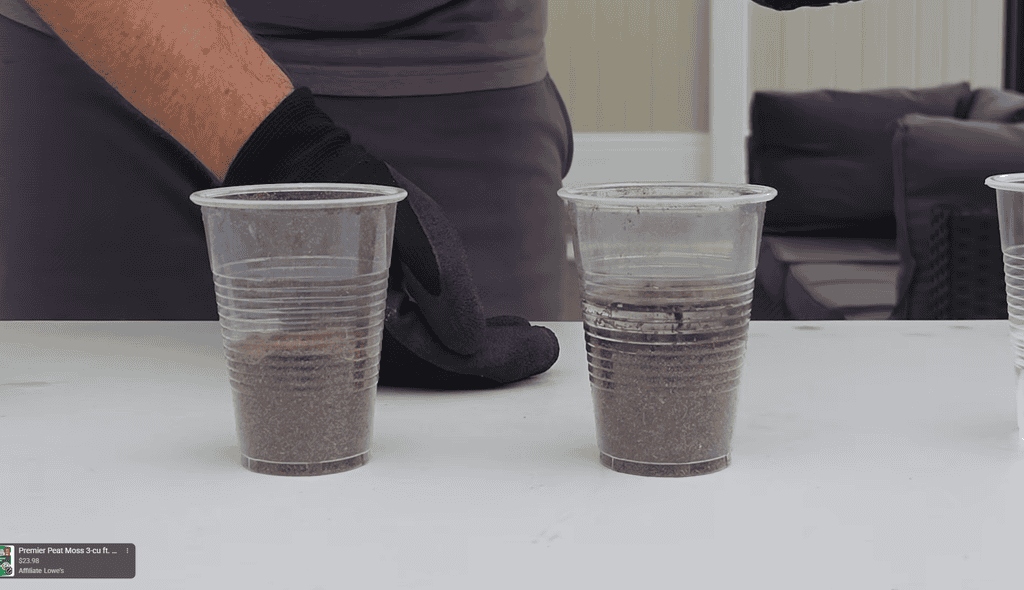
The difference was surprisingly obvious. In the container with plain water, much of the water remained sitting on top of the compacted peat moss instead of immediately soaking through.
The container treated with the surfactant reacted much differently. The water began penetrating the peat moss almost immediately, and after approximately five minutes, the treated container had absorbed the water while much of the plain water was still sitting near the surface of the untreated container.
Obviously, a cup of peat moss isn’t identical to an established lawn, but the demonstration helped illustrate what a surfactant is designed to do. It helps water move into dry material instead of simply sitting on top of it.
Buy EvenFlow here 👉https://thelawnlife.com/products/dark-matter-evenflow?sca_ref=9570198.tnSsFSCU50O&sca_source=website
(If you make a purchase using the links in this description, we may earn a commission at no additional cost to you.)
When Should You Apply a Lawn Surfactant?
Timing can make a difference when applying products to your lawn, especially during summer. I applied my first treatment on a mild day when temperatures were in the 70s and there was cloud cover.
If you’re applying a surfactant during hotter weather, I’d avoid spraying it in the hottest part of the afternoon. Waiting until evening, when temperatures have cooled and direct sunlight is less intense, gives you a better opportunity to get the product down into the soil before excessive evaporation occurs.
That’s exactly what I did with my second application. I waited until evening, mowed the lawn first, applied the product and then immediately watered it into the soil.
Should You Mow Before Applying a Lawn Surfactant?
I chose to mow before both applications because I wanted to make it easier for the surfactant to reach the soil. With less grass material in the way, more of the spray has a chance to move past the grass blades and reach the soil surface.
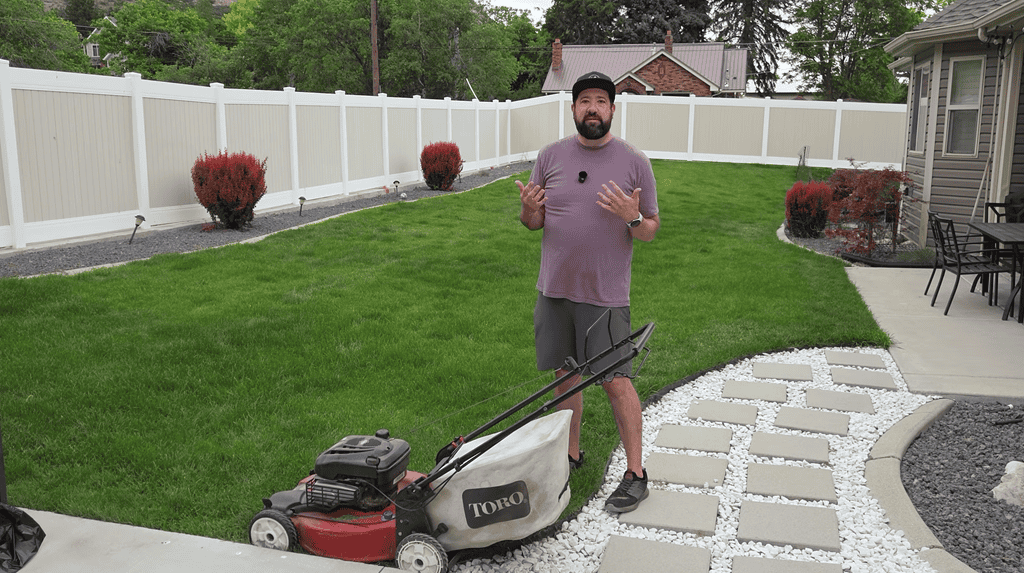
Mowing isn’t the only factor that matters, though. The bigger goal is making sure the product gets where it needs to go rather than remaining on the foliage.
That’s also why watering the product in after application was an important part of my process. Once the surfactant is applied, you want it moving down toward the soil rather than simply drying on top of the grass blades.
How to Apply a Lawn Surfactant
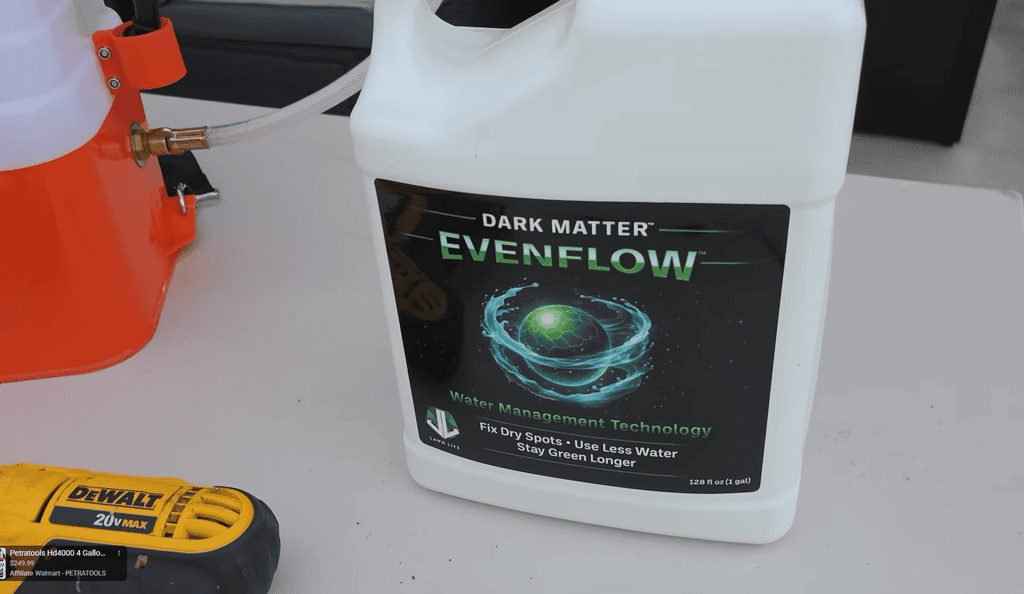
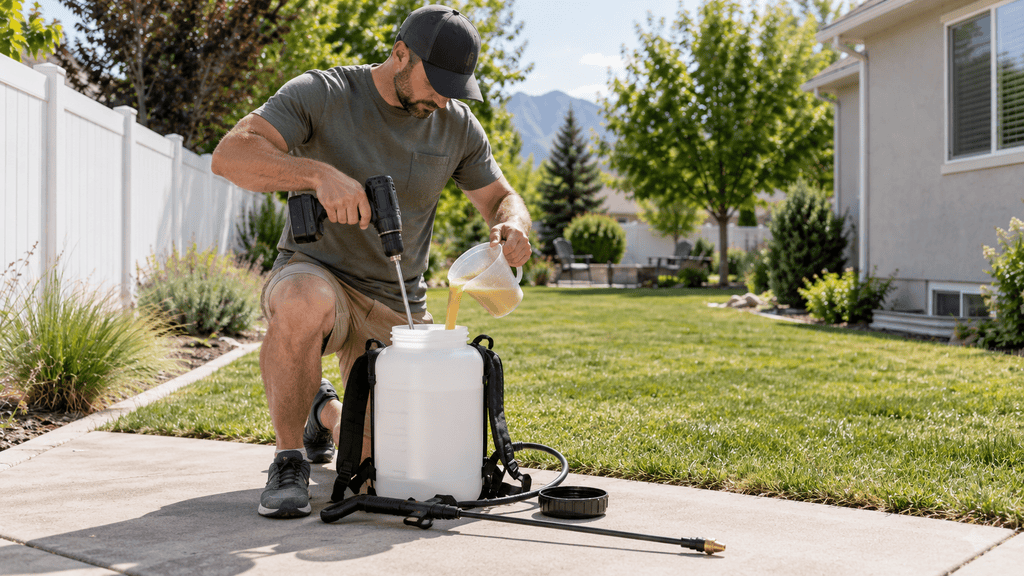
For my test, I used a backpack sprayer because the EvenFlow concentrate is extremely thick. The consistency is almost soap-like, so it needs to be thoroughly mixed before spraying.
The application process itself was pretty straightforward. I mowed the lawn, added water to my backpack sprayer, measured the surfactant, mixed everything thoroughly and then sprayed the lawn as evenly as possible.
For the EvenFlow product used in this test, the application rate given in the video was 8 ounces, or approximately 1 cup, per gallon of water per 1,000 square feet. Always follow the current label directions for the specific product you’re using, since application rates and instructions can differ between lawn surfactants.
Because the concentrate was so viscous, I used a paddle mixer to get it thoroughly incorporated into the water. A good mixture is especially important with thicker products because you don’t want concentrated material sitting at the bottom of your sprayer.
Why I Used a Backpack Sprayer Instead of a Hose-End Sprayer
The Even Flow concentrate I tested was much thicker than a typical liquid lawn product. Because of that consistency, I used a backpack sprayer rather than trying to run it through a hose-end sprayer.
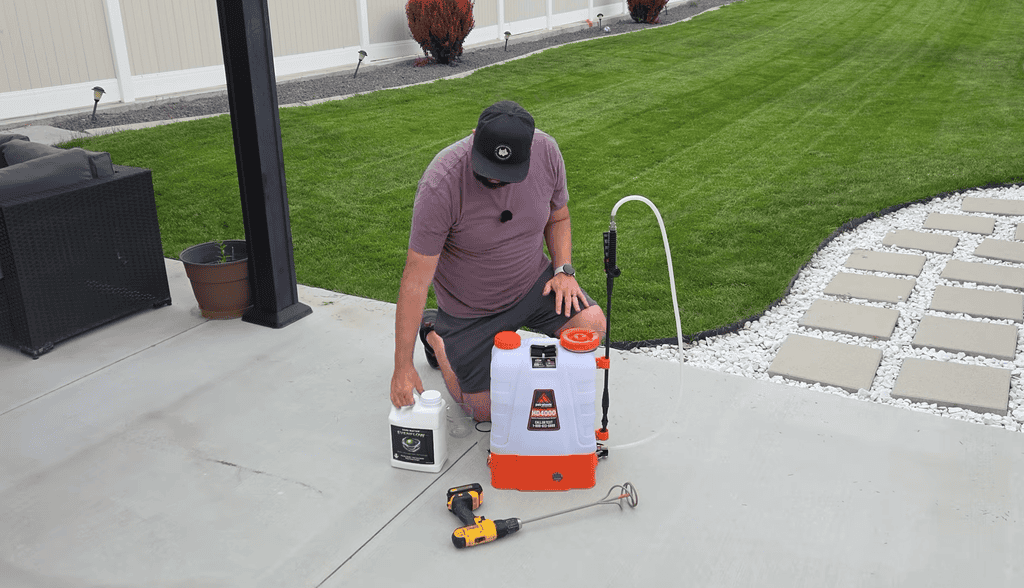
A pump sprayer can also work for smaller areas, but a backpack sprayer makes covering a larger lawn much easier. The important part is choosing equipment capable of handling the viscosity of the particular product you’re applying.
If you use a different lawn surfactant, check its application instructions before assuming you need the same equipment. Some products may have very different mixing and spraying requirements.
Water the Surfactant Into the Soil
Once I finished spraying, I noticed some of the product was still sitting on the grass blades. Since the whole purpose of using a soil surfactant is to affect how water behaves in the soil, I wanted to get that material off the foliage and into the ground.
I briefly ran my sprinklers after application to water the product in. Rain was also in the forecast that day, but I decided to use the irrigation system anyway so I knew the surfactant was moving toward the soil immediately.
The same principle applied during the second treatment. After spraying the lawn, I watered it in right away so the product could reach the soil instead of remaining on the grass.
Why I Applied a Second Treatment Seven Days Later
The application plan I followed called for two treatments spaced seven days apart. After completing the first application, I waited one week and then repeated essentially the same process.
For the second application, I mowed again, waited until evening when temperatures were cooler, mixed the surfactant in my sprayer and covered the lawn. I then watered the area immediately after spraying.
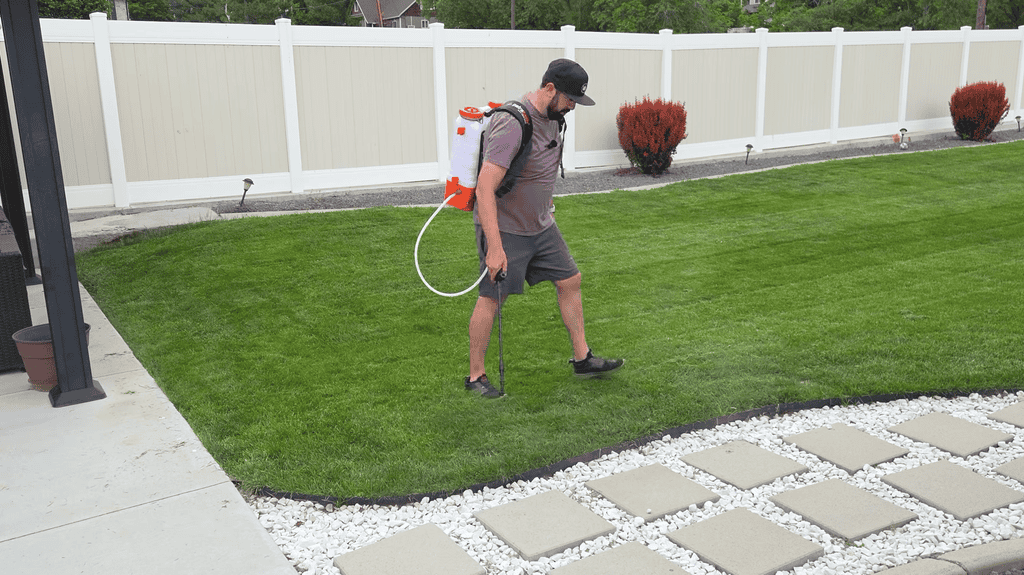
The video describes this two-application program as being intended to provide extended benefits through the season. If you use EvenFlow or another surfactant yourself, check the current product label for the recommended application frequency rather than assuming every surfactant follows the same schedule.
Can a Lawn Surfactant Reduce Watering?
I wouldn’t look at a surfactant as a substitute for watering your lawn. Your grass still needs adequate moisture, especially during periods of heat and drought.
Instead, think of a lawn surfactant as a way to potentially make your irrigation more effective. If water can penetrate dry areas more evenly rather than pooling or running off, a greater percentage of the water you apply may reach the soil where your grass can use it.
That can be particularly useful in problem areas that repeatedly dry out even though the rest of the lawn seems adequately watered. Before simply increasing your sprinkler runtime, it’s worth looking at whether water is actually soaking into those areas.
Signs Your Lawn May Have Water-Repellent Soil
One of the biggest clues is water sitting on top of the soil rather than soaking in. You may also notice runoff occurring unusually quickly even when the irrigation system hasn’t been running very long.
Dry spots that remain stubbornly brown despite regular irrigation can also be worth investigating. That doesn’t automatically mean you have hydrophobic soil, but checking how well water penetrates those areas can help you narrow down the problem.
You can test the area by watering it and then checking the soil below the surface. If the top looks wet but the soil underneath remains surprisingly dry, poor infiltration could be part of the issue.
Lawn Surfactants Can Be Especially Helpful During Drought
This experiment interested me because we were dealing with drought conditions in Utah. When water is limited, simply running the sprinklers longer isn’t always the best answer.
If the soil isn’t accepting water efficiently, adding more water may just create more runoff. Improving the way water penetrates the soil can help address the underlying problem instead.
The side-by-side test with compacted peat moss was what really caught my attention. Seeing the treated water move quickly through the material while plain water continued sitting on the surface made it easy to visualize why a surfactant could be useful in a dry lawn.
Is a Lawn Surfactant Worth Trying?
If you have extremely dry soil, stubborn dry spots or water that seems to run off instead of soaking into the lawn, a soil surfactant may be worth considering. The goal is simple: help the water you’re already applying move into the soil more effectively.
My initial EvenFlow test showed a dramatic difference in water penetration, which made me interested to see how the lawn responded throughout the season. During drought conditions, anything that helps make your irrigation more effective is worth understanding.
If summer temperatures are starting to climb where you live, your watering strategy is only one part of keeping the lawn healthy. Check out our guide to the biggest lawn care mistakes to avoid during summer heat to protect your grass when conditions get tough.
Want more help getting your lawn thicker, greener, and healthier throughout the year? Join the Tips for Turf community for seasonal lawn care guides, equipment and product recommendations, and help from Greg, Matt, and other lawn enthusiasts.
Lawn Surfactant FAQ
A lawn surfactant helps water penetrate and spread through soil more effectively. It can be especially useful when dry or compacted soil has become resistant to absorbing water.
The terms are often used in similar contexts because both involve improving how water interacts with soil. Different products can use different formulations, though, so always check the product instructions to understand exactly what you’re applying.
For the product I used (Evenflow), I watered immediately after application to move the material from the grass blades into the soil. Check the instructions on your specific product because watering requirements can vary.
I prefer applying it during cooler conditions rather than during the hottest part of the day. If temperatures are high, evening application can help reduce evaporation and give you an opportunity to water the product into the soil.
That depends on the product. In this test, I applied Even Flow twice, with seven days between applications, but other surfactants may use different schedules.