
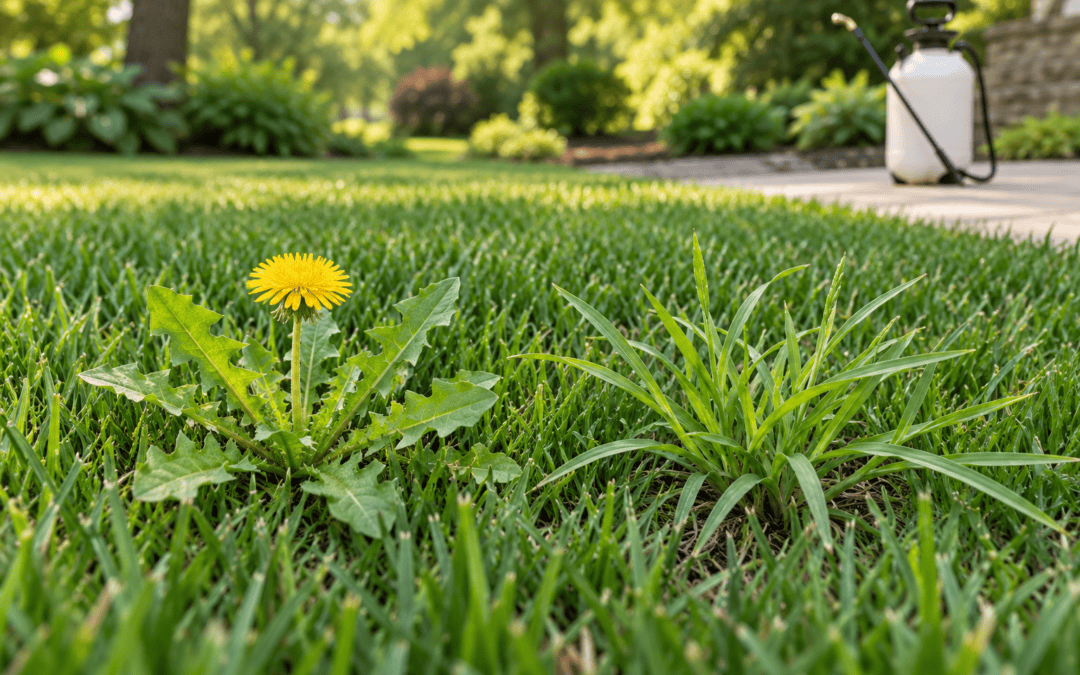
The best time to apply a spring pre-emergent is before the weeds you want to prevent begin germinating. That means planning around local growing conditions and your target weed, rather than waiting until the lawn is full of crabgrass.
In my spring lawn treatment, I used an alternative brand of liquid mesotrione herbicide. Mesotrione is also the active ingredient in Tenacity. My goal was to get ahead of new weeds while treating some that were already appearing. Here is how I approached the application, what I noticed after seven days, and what to check before trying a similar treatment on your lawn.
For a full walkthrough on how to apply a spring pre emergent to your lawn, watch this!
Why I applied a pre emergent in spring
My grass was starting to green up after winter. I had applied ammonium sulfate and was seeing a nice improvement in color. Most of the lawn still looked clear, although weeds were already growing in nearby garden beds.
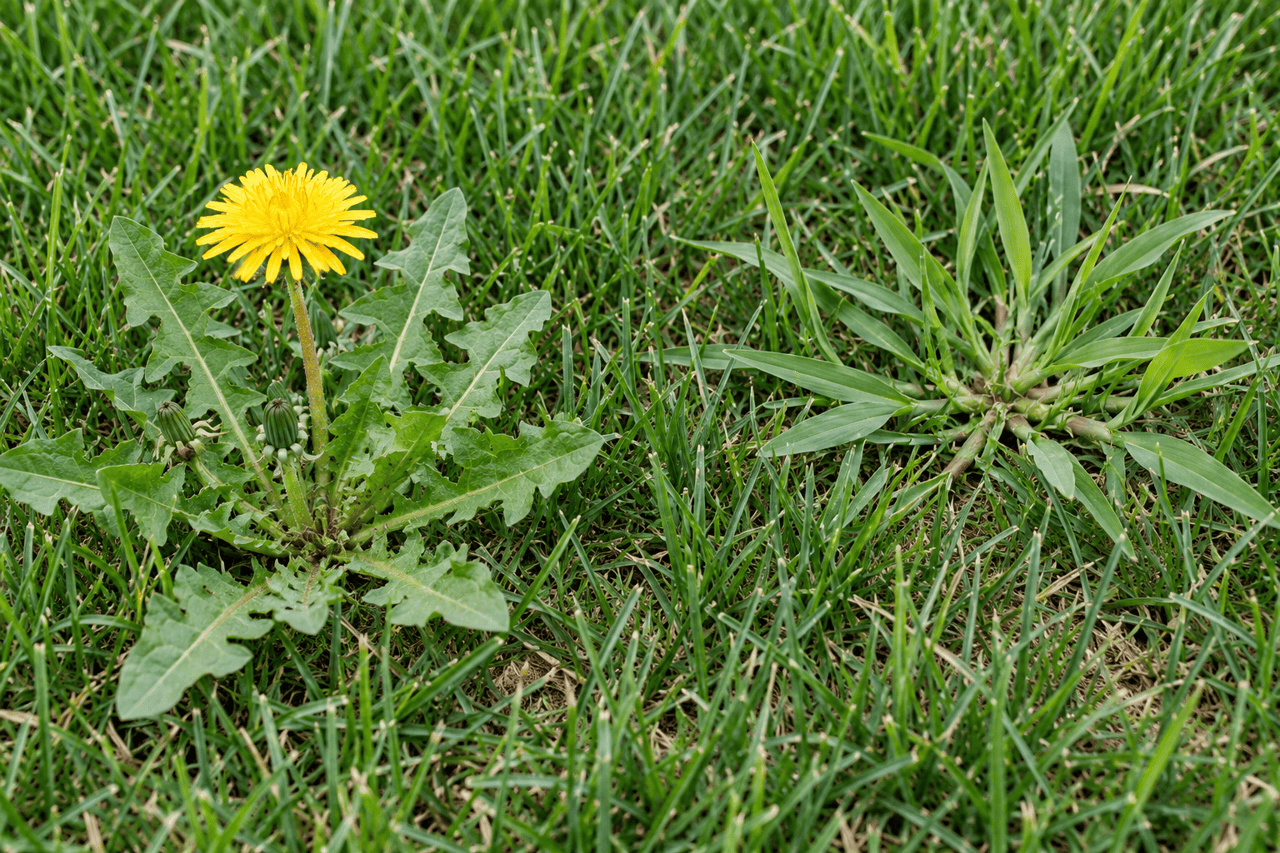
That was my reminder to check the lawn closely. On closer inspection, I found a few broadleaf weeds there, too. A yard can look weed-free from a distance while small weeds are already getting established.
Spring green-up is a useful reminder to plan weed control, but it does not tell you the exact application date. Different weeds emerge at different times, and a weed growing in a garden bed does not establish the timing for every weed in the turf.
For a better timing plan, Kansas State University recommends combining soil temperatures, local plant development, and growing degree day tools. Its guidance also explains that pre-emergents act on young weed seedlings in the soil. Apply ahead of the target weed's germination window, using local conditions and the product label to guide you.
Why I chose mesotrione
Mesotrione can provide both pre-emergence and post-emergence control of certain weeds. That appealed to me because I wanted to address new weed pressure and the small weeds already showing up.
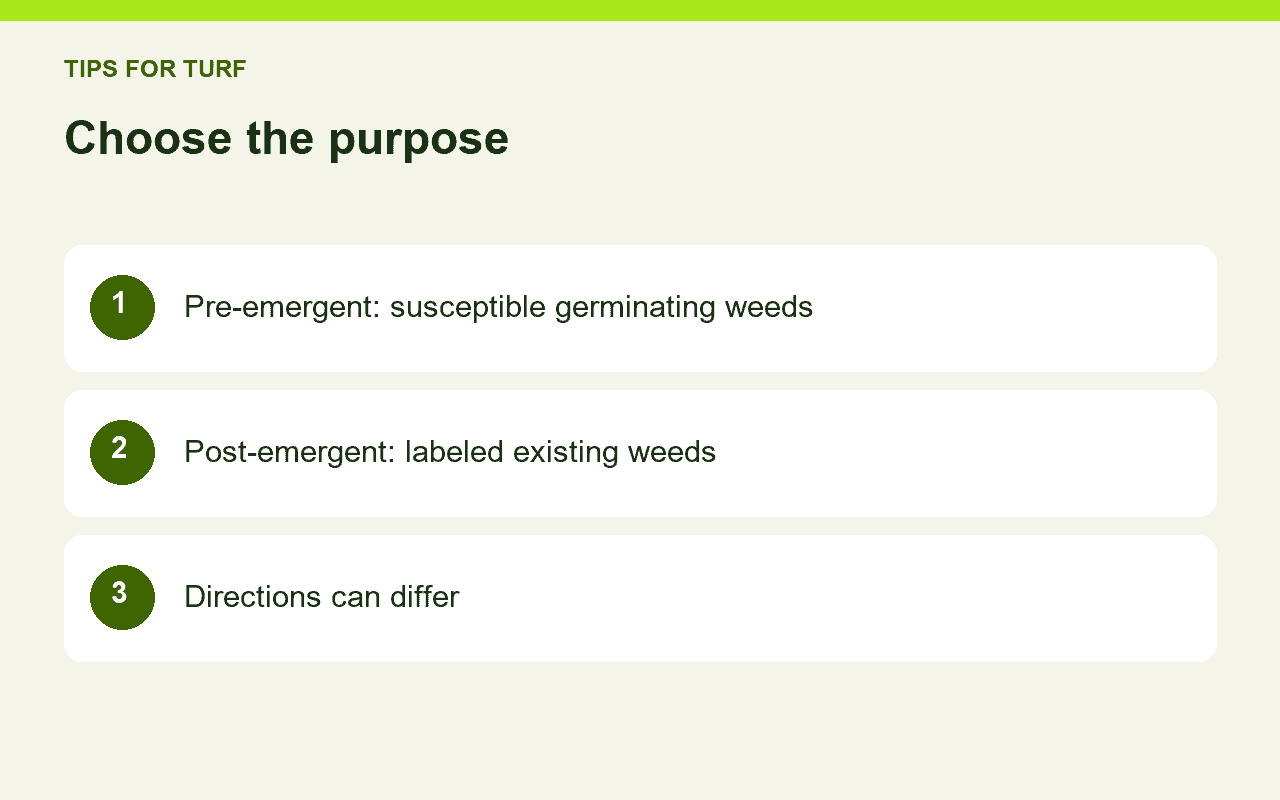
Those are two different jobs. Pre-emergence treatment targets weeds as they begin developing. Post-emergence treatment targets susceptible weeds that are already growing. Neither means that one spray will control every weed in the yard.
In the video, I chose the alternative brand because it cost less at the time. If you compare Tenacity with another mesotrione product, check the active ingredient concentration, labeled uses, and directions on each container. Sharing an active ingredient does not make every formulation or application instruction interchangeable.
Grass tolerance matters, too. Read the exact product label for your turf species before buying or spraying. Avoid treating mesotrione as a product that cannot hurt grass.
Check your spring seeding plans first
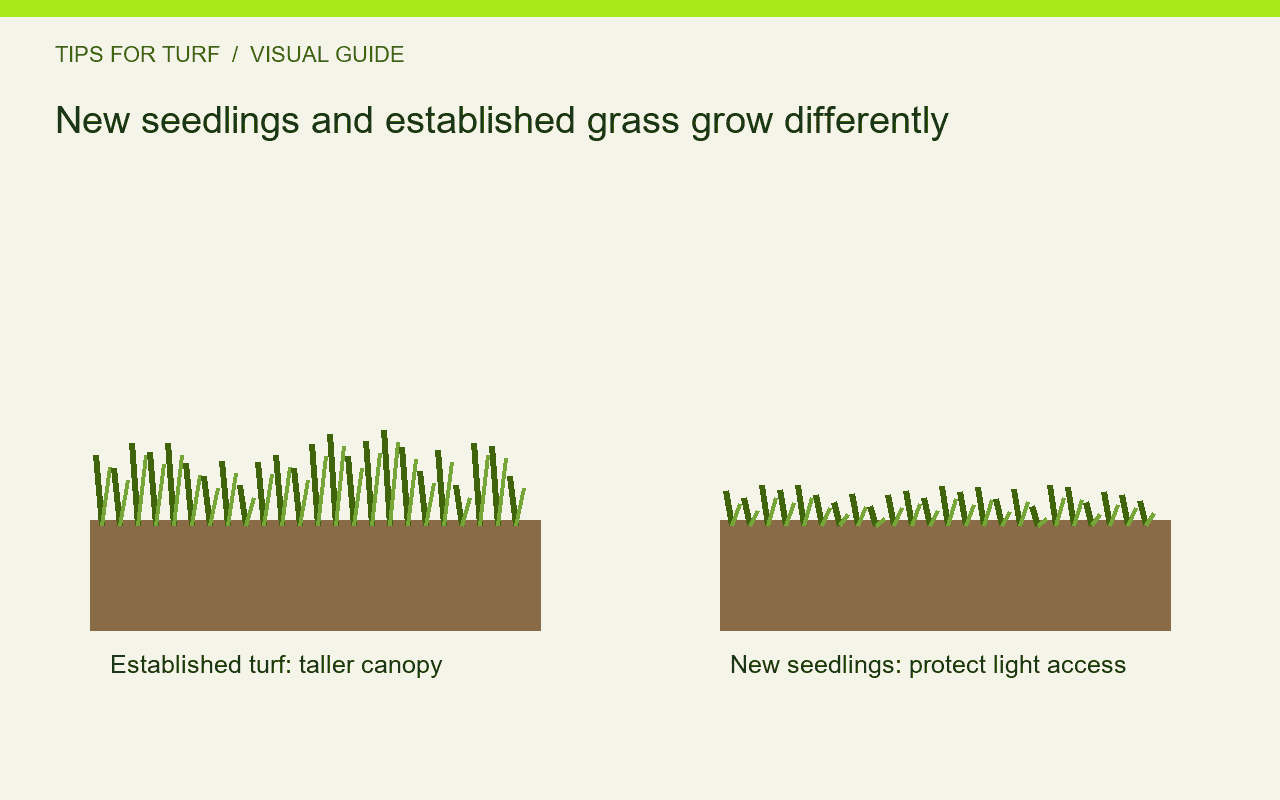
Before choosing a pre-emergent, decide whether you will also be planting grass seed. Many weed preventers interfere with new lawn establishment, so those two projects need to be planned together.
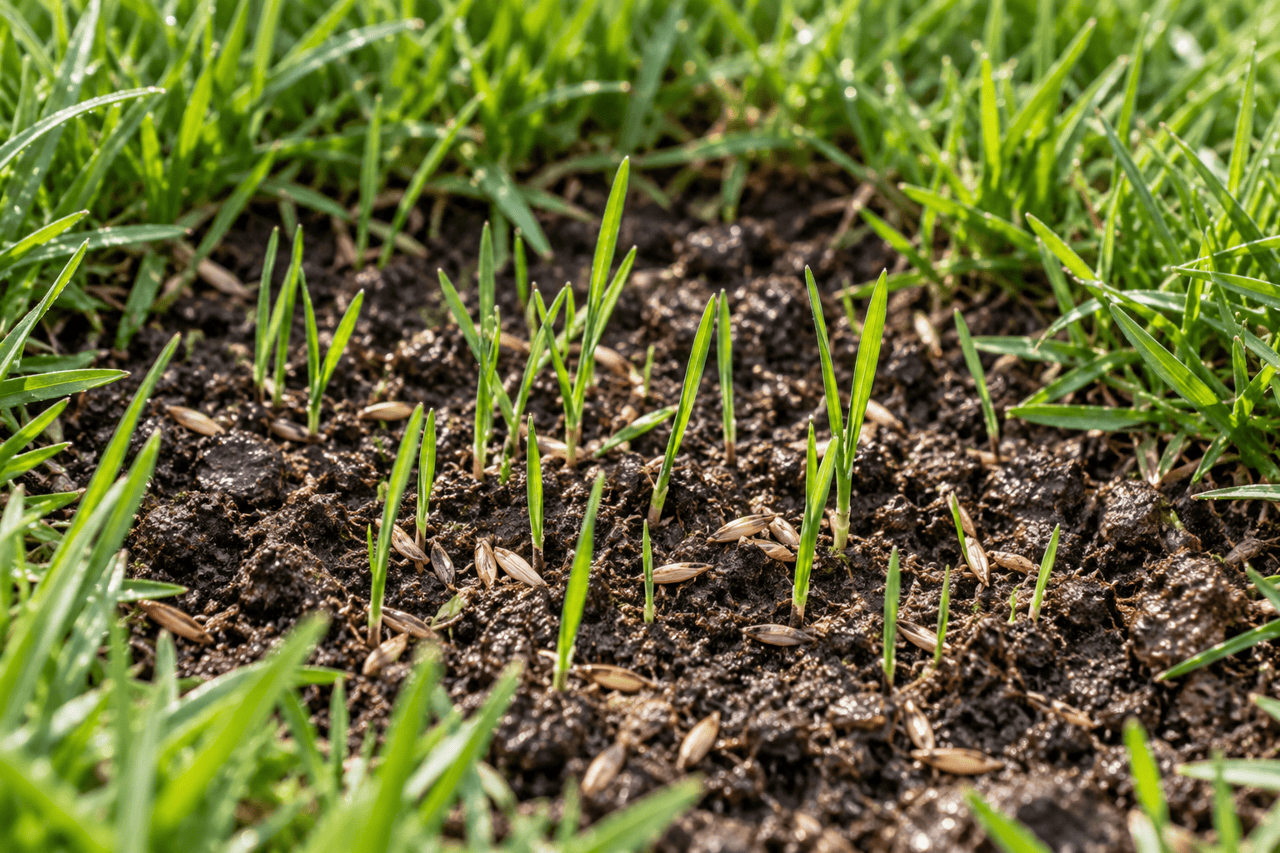
Mesotrione can be useful around seeding when the product, grass species, and timing are compatible. Rutgers University describes mesotrione as an option for spring seedings while noting that it may not provide season-long crabgrass control under heavy weed pressure. Its guidance also cautions against overapplication and highlights extra care with fine fescue.
If filling thin areas is part of your plan, my spring overseeding guide walks through the lawn preparation process. Check your specific herbicide's seeding restrictions before combining the projects, including any waiting period for newly emerged grass.
How I applied the liquid weed treatment to my lawn
I used a pump sprayer, water, the herbicide, and a measuring syringe. A backpack sprayer is another equipment option when suitable for the product and area. Here is how to make the application deliberate rather than guessing at coverage.
Measure the lawn and calibrate the sprayer
Start with the square footage you intend to treat. Then test your sprayer with plain water over a measured area so you know how much ground a tank covers at your walking pace.
A full tank does not tell you how much herbicide the lawn needs. Calculate the product amount from the labeled area rate and use the labeled spray volume. The video does not provide a complete mixing recipe, so do not copy an estimated amount from the footage.
Follow the label for mixing and protection
Read the mixing directions, agitation requirements, protective equipment instructions, weather restrictions, and reentry directions before opening the container. Wear the specified clothing and gloves. If respiratory protection is required, an ordinary face mask is not a substitute for the specified equipment.
Mix in the required order and keep the mixture agitated as directed. Add a surfactant only when the label calls for it for that application type.
Spray evenly and protect nearby plants
Use a consistent walking pace and spray pattern. Avoid repeatedly covering the same strip, and keep spray away from plants and surfaces outside the labeled treatment area.
I also sprayed a garden bed in the video. Do not copy that step without checking the label: permission to treat a lawn does not establish permission to spray ornamental or vegetable beds. Choose a weed-control method specifically permitted for that planting area.
Follow the correct watering instructions
A liquid spray is not automatically a foliar-only treatment. For pre-emergence use, follow the product's instructions for moving the treatment into the soil. For post-emergence use, follow its rain-free interval and irrigation directions so the application can work as intended.
Once that application window has passed, keep your normal watering appropriate for the lawn and weather. If the grass looks stressed, use my guide to telling whether you are overwatering or underwatering your lawn to check soil moisture before changing the schedule.
Results after seven days
At the one-week check, the lawn still had relatively few visible weeds. Some existing broadleaf weeds appeared wilted around their edges, while a dandelion had appeared after treatment. Weeds were also still visible in the garden beds.
Those were observations from my yard, not a controlled comparison. I did not have a matched untreated lawn section, so I cannot say exactly how many weeds the application prevented. The treated garden bed was not an untreated control, either.
The follow-up did show why expectations matter. One application did not leave the property completely weed-free, and seven days was too early to call every affected weed dead. Wilting alone does not prove the roots are dead.
Mesotrione can also cause bleaching, including temporary whitening of turf. Keep observing treated plants and follow the label before deciding whether another application is appropriate. Do not increase the rate or shorten the interval because the weeds are taking longer than you expected.
What to do if weeds still appear
First, identify the weed. Then check whether your product controls it at its current growth stage. A surviving perennial, a newly emerged annual, and a weed outside the product's control list may need different responses.
Keep a simple record of the treatment date, product, rate, weather, and watering. Take close-up photos of the same patches during follow-up checks. That gives you something more useful to compare than a general impression of whether the yard looks better.
Work on the turf itself as well. My guide to making grass dense and thick covers common reasons lawns stay thin and the care changes that help fill them in. Weed control works better as part of an ongoing lawn-care plan than as an isolated spring chore.
Products and tools from our walkthrough
- Petra HD4000 Backpack Sprayer
- 2-Gallon Pump Sprayer
- Tenacity
- Torocity
- Garden Gloves
- Respirator Mask
- Rubber Boots
(If you make a purchase using the links in this post, we may earn a commission.)
Get help with your next lawn project
For lawn care guides, seasonal advice, product recommendations, and feedback from Matt, Greg, and other lawn enthusiasts, join the Tips for Turf community. We can compare notes on your grass, your conditions, and the next practical step.
Frequently asked questions
Is mesotrione only a pre-emergent?
No. We use the label to distinguish its pre-emergent and post-emergent purposes, target weeds, and application instructions.
Can we use it when seeding?
Some labeled turf species and seeding situations allow it. We verify the exact product, grass species, and timing instead of assuming every new lawn qualifies.
Should we add a surfactant automatically?
No. The instructions depend on application purpose. We follow the chosen product’s directions for adjuvants and watering.
Will one application stop all spring weeds?
No. My lawn still had some weeds afterward. We inspect the response and use the label’s timing and limits for any follow-up.