
A strong, healthy, green lawn needs three basic things: water, air, and nutrients.
Compacted soil gets in the way of all three.
When soil gets packed down too tightly, water has a harder time soaking in, oxygen can’t move through the soil as easily, and nutrients don’t reach the root zone the way they should. Over time, that can lead to shallow roots, stressed grass, thin turf, and a lawn that struggles when hot weather hits.
The good news is that you don’t always need to rent a big machine or hire a lawn care company to fix it. For small yards or problem areas, you can manually aerate your lawn with a simple hand aerator.
Here’s how to tell if your lawn needs aeration, when to do it, what type of manual aerator to use, and how to aerate your lawn by hand step by step.
(If you make a purchase using the links in this post, we may earn a commission.)
What Is Lawn Aeration?
Lawn aeration is the process of opening up compacted soil so water, air, and nutrients can move deeper into the ground.
Core aeration works by pulling small plugs of soil out of the lawn. Those holes give the surrounding soil room to loosen up, which helps your grass roots grow deeper and stronger.
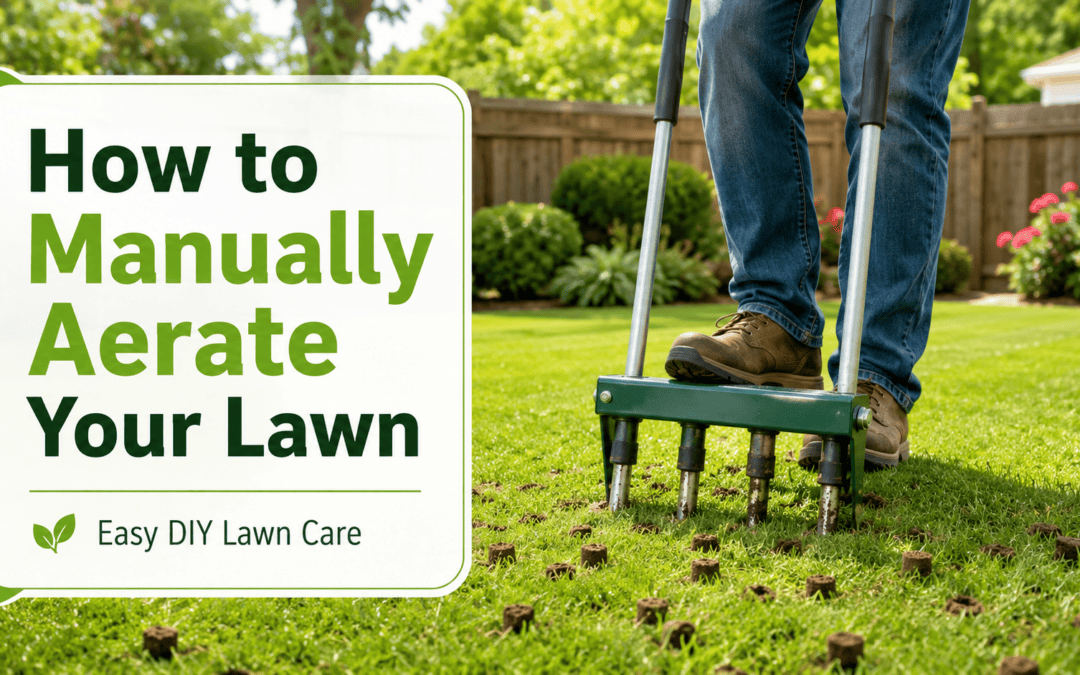
Manual lawn aeration uses a handheld tool instead of a gas-powered or tow-behind aerator on your lawn. The tool is usually pushed into the ground with your foot, then pulled back up to remove small soil cores.
Manual aeration takes more effort, but it works well for small lawns, side yards, or compacted trouble spots.
Why Soil Gets Compacted
Soil compaction in your lawn happens when soil particles get pressed tightly together.
A few common causes include:
- Heavy foot traffic
- Kids or pets playing in the same area often
- Heavy rain or snow
- Lawn equipment or vehicles driving over the grass
- Clay-heavy soil
- Repeated watering followed by dry, hard ground
- Clay soil is especially prone to compaction. When clay soil gets wet, it can clump together. When it dries out, it can become extremely hard. That makes it harder for roots to grow deep and harder for water to soak in evenly.
Sandy soil usually drains better and doesn’t compact as easily, but even sandy lawns can benefit from aeration every few years to allow for air, water and nutrients to reach the root layer.
How To Tell If Your Lawn Needs Aeration
A compacted lawn can look thin, stressed, or dry even when you’re watering it. Before you aerate, run a couple of simple tests.
Try the Screwdriver Test
The screwdriver test is one of the easiest ways to check for compacted soil.
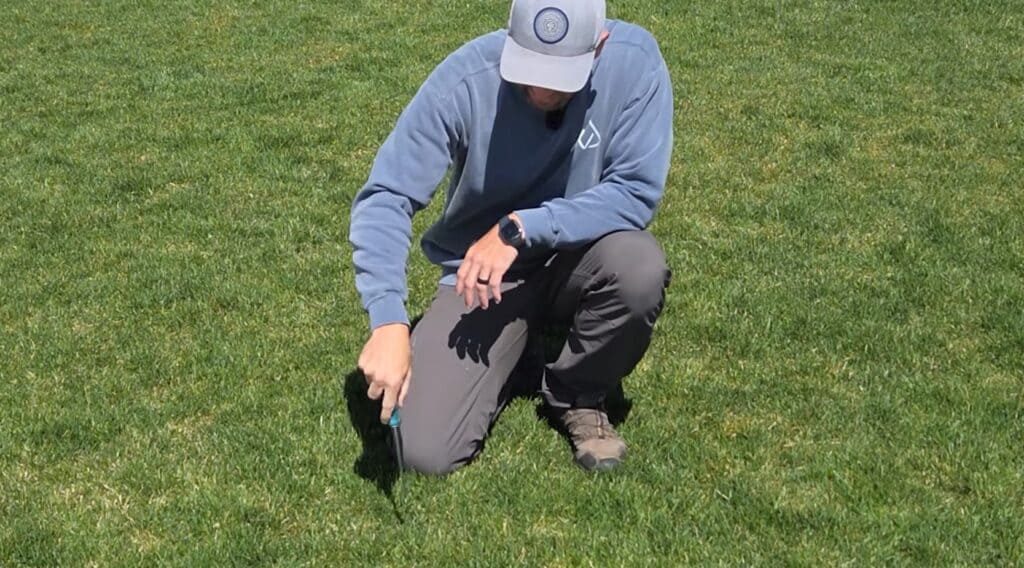
Grab a screwdriver that’s about 6 inches long and push it into the lawn. Healthy, loose soil should let the screwdriver slide in without too much resistance.
Compacted soil will feel hard. The screwdriver may stop early, take extra force, or feel like you’re pushing into dry clay.
Test a few different parts of your lawn. Some areas may be compacted while others are fine. For example, a spot where kids play soccer, a walkway area, or the strip near a driveway may need aeration more than the rest of the yard.
👉BUY – 6 Inch Screwdriver – https://amzn.to/3IPIn4Y
Check Your Soil Type With a Soil Probe
A soil sampler probe lets you pull up a small plug so you can see what’s happening under the grass. This is especially useful if you want to find out if you have clay soil or a sand-based soil.
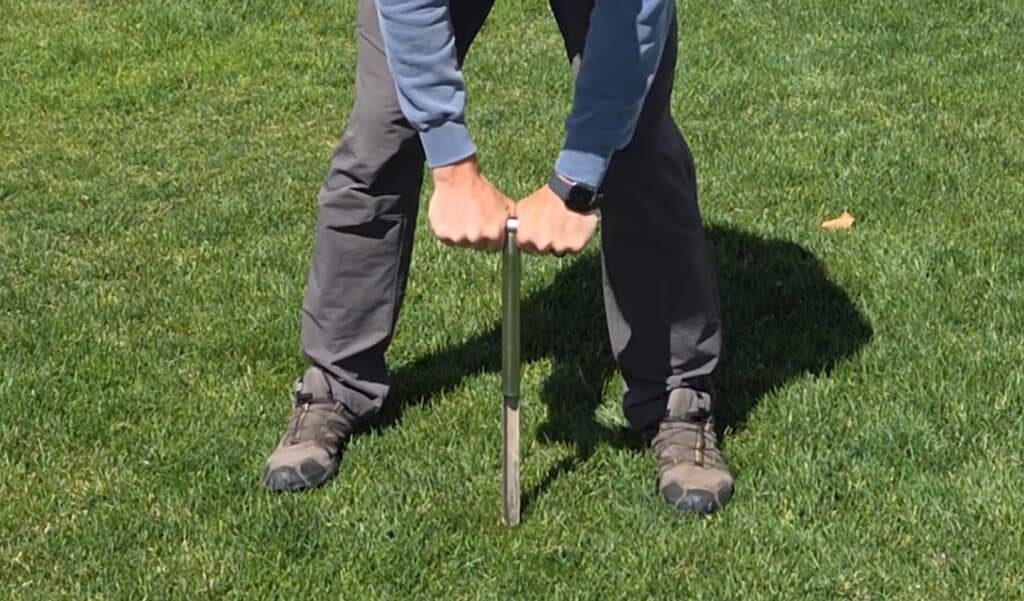
Push the probe into the lawn and pull out a sample. Sandy soil usually breaks apart more easily. Clay soil tends to hold together, clump, and feel moldable.
If the soil plug is hard to pull, stays in one solid clump, and feels sticky or dense, you may be dealing with clay-based soil and compaction.
👉BUY – Soil Sampler Probe (I have the 21″ version) – https://amzn.to/4mp5eDg
When Is the Best Time To Aerate Your Lawn?
The best time to aerate your lawn depends on the type of grass you have.
Cool-Season Grass Aeration
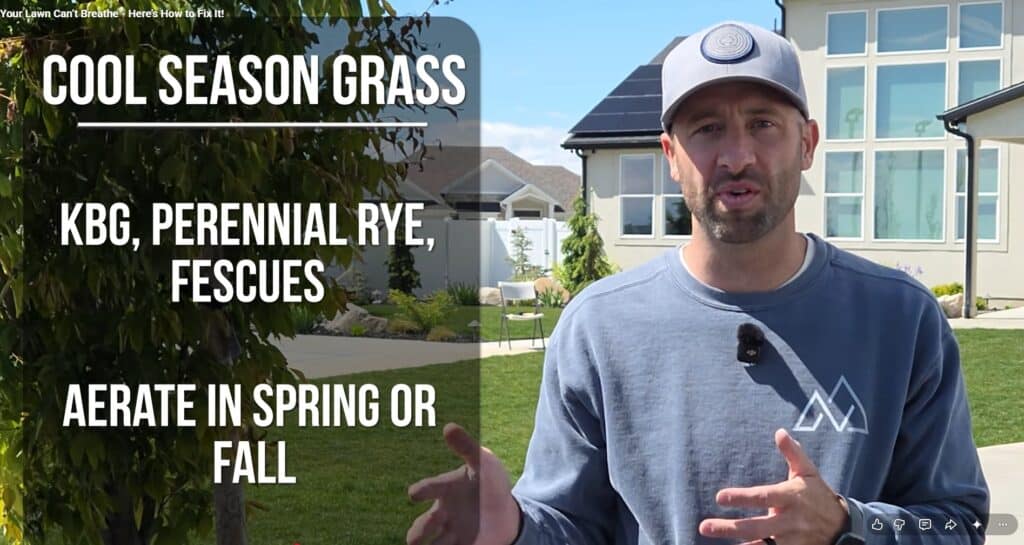
Cool-season grasses include Kentucky bluegrass, perennial ryegrass, and fescue.
For cool-season lawns, aerate in spring or fall. Fall is often a great time because temperatures are cooler, the grass is actively growing, and the lawn has time to recover.
Warm-Season Grass Aeration
Warm-season grasses include Bermuda, zoysia, and other grasses that thrive in heat.
For warm-season lawns, aerate in late spring or early summer when the grass is actively growing.
Avoid Aerating During Heat Stress
Aeration puts some stress on the lawn, so avoid doing it when the grass is already struggling. Hot, dry weather is not the best time to punch holes in the yard.
Choose a time when the lawn is growing well and can recover quickly. For most lawns, this will be in the spring and fall.
How Often Should You Aerate Your Lawn?
Clay soil may need aeration every year, especially if the lawn sees a lot of traffic or has poor drainage.
Sandy soil may only need aeration every two or three years.
Your lawn doesn’t always need a full-yard aeration every time. Manual aeration is helpful because you can focus only on the compacted spots instead of turning the whole project into a bigger job.
Manual Aeration vs. Machine Aeration
Whether or not you choose manual aeration vs machine aeration depends on your budget, your time, and how much energy you’re willing to exert. There are three common ways to aerate a lawn:
1. Rent a Lawn Aerator
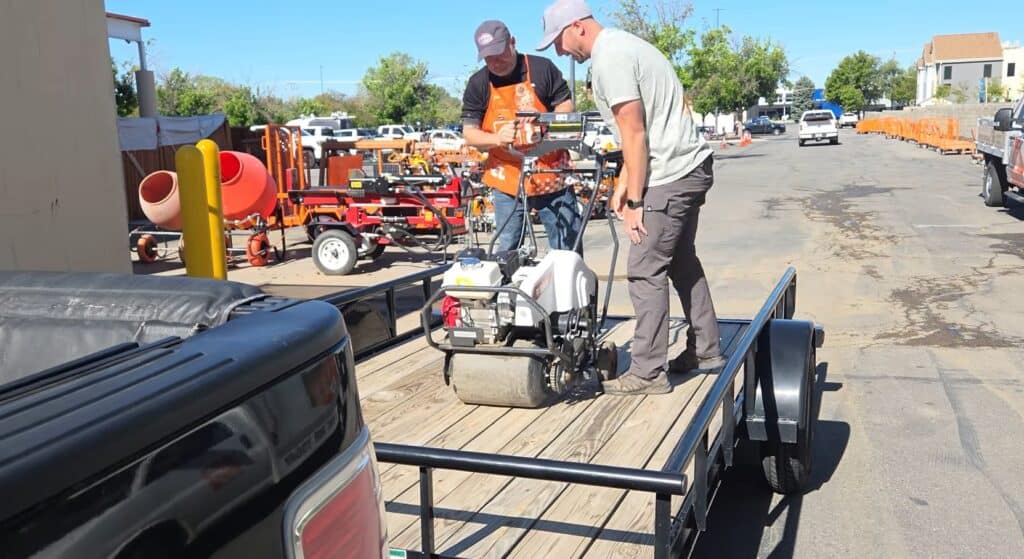
A rental machine aerator works well for larger yards. You push it across the lawn like a mower, and it pulls plugs as you go.
The downside is the setup. You may need a truck or trailer, a rental appointment, and time to pick up and return the machine. You can also expect to pay anywhere from $80 to $150 for a day’s worth of rental time, so it might be best to try and split the cost with some neighbors to make it more worth it.
2. Hire a Lawn Care Company
Hiring a pro is the easiest option. The lawn gets aerated without much effort from you.
The downside is cost. Professional aeration is usually the most expensive choice. This is why most home owners choose to rent a machine aerator or buy a manual aerator to do themselves.
3. Use a Manual Lawn Aerator
A manual core aerator is a great option for smaller yards or problem areas. There are a few different types of manual aerators – some that you push (and roll in front of you) and some that you push into the ground with your foot. At Tips for Turf, we prefer the manual fork aerators like the Landzie Fork Aerator.
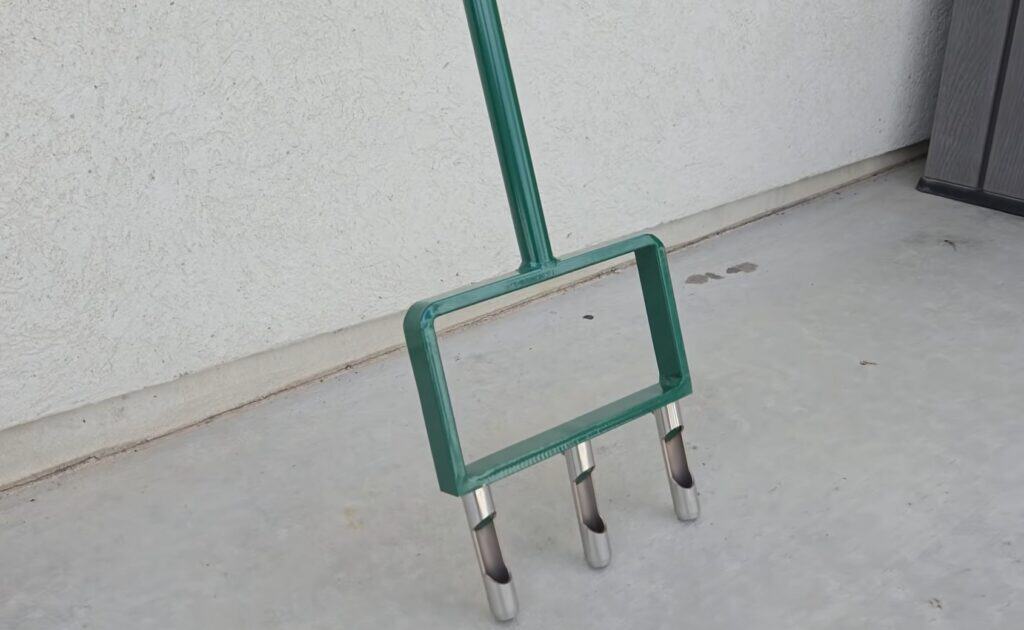
You push the tool into the ground with your foot, pull it back out, and move forward a few inches at a time.
Manual aeration takes more physical work, but it gives you control. You can hit compacted areas several times and skip areas that don’t need it.
👉BUY – Landzie Fork Aerator – https://amzn.to/49q0x8b
Choose the Right Manual Aerator
Not all hand aerators work the same way.
Solid Tine Aerators
Solid tine aerators poke holes into the soil without removing soil plugs.
These can be useful for sandy lawns where you mainly want to open up small channels for water, air, and nutrients.
Hollow Tine Core Aerators
Hollow tine aerators pull plugs of soil out of the ground.
For compacted clay soil, a hollow tine aerator is usually the better choice. Removing cores gives the surrounding soil room to loosen, which helps reduce compaction.
If your lawn has clay soil or serious compaction, use a manual core aerator with hollow tines.
How To Manually Aerate Your Lawn Step by Step
Manual aeration is simple, but a little prep will make the job much easier.
Step 1: Water the Lawn First
Manual aeration works best when the soil is moist.
Pick a day after a good rain, or deeply water the lawn the day before the project. The soil should be damp enough for the aerator to push in, but not so muddy that every step turns into a mess.
Dry clay soil can be extremely hard, so don’t skip this step!
Step 2: Mow the Grass Lower Than Normal
Mow the grass a little lower than your regular mowing height before aerating.
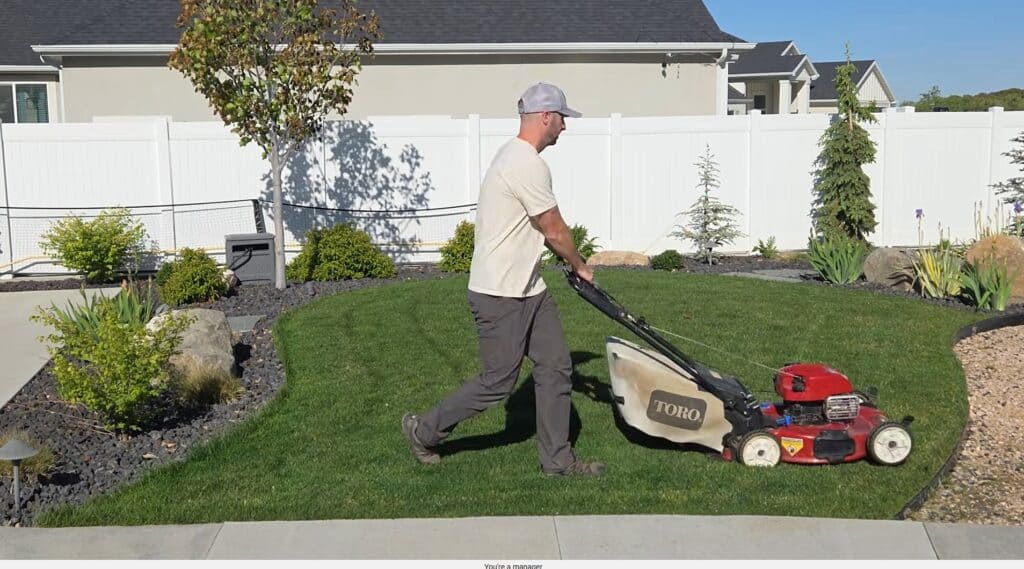
A good range for this project is around 1.5 to 2.5 inches, depending on your grass type and current lawn height.
Shorter grass gives the aerator easier access to the soil and helps the tool pull plugs more cleanly.
Step 3: Push the Manual Aerator Into the Soil
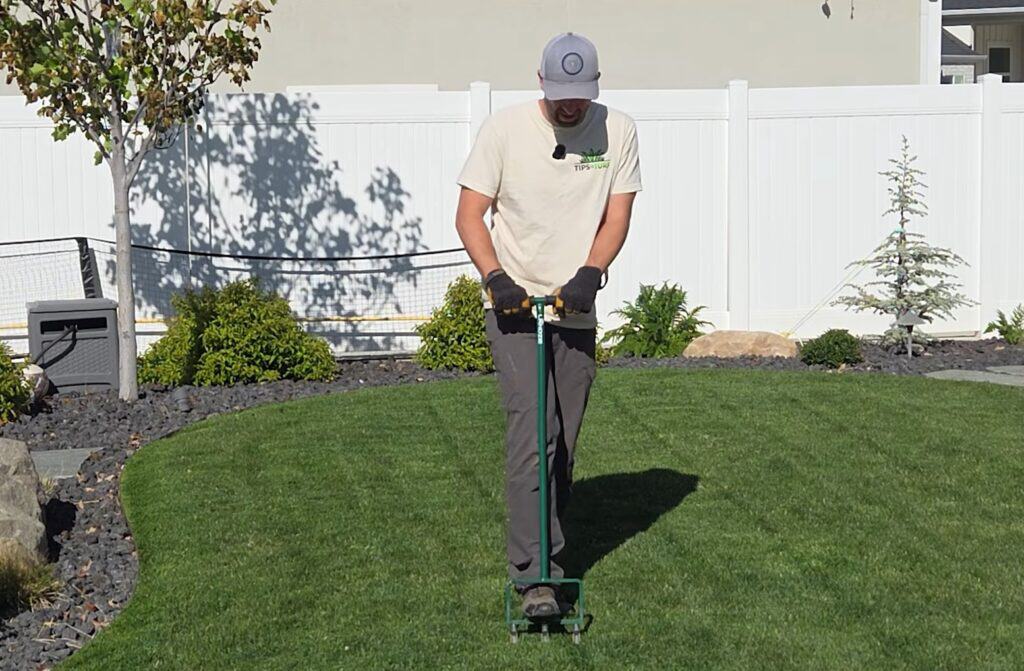
Place the manual aerator where you want to start. Put your foot on the step bar, press the tines into the ground, then pull the tool back up.
The hollow tines should pull soil plugs out of the lawn.
Move forward about 3 to 4 inches and repeat.
Step 4: Work in Rows
Manual aeration is easier when you work in rows across the lawn.
Use the same foot for one full row, and keep your other foot on the side that hasn’t been aerated yet. When you turn around for the next row, switch feet.
This keeps you from stepping all over the wet soil plugs. Clay plugs can stick to your shoes, so this small trick helps keep the project cleaner.
Step 5: Go Over Bad Spots More Than Once
Very compacted areas can handle more passes.
If one part of your lawn feels especially hard, run over that area two, three, or even four times. Manual aeration gives you the freedom to spend more time on the spots that need extra help.
Step 6: Decide Whether To Remove the Cores
Lawn cores are a debated topic, but here’s a simple way to think about it.
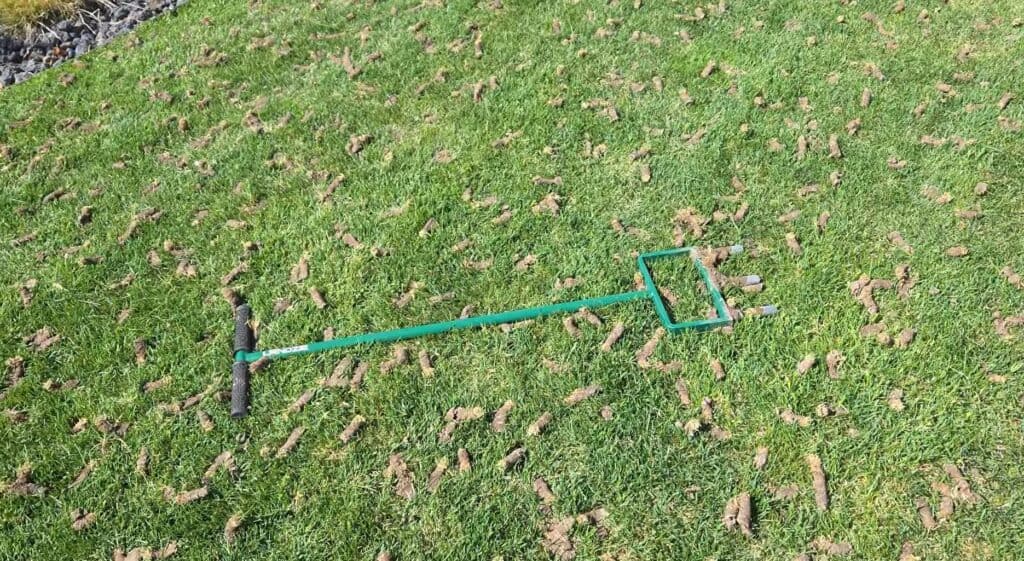
If you have sandy soil and you aerated mainly to improve air, water, and nutrient movement, you can usually leave the cores. They’ll break down and return organic material back to the soil.
If you have compacted clay soil and you’re trying to loosen the lawn, remove the cores. Pulling those plugs out helps displace some of that dense soil and gives the lawn room to relax.
A rake, shovel, or bucket works fine for cleanup.
👉BUY – Leaf Rake – https://amzn.to/4npip7s
👉BUY – Gloves – https://amzn.to/4leHEbn
👉BUY – Wheel Barrow – https://amzn.to/4nwFHK5
Step 7: Let the Lawn Recover
Give the lawn some time to heal after aeration.
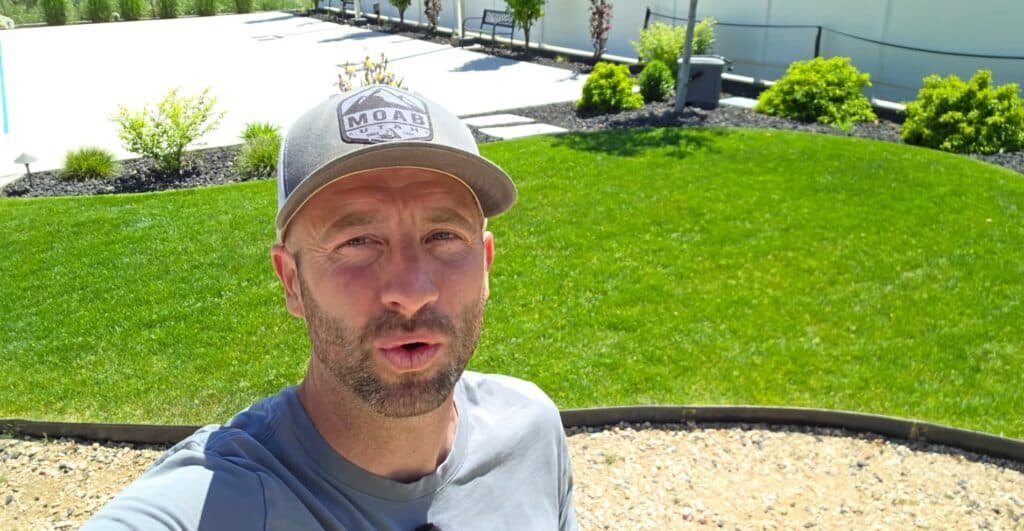
In the video, the grass had fully recovered about 10 days after manual aeration. Waiting a little longer before mowing can help the lawn bounce back without extra stress.
Keep the soil lightly watered as needed, especially if the weather gets dry.
How Long Does Manual Aeration Take?
Manual aeration takes more time than using a machine, but it’s very doable for small spaces.
For a 500-square-foot section, plan on around 30 minutes if you’re working steadily. A 250-square-foot area may take about 15 minutes.
For a large yard, renting a machine will probably be more practical. For a small yard, side strip, front patch, or compacted play area, a manual aerator is a simple and affordable option.
What To Do After Aerating Your Lawn
Aeration opens up the soil, so it’s a great time to help your lawn recover and grow stronger.
After aeration, you can:
- Water the lawn as needed
- Add compost or soil amendments if you’re working on clay soil
- Overseed thin spots, especially on cool-season lawns
- Apply fertilizer if your lawn is actively growing
- Keep foot traffic lower while the lawn heals
Avoid doing anything too aggressive right after aeration. Give the grass time to recover before mowing low, scarifying, or putting heavy traffic back on the area.
Should You Aerate Your Lawn? Yes!
Manual aeration is one of the simplest ways to deal with compacted soil in a small yard.
A handheld core aerator can help loosen hard soil, open up the root zone, and give your grass better access to water, air, and nutrients. For clay soil or compacted areas, use a hollow tine aerator that pulls plugs instead of just poking holes.
The process is simple: water the lawn, mow low, push the manual aerator into the soil, work in rows, remove the cores if you’re dealing with clay compaction, and give the lawn time to recover.
For small lawns, manual aeration is a practical weekend project. For bigger yards, renting a machine may save time.
Either way, reducing compaction gives your grass a better chance to grow deeper roots and stay healthier through the season. Let us know how you aerate your lawn in the comments below!
Join our Skool Community to learn how to get a thicker, greener, healthier lawn!
Frequently Asked Questions About Manual Lawn Aeration
Can you aerate a lawn by hand?
Yes, you can aerate a lawn by hand with a manual core aerator. This works especially well for small yards, side yards, or compacted spots where a large machine isn’t necessary.
Is manual aeration worth it?
Manual aeration is worth it for smaller lawns or targeted problem areas. Large lawns are usually easier to aerate with a rented machine or professional service.
Should I use a spike aerator or core aerator?
A core aerator is usually better for compacted clay soil because it removes plugs from the lawn. A spike aerator only pokes holes, which may be fine for sandy soil but may not relieve compaction as well.
Should the soil be wet before aerating?
The soil should be moist before aerating. Water the lawn the day before, or aerate after a good rain. Avoid aerating when the soil is bone dry or overly muddy.
How deep should manual aeration holes be?
Most manual core aerators pull plugs several inches deep. A depth of around 3 to 4 inches can help open the soil and improve movement of water, air, and nutrients.
Should I pick up the soil plugs after aerating?
Sandy soil plugs can usually stay on the lawn and break down naturally. For compacted clay soil, removing the plugs can help displace dense soil and give the lawn more room to loosen up.
How long does a lawn take to recover after aeration?
Many lawns recover within about 7 to 14 days when the grass is actively growing and the weather is mild. Keep the lawn watered as needed and avoid heavy traffic while it heals.