
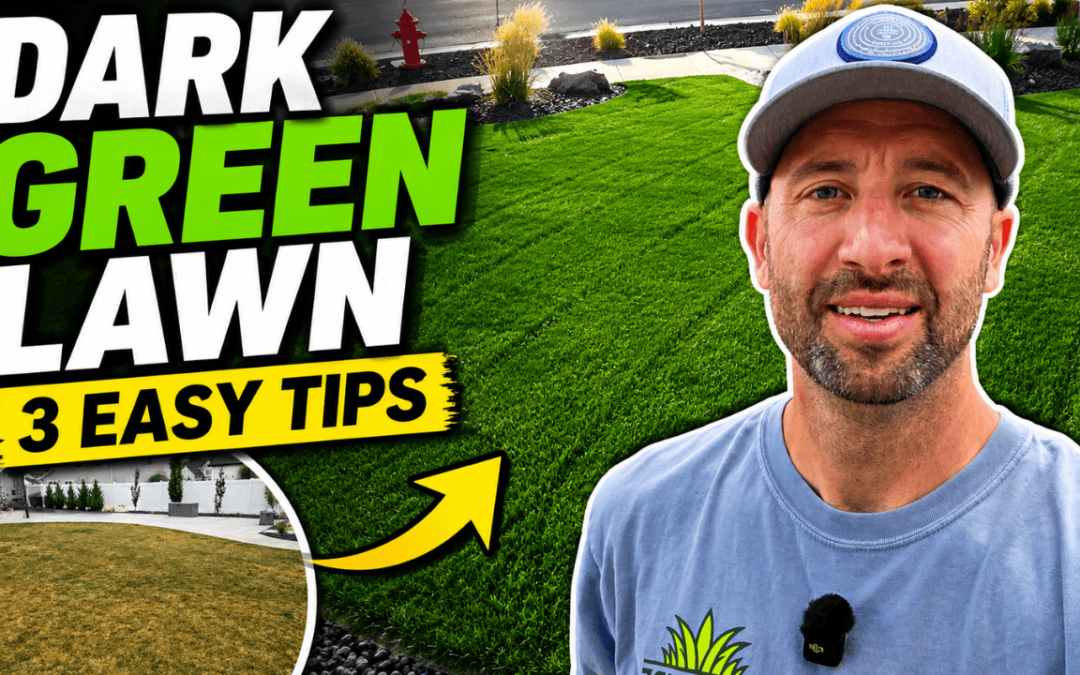
If you’ve ever looked across the street and wondered why your neighbor’s grass is darker and greener than yours, you’re definitely not alone. Getting a deep green lawn doesn’t necessarily require a complicated lawn care program, either. In my own yard, three changes have made a huge difference: dethatching and scarifying, overseeding and improving my fertilizer routine.
Before you start adding products or making major changes, though, you need to make sure your lawn’s basic needs are being met. If there’s a bigger underlying issue with watering, soil health, compaction, disease or pests, those problems should usually be addressed first.
See my entire strategy here!
Before You Try To Make Your Grass Darker Green
If your lawn is struggling, don’t immediately assume it just needs more fertilizer. Start by looking at how you’re watering, what your soil needs and whether another lawn problem could be affecting the grass.
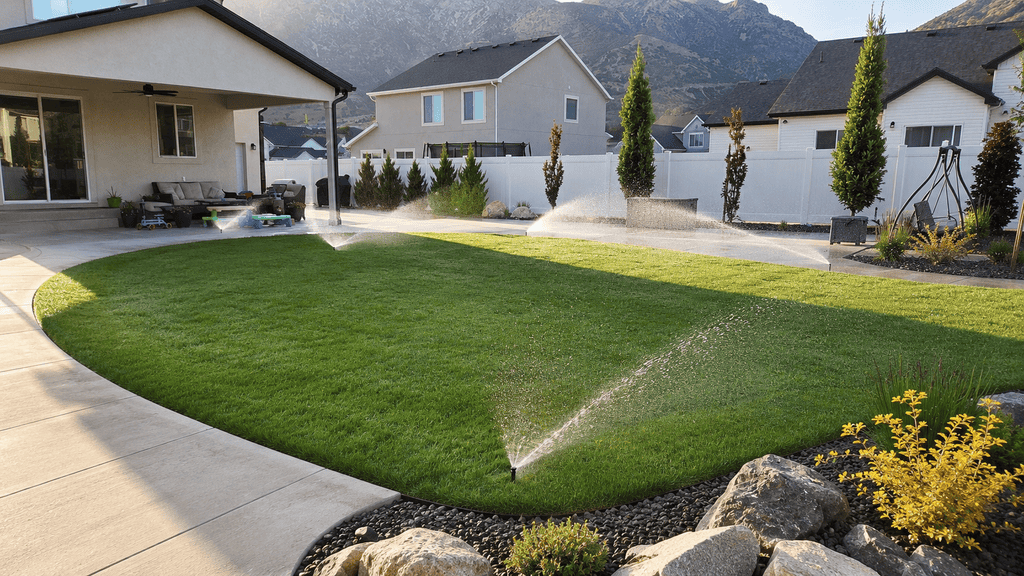
Make Sure You’re Watering Correctly
Both too much and too little water can cause lawn problems. One change that helped my own yard was switching to deeper, less frequent watering instead of simply watering more often.
Pay attention to how your grass responds and make sure your irrigation system is actually covering the lawn evenly. If certain areas aren’t receiving enough water, adding more fertilizer or seed may not solve the underlying problem.
Test Your Soil
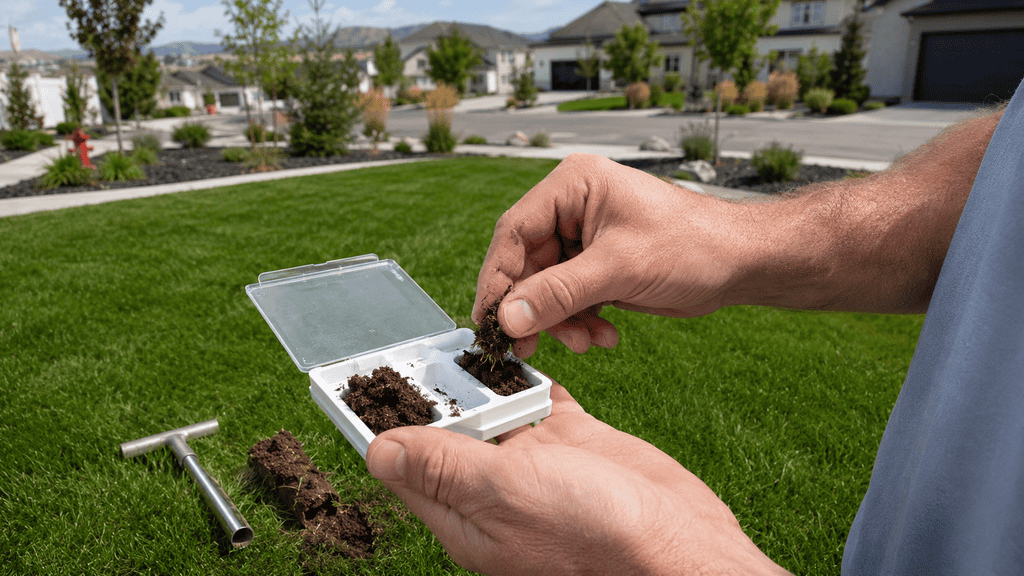
A soil test can help you understand what nutrients your lawn may be missing. This was especially helpful in my yard because, at one point, I thought I might actually be fertilizing too much. After testing the soil, I found that my grass needed considerably more nitrogen.
Knowing what your soil needs gives you a much better starting point than simply guessing. Once you have a healthier baseline, you can start focusing more on improving thickness, color and the overall appearance of the lawn.
Check for Other Lawn Problems
Poor color can also be related to issues such as compacted soil, lawn diseases, grubs or other pests, inconsistent irrigation and nutrient deficiencies. The three strategies below work best when your lawn is already reasonably healthy, so if the grass is severely struggling, take some time to troubleshoot those larger problems first.
Once you have the basics covered, you can start using these next three strategies to take your lawn to another level.
1. Dethatch and Scarify Your Lawn
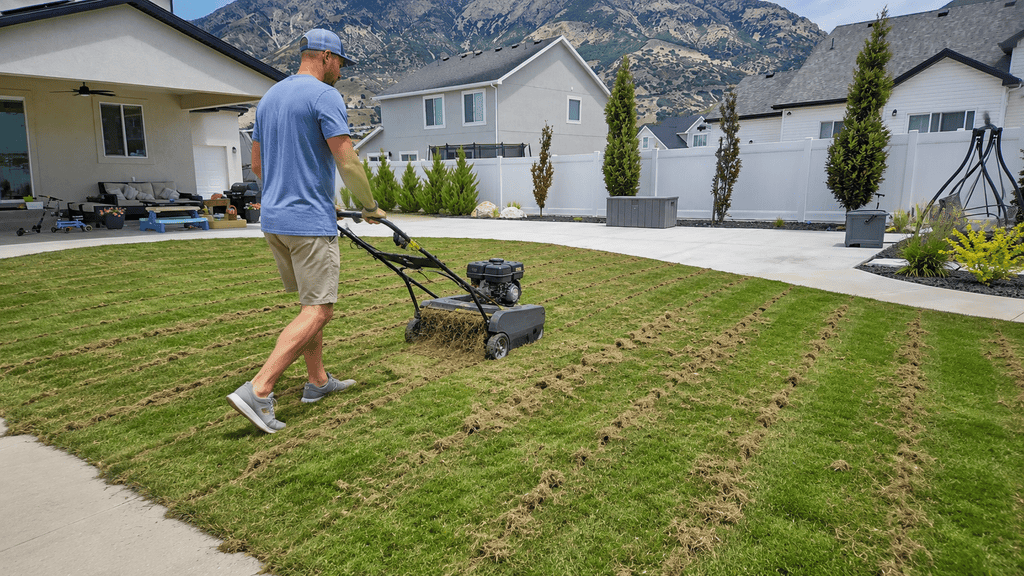
One of the biggest changes I made to my lawn care routine was dethatching and scarifying. Over time, dead grass and other organic material can accumulate around the base of your lawn, and removing some of that material can help open things up so air, water and nutrients can more easily reach the soil.
For my lawn, I use a Sun Joe dethatcher and scarifier. What I like about the scarifying attachment is that it does more than simply pull up dead material. The blades also disturb the surface of the soil slightly, which can help prepare the lawn for projects such as overseeding.
Scarifying can be especially useful when you’re preparing for a larger lawn project because it can remove excess dead material, open up the grass canopy, expose more soil and create better conditions for new seed. Aeration can also be useful when you’re trying to improve soil conditions, particularly if compaction is an issue.
For me, dethatching and scarifying have become an important part of the routine because they help prepare the lawn for the second strategy: overseeding.
Buy a Sunjoe Scarifier and Dethatcher here 👉 https://amzn.to/45Dfty7
(If you make a purchase using the links in this description, we may earn a commission at no additional cost to you.)
2. Overseed To Create a Thicker, Darker Lawn
If you want a thicker and darker green lawn, overseeding can make a major difference. Overseeding simply means spreading new grass seed into your existing lawn to help increase density, repair thin areas and introduce new grass cultivars.
When I first started getting serious about lawn care, overseeding seemed a little intimidating because I didn’t completely understand why you would add seed to a lawn that already had grass. Now, I overseed regularly because I’ve seen how much it can improve both the thickness and appearance of the lawn.
Lawns naturally take abuse from kids, pets, heat and normal foot traffic, so certain areas can gradually become thin or bare. Overseeding gives you an opportunity to introduce new grass into those areas and increase the overall density of the lawn. A thicker lawn can also help reduce the amount of open space available for weeds.
One of my favorite reasons to overseed, though, is that you aren’t limited to simply replacing the grass you already have. Overseeding allows you to introduce new grass cultivars with characteristics you want, including darker color.
In my own lawn, I’ve been overseeding with Night Shift Dark 30, a dark perennial ryegrass, and blending it into my Kentucky bluegrass lawn. That combination has helped give my yard the darker green appearance I’m looking for.
Because my lawn gets a lot of use from kids playing soccer and other activities, overseeding also gives me an opportunity to continually refresh thin or worn areas while gradually improving the overall color.
Buy Night Shift Dark:30 here 👉 https://thelawnlife.com/products/dark-30-formerly-blackout-2-0-pre-sale?sca_ref=9570198.tnSsFSCU50O&sca_source=website
(If you make a purchase using the links in this description, we may earn a commission at no additional cost to you.)
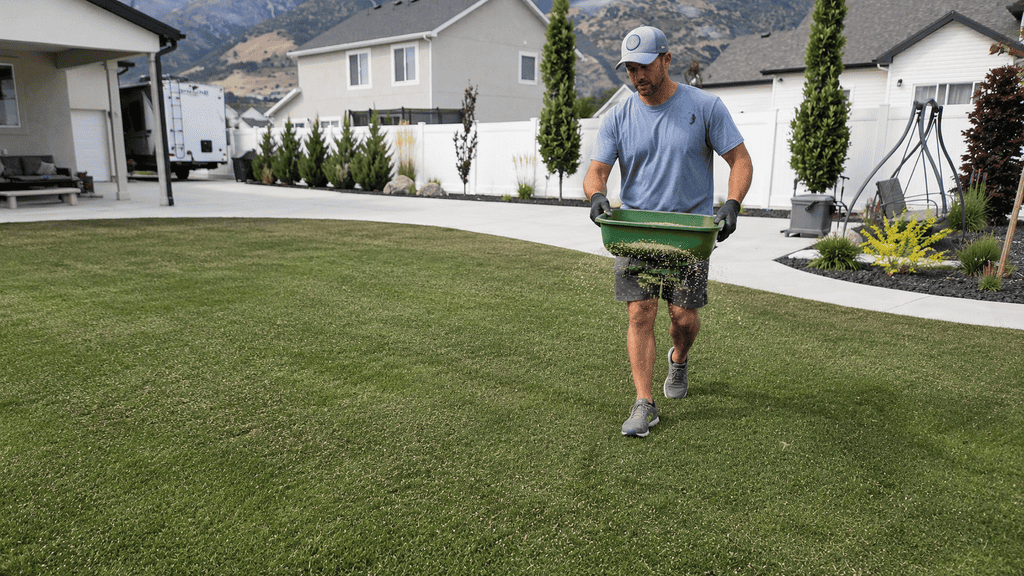
3. Use the Right Fertilizer Routine
The third change that has helped keep my lawn dark green is improving the way I fertilize. For years, I took a fairly traditional approach and fertilized several times throughout the season, but now I pay much more attention to what my soil actually needs and use fertilizer based on those needs.
One product I’ve been using is Neighbor’s Envy liquid lawn fertilizer. It contains a combination of ingredients my lawn needs, including nitrogen, potassium and iron, along with organic elements such as sea kelp and humic acid.
Instead of using fertilizer only a few times per year, I’ve been applying this liquid fertilizer approximately every couple of weeks as part of my lawn care routine. That change has played a major role in maintaining the deep green color of my lawn throughout the season. Because it’s a liquid product, you’ll need a sprayer such as a backpack sprayer or another type of lawn sprayer to apply it.
Get Neighbor’s Envy here 👉 https://thelawnlife.com/products/neighbors-envy-liquid-fertilizer?sca_ref=9570198.tnSsFSCU50O&sca_source=Website
(If you make a purchase using the links in this description, we may earn a commission at no additional cost to you.)

Prefer Granular Fertilizer?
You don’t have to use a liquid fertilizer to get a greener lawn. If you already own a hand spreader or broadcast spreader, ammonium sulfate is another option I’ve used.
More recently, I switched to Night Shift Dark Matter ammonium sulfate because I like the smaller granule size. Smaller granules can be distributed more evenly across the lawn, which can help reduce the chance of getting obvious darker or greener patches from uneven fertilizer coverage.
With a granular fertilizer like this, my routine is closer to an application every four to six weeks, rather than the more frequent liquid applications. The important thing isn’t simply applying fertilizer as often as possible. Test your soil first, understand what your grass actually needs and build your fertilizer routine around that information.
How To Get Dark Green Grass: The Simple Formula
If your lawn is already reasonably healthy, getting it darker and thicker may come down to improving a few key parts of your lawn care routine. For me, the biggest improvements came from dethatching and scarifying to open up the lawn, overseeding to increase density and introduce darker grass cultivars, and improving my fertilizer routine based on what my lawn actually needs.
Keep in mind that fertilizer and seed can’t fix every lawn problem. If your grass is struggling, start with irrigation, soil health, compaction, disease and pest problems before worrying too much about making the grass darker.
Once those fundamentals are in place, these three strategies can help take an ordinary lawn and turn it into the kind of thick, dark green lawn that gets your neighbors asking what you’re doing differently.
Get Dark Matter Ammonium Sulfate here 👉 https://thelawnlife.com/products/dark-matter-18-0-0-ammonium-sulfate-with-4-iron?sca_ref=9570198.tnSsFSCU50O&sca_source=website
(If you make a purchase using the links in this description, we may earn a commission at no additional cost to you.)
Want More Help Improving Your Lawn?
Getting greener grass is only one part of building a great lawn. Inside the Tips For Turf Skool community, we share seasonal lawn care guides, tutorials, step-by-step instructions, product recommendations and answers to common lawn problems.
You can also ask questions, share pictures of your lawn and get help troubleshooting what’s going on in your yard. Join the Tips For Turf Skool community and start building a greener, thicker and healthier lawn!